

Broadway is staging fewer new musicals than ever, but Off-Broadway is overflowing with them. Georgie McKeon talks to the producers, writers, and directors behind the boom.
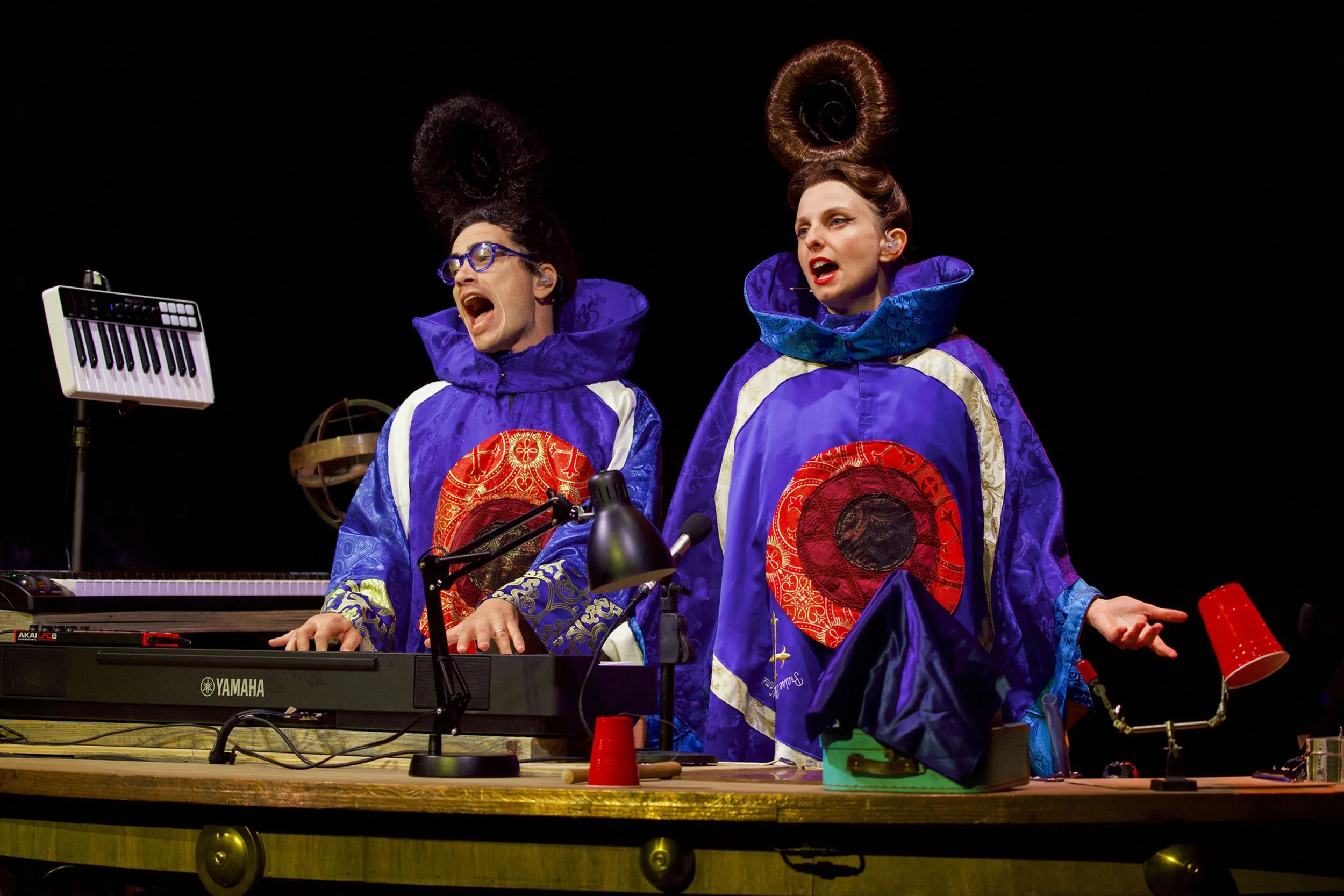
Jake Brasch and Nadja Leonhard-Hooper are bringing their wild new musical Hole! to Playwrights Horizons in November, following productions at Edinburgh Fringe and London’s Soho Theatre (pictured here).
Over the past few years, there has been much hand-wringing about the state of the Broadway musical. In the 2026–27 Broadway season, only seven new musical productions have been announced with a confirmed venue and opening date. There were six the season prior (two of which shuttered quickly).
The reasons for this dearth are largely economic. With initial capitalizations on Broadway hovering between $20 and $30 million, many producers are hesitant to invest in original stories, preferring to bank on the name recognition of revivals and existing IP to garner ticket sales (if they choose to invest in musicals at all).
For many theater-makers, both award-winning veterans and aspiring newcomers, mounting a musical on a Broadway stage seems absurdly impossible right now. But musical theater is far from extinct. In fact, it’s thriving outside of the inhospitable confines of the Great White Way.
This season, there are more than twice as many musicals Off-Broadway (and Off-Off) than there are on it, with offerings as diverse as Imitation of Life, inspired by the 1933 novel of the same name about the intertwined lives of two mothers, one Black and one white, as they strive for success in New York City; Todrick Hall’s Midnight, about the relationship between an enslaved man and plantation owner in the antebellum South; and The Conversation, an intimate love story from former Hamilton castmates; among many others. Some shows, such as The Curious Case of Benjamin Button or The Heart, arrive with accolades from prestigious regional or London productions and expectations of a Broadway transfer, while others are meant to remain in the smaller, appreciative houses of Off-Broadway.
I spoke with a collection of producers, playwrights, and directors to discuss a few of these new productions, and to understand the forces behind what some have been calling an “Off-Broadway Renaissance.” Is the boom due to a new generation of producers, who know how to market the cultural experience that is alternative theater? Or has the zeitgeist finally caught up with what downtown stages have always offered?
***
A place for second-act problems
For those of you who skipped History of New York Theater, an Off-Broadway theater is any professional theater venue in New York City with a seating capacity between 100 and 499 seats. These days, nonprofit theaters are the primary presenters and producers of theater Off-Broadway. Though the forces of inflation (rising labor and material costs) have impacted theaters everywhere, these organizations have the infrastructure—from long-term residency in the theaters themselves to year-round staff to in-house scene shops—to produce resource-heavy productions (like musicals) more efficiently and at significantly less expense than on Broadway.
Subsidized as it is by foundations and donations, the nonprofit model was designed to support art without the pressure of commercial interests. Because of this, Off-Broadway has always been a destination for the experimental. Over the years, commercialization has crept in—in the form of “enhancement,” a practice in which outside producers will co-sponsor a production at a nonprofit, and in the growing number of for-profit venues—but that hasn’t altered the fundamental space that Off-Broadway occupies in the theater landscape: a home for artists finding their voices and for adventurous audiences looking to see something new.
To put it another way: “People go to Off Broadway to see weird shit,” says Obie Award-winning and Tony-nominated director Anne Kauffman, lovingly.
Adam Greenfield, artistic director of Playwrights Horizons, likes to point to Sunday in the Park with George, which premiered at Playwrights in 1983 (Stephen Sondheim’s Off-Broadway debut) to illustrate the role of Off-Broadway. “It’s often said that Sunday in the Park with George has second-act problems,” Greenfield says. “Playwrights Horizons is a place that is not afraid of second-act problems. Actually, second-act problems are some of the things that make a musical itself.”
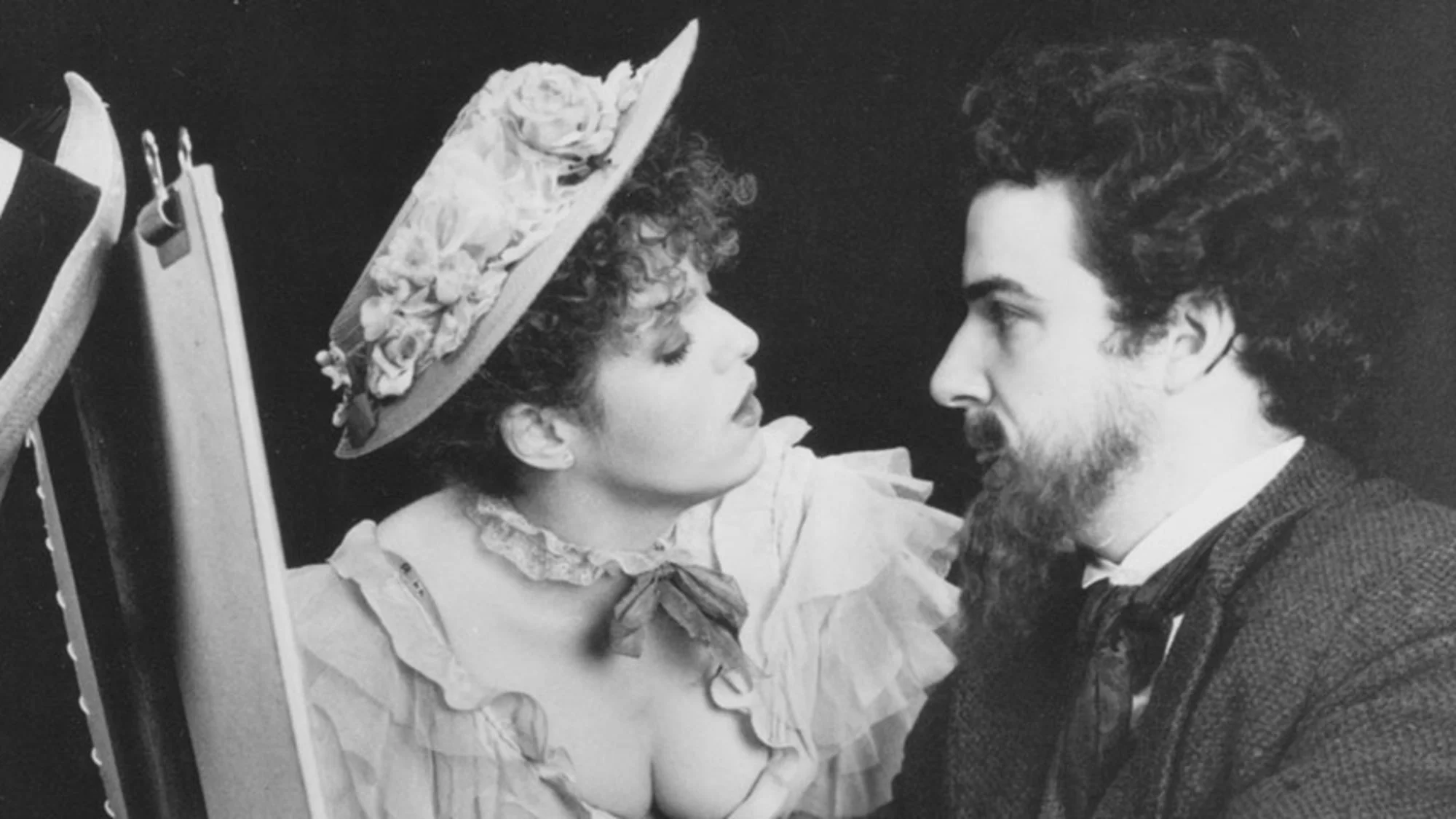
Bernadette Peters and Mandy Patinkin in Stephen Sondheim and James Lapine’s Sunday in the Park with George at Playwrights Horizons in 1983. Photo: Gerry Goodstein.
Greenfield believes that without the pressure to appeal to a Broadway-sized audience, Off-Broadway can emphasize a playwright’s unique perspective. The more idiosyncratic and misbehaved, the better. “The musicals that we do are the musicals that might seem at first like a really bad idea, but then actually turn out to be a really good idea.”
Hole!, which had a successful run at Edinburgh Festival Fringe this summer and begins performances at Playwrights Horizons on November 28, is emblematic of that philosophy. Written by the gleefully unhinged writer-performer duo American Sing Song (A.S.S. for short), Hole! is a musical love story about two definitely straight members of a butt-plug wearing cult who survive an apocalyptic event called “The Great Sucking” and set out across America to spread their anal-retentive gospel. Perfect post-Thanksgiving fun for the (w)hole family.
“We wrote the thing that only we would write,” explains Nadja Leonhard-Hooper, one half of the “bisexual Power Ranger” that is American Sing Song, along with Jake Brasch. “We’re shocked every day by how much people resonate with it. But it’s just not true that audiences want something normal. It’s not true that people want IP. It’s not true that people only want stars. People want to be surprised and delighted. They want artists who are trying something new.”
“This whole thing was created because we were making each other laugh until we pissed,” adds Brasch. “We thought we were going to have to break into theaters to perform this.”
Now, its favor among audiences is due to its singularity—not in spite of it.
“Hole! expanded the limits that I had made in my own head about what you can do in a musical,” says Dani Koenig, an emerging playwright. “I left that show thinking, ‘I have to be willing to write the thing that it feels like no one would ever make.’” As a young writer of musicals, Koenig says that they find more artistic inspiration from musicals Off-Broadway than on Broadway. “I feel more connected to art that is taking risks and doing something weird rather than the stuff that feels really polished.”
***
Success isn’t defined by scale
Weird shit has not traditionally been synonymous with commercial viability. However, the success of shows that speak from the extremely specific voices of their creators—shows like Oh, Mary! and Titanique (which ran for three years Off-Broadway before transferring), which elevate gay, contemporary humor and sensibility rather than pander to it—demonstrate to producers that audiences’ appetites are more adventurous than they thought.
Dylan MarcAurele’s Heated Rivalry: The Unauthorized Musical Parody is a recent example: the send-up of the hit TV show opened at the 174-seat Culture Club this past May, and recouped its initial capitalization of $500,000 thirteen weeks later, ahead of schedule. Heated Rivalry is still open in New York and held a limited engagement in London in September.
While the show arrived pre-baked with name recognition and timely subject matter—much more in the cultural consciousness than Mary Todd Lincoln or James Cameron’s Titanic—its humor is off-beat and specific. MarcAurele’s script speaks (and sings) in a language that is not native to a wide swath of people. But without the burden of a multi-million-dollar capitalization, and all its attendant expectations and compromises and shareholders, the show had the flexibility to lean into its niche. Its success demonstrates how well a small, dedicated fan base can sustain a production’s life.
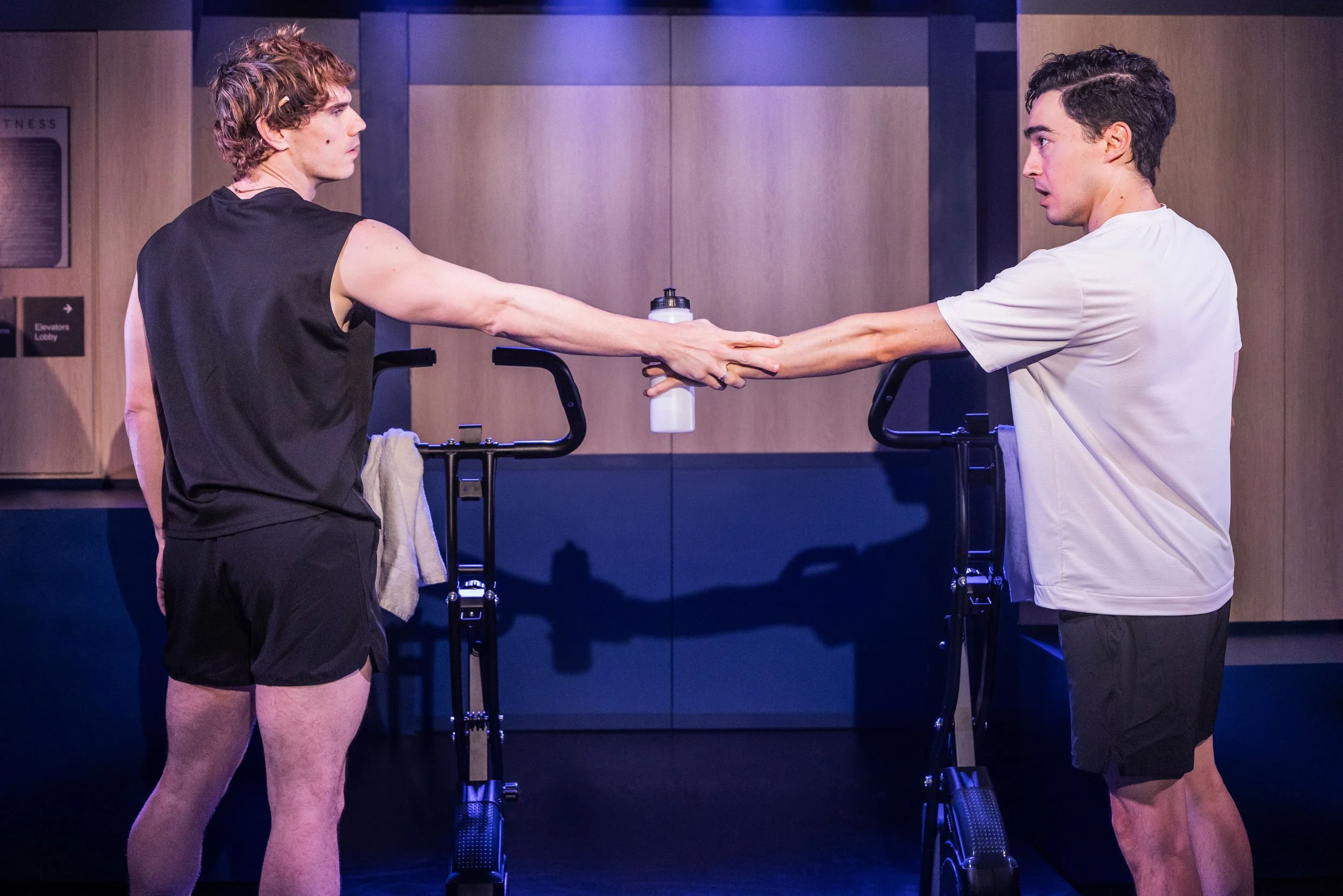
Jay Armstrong Johnson as Ilya Rozanov and Troy Iwata as Shane Hollander in Heated Rivalry: The Unauthorized Musical Parody, which recouped its initial $500,000 capitalization after 13 weeks. Photo: Matthew Murphy.
“Having a niche audience is actually a huge advantage,” says Christian Palomares, founder of Paloma Theatrical and executive producer and general manager of Heated Rivalry. “You get to be a lot more thoughtful about who you’re serving and how you’re reaching them and how you’re going to get them to come back or tell their friends and build a relationship with your piece. We’re all fighting for attention, whether it’s Broadway or Off-Broadway. It’s an open marketplace to find the audience that’s right for you.”
Bolstered by audience response and encouraged by the comparatively low production and capitalization costs, commercial producers are adopting the renegade spirit that has long characterized downtown theater. The mood has been compared to the Wild West, with producers reviving once-defunct performance spaces or founding new ones, and devising alternative production models.
“Our hope is that if Off-Broadway becomes a real opportunity for commercial work, especially musicals, to succeed, it is a direct competitor with Broadway,” says Andrew Patino, CEO of Regular People Productions, which led marketing for Heated Rivalry. The production, marketing, and general management studio has co-produced such Tony Award–winning musicals as Dead Outlaw and Maybe Happy Ending, but has worked exclusively Off-Broadway this year, with over thirty projects. “It’s giving producers an alternative,” Patino says. “Looking at Broadway as the end-all, be-all of what theater-making can be is an outdated mentality for the current landscape we are living in.”
Though downtown artists and theater practitioners (and readers of The Hat) have always known that Off-Broadway is an alternative to, not less than, Broadway, that distinction hasn’t always been obvious to casual audiences. With more commercial producers in the space, those perceptions are changing in the mainstream.
“Success isn’t defined by scale,” Jacob Stuckelman, co-CEO of Regular People, says. “It’s defined by the art’s impact on a community.”
***
A reinvestment in what makes theater itself
The burgeoning of Off-Broadway musicals this season synchronizes with the hunger among audiences, especially younger audiences, for offline, communal experiences.
“If you look at the way that young people are spending money, they’re spending money to go on trips. They’re going to expensive concerts. They’re wanting to experience things in reality, off of their phones,” says Andrew Patino.
“As we’re producing our own work, or general managing or marketing our clients’ projects, we’re wondering how we can make shows feel like, if you miss this, you’re never going to see this again,” adds Stuckelman.
While commercial producers speak about “eventizing” theater, what that really means is a rediscovery and reinvestment in what theater already is. Theater itself is an event. It is defined by its ephemerality and aliveness: the alchemy between bodies in space, performer and witness, breathing the same air. It’s irreplicable. FOMO is integral.
New York Theatre Workshop sees every production as an opportunity to engage or re-engage audiences beyond the show itself. On November 24, NYTW will premiere Wild Rose, adapted from the 2018 film of the same name, written by Nicole Taylor and John Tiffany. The musical is about a Scottish woman with a challenged past who dreams of becoming a Nashville star, featuring original music as well as powerhouse ballads from Brandi Carlile, The Chicks, and others. NYTW has partnered with Wild Horses, the Lucinda Williams–owned country music bar for Wild Rose–themed karaoke and line-dancing nights. While it may look like a savvy marketing move, it’s about community building, too.
“We’re facilitating human connection, and that’s what people really stay for,” Patricia McGregor, artistic director of NYTW, explains. “We’re trying to build relationships that feel more than just transactional. We want audiences to feel like they belong to something larger than just a show, that they are welcomed into a long-term community.”
The musical adaptation of What’s Eating Gilbert Grape, which will open at MCC next June, aims to achieve communion with its audience via intimacy and proximity. “There’s a thin membrane between the audience and stage,” says Anne Kauffman, director of the upcoming production.
With a book by Peter Hedges, who wrote the 1991 novel and its screen adaptation, the music was composed by four actor-musicians, who will also star in the production: Adrian Blake Enscoe, Sydney Shepherd, Regina Strayhorn (who form the indie-folk-pop outfit Bandits on the Run), and Christopher Sears. The entire production, not just the music, is human powered and acoustic. Every company member narrates the story, sometimes inhabiting different characters as the tale demands, while playing the guitar or suitcase drum or some other toy instrument. Kauffman has likened it to people gathered around a campfire.
“It feels like a return to original storytelling, almost,” Kauffman says. “There’s no mitigating. It’s all happening right before your eyes.”
Penelope, a musical retelling of Homer’s The Odyssey from the perspective of Odysseus’s wife, which will open at Classic Stage Company on December 10 for a limited engagement, embraces a similar closeness.
“We, as theater practitioners, lose our way when we try to make the work look and feel like cinema. The way to sustain the art form is to reinvest in what makes it truly and purely theater.”
Having begun as a contemplation of what it means to wait, when co-creator and composer Alex Bechtel was forced to quarantine hundreds of miles away from his partner during the early days of the pandemic, it couldn’t be more antithetical to that other adaptation that was on everyone’s lips this summer. “We, as theater practitioners, lose our way when we try to make the work look and feel like cinema. The way to sustain the art form is to reinvest in what makes it truly and purely theater,” says Bechtel.
Penelope is evocative of ancient bards and epic poetry, with the stage occupied by a solo performer, as she translates her experience into song. A five-piece band, an instrumental Greek chorus, accompanies Penelope as she waits. The theatrical dare of Penelope is its simplicity. “The story is made possible in a space like Classic Stage because it is so intimate,” says Bechtel. “In one of the title pages in the script, we wrote that it is very important that the band is in the same world as Penelope, and so is the audience, and that if this is a dream, it’s one we’re all having together.”
Hole! at Playwrights is also audacious, though not just for its subject matter. It is a sweeping musical love story with a huge cast of characters—and it’s performed entirely by two people. Its staging is simple, with Nadja Leonhard-Hooper and Jake Brasch remaining in the same place for the majority of the show. Brasch plays three separate keyboards, while Leonhard-Hooper stands before a table laid with various objects, which she manipulates to create a Foley-esque soundtrack.
“How do you make something that feels impossibly big and has the glitz and glamour of the $50 million Broadway musical, but what you’re looking at is just two dorks on a stage?” Brasch asks. “What’s been such an exciting revelation for us is that the thing that’s in your mind is always going to be better than the thing that’s onstage. We can suggest something so much bigger than we can show.”
“How do you make something that feels impossibly big and has the glitz and glamour of the $50 million Broadway musical, but what you’re looking at is just two dorks on a stage?”
“Hole! is a testament to the power of theater and the event of theater,” says Adam Greenfield. “Unlike TV or movies, you can just say ‘I’m in Nebraska. Now I’m on Mars! Now I’m on a spaceship!’ Hole! does what theater does best, which is transport you.”
***
“I don’t want to let my fan girl go away”
Many of the musicals Off-Broadway this season are at once ambitious and intimate. They are risky, for the artists who created them, for the individuals and institutions which have supported them, and for the people who are buying tickets to see them. Rather than exist in opposition to Broadway, the blossoming scene Off-Broadway shows that there is a path forward. Among many of the people with whom I spoke, there was a sense of optimism about the positive, trickle-up impact of a competitive Off-Broadway landscape.
“I’ve wound my way back to being like, yeah, I do want one of our shows on Broadway,” says Brasch, who had a Tony-themed Bar Mitzvah and is a proud musical theater freak. “I want to do something that is wild, and to participate and innovate within the thing. I don’t want to let my fan girl go away.”
The dream of the Broadway musical isn’t dead. It’s an ideal and tradition carried inside the artists making work today, no matter the size of the cast, audience, or budget. Each new production adds an embellishment or twist that may inspire the next show and the next generation of theater-makers. It is a changing, shifting thing—the question now is if Broadway can change with it.