

With I Became We, the playwright uses a 16-person chorus to sing the thoughts of a 34-year-old woman considering whether to have children. How does Pirnot keep channeling her life—and reimagining theatrical forms—again and again?
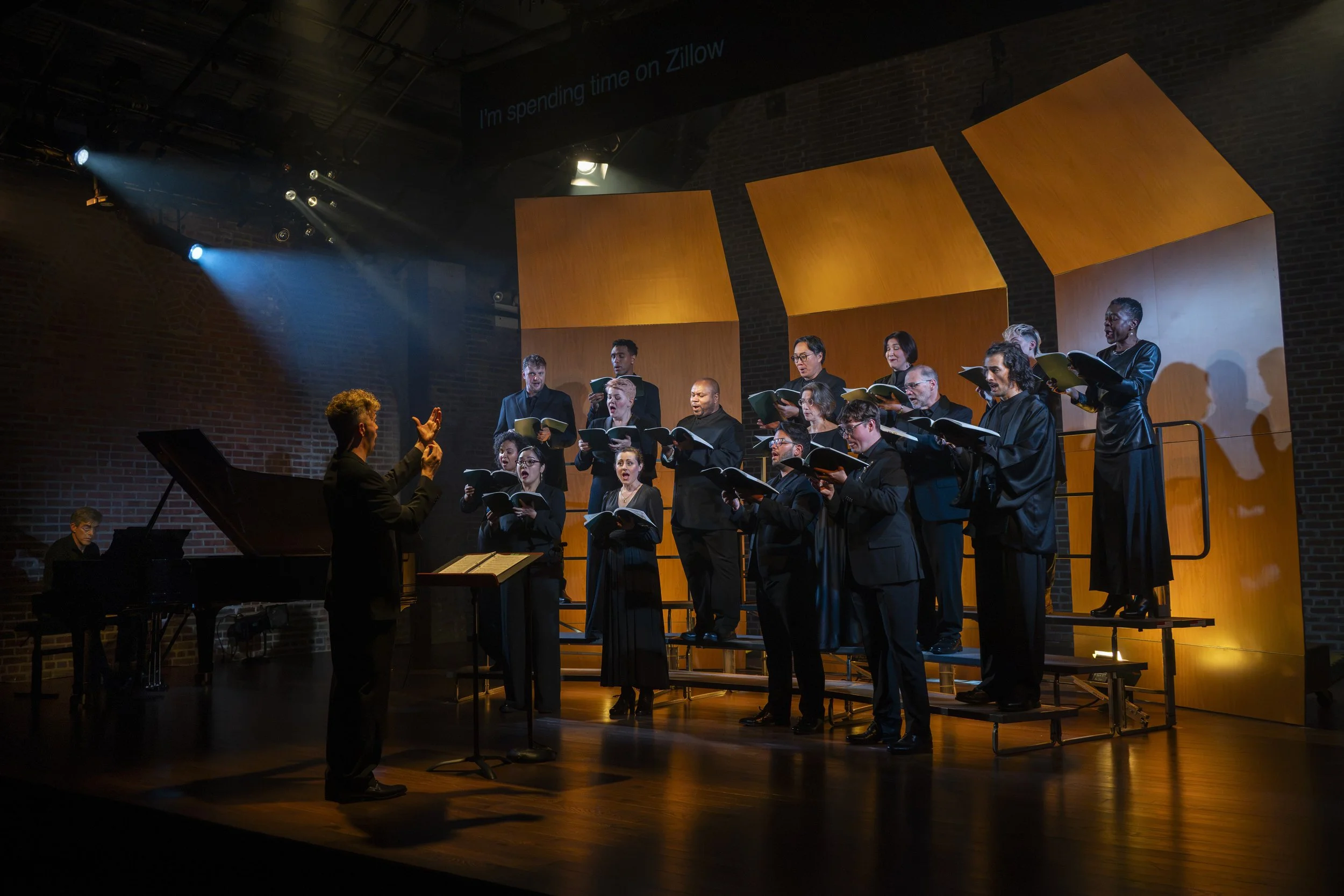
A 16-person chorus, spearheaded by Jack D. Cohen, brings to life Mona Pirnot’s latest play, I Became We at the Atlantic Theater. Photo: Ahron R. Foster.
In discussing her plays, Mona Pirnot reflects on how they captured her life at a particular moment—how writing “puts the time in amber,” as she says.
I Love You So Much I Could Die, staged in 2024 at New York Theatre Workshop, chronicled Pirnot’s grief after her sister’s medical emergency. A year later, at Atlantic Theater Company, I’m Assuming You Know David Greenspan hilariously broke down the insanity of devoting a career to writing new plays.
While both plays are forms of autobiography, each was executed in thrillingly unique and highly theatrical ways. Now, Pirnot returns to the Atlantic with I Became We, once again excavating herself—and again in an entirely new form.
“I wanted to do something big,” Pirnot says of her new play, directed by Sarah Benson. Pirnot sees this play capping off what she calls “a very loose trilogy,” as these three works each examine facets of her life—her family, her career, and, now, her future. But whereas I Love You and Greenspan were each solo plays, I Became We features a 16-person chorus all singing as a version of Pirnot’s internal thoughts. Here, a single character is represented by many, illuminating the ways in which our thoughts can compete with and contradict each other. A larger cast also offered Pirnot the chance to end her trilogy “with a bang.”
It is not uncommon for playwrights to use theater as a vehicle for autobiography; what sets Pirnot’s plays apart is how they seem concerned with theater first and herself second. Pirnot maximizes theater as a medium by putting audacious kinds of performance onstage.
In I Love You, directed by her husband, Lucas Hnath, Pirnot performed alone on stage with her back to the audience while a computer voiced her story, which seemed too traumatic to speak. In Greenspan, directed by Ken Rus Schmoll, the actor David Greenspan performed a solo play Pirnot wrote for him—wherein he played a number of young female artists gathering to read a script—without knowing if he would actually read, let alone perform, it.
“It is not uncommon for playwrights to use theater as a vehicle for autobiography; what sets Pirnot’s plays apart is how they seem concerned with theater first and herself second. ”
But that play, embodying Pirnot’s ethos, is a celebration of what theater can accomplish. For Pirnot, the best way to show that potential was to share “the theatrical genius who means the most to me—he’s going to make a stronger case by just standing in front of them and doing it. You just feel like you’re watching Whitney Houston sing or something.”
Both plays revealed Pirnot’s sharp gift for being able to access her immediate experience and channel it into art, no years of digestion necessary. Her plays, like theater itself, are exuberantly present tense. I Became We follows this mode: in the play, a chorus sings the thoughts of a 34-year-old woman considering whether or not to have children.
“It’s what all of my mid-30s friends are talking about,” Pirnot says.
In her works, “I’m always trying to capture the sound of thinking,” Pirnot says, and choosing parenthood comes with many questions. A 16-person chorus, then, offers “a multiplicity of voices representing one voice,” she says.
“The choral music felt correct because the language is so plainspoken, the question is so common, the feelings are so timeless and huge that it could be sung by a choir,” Pirnot says.
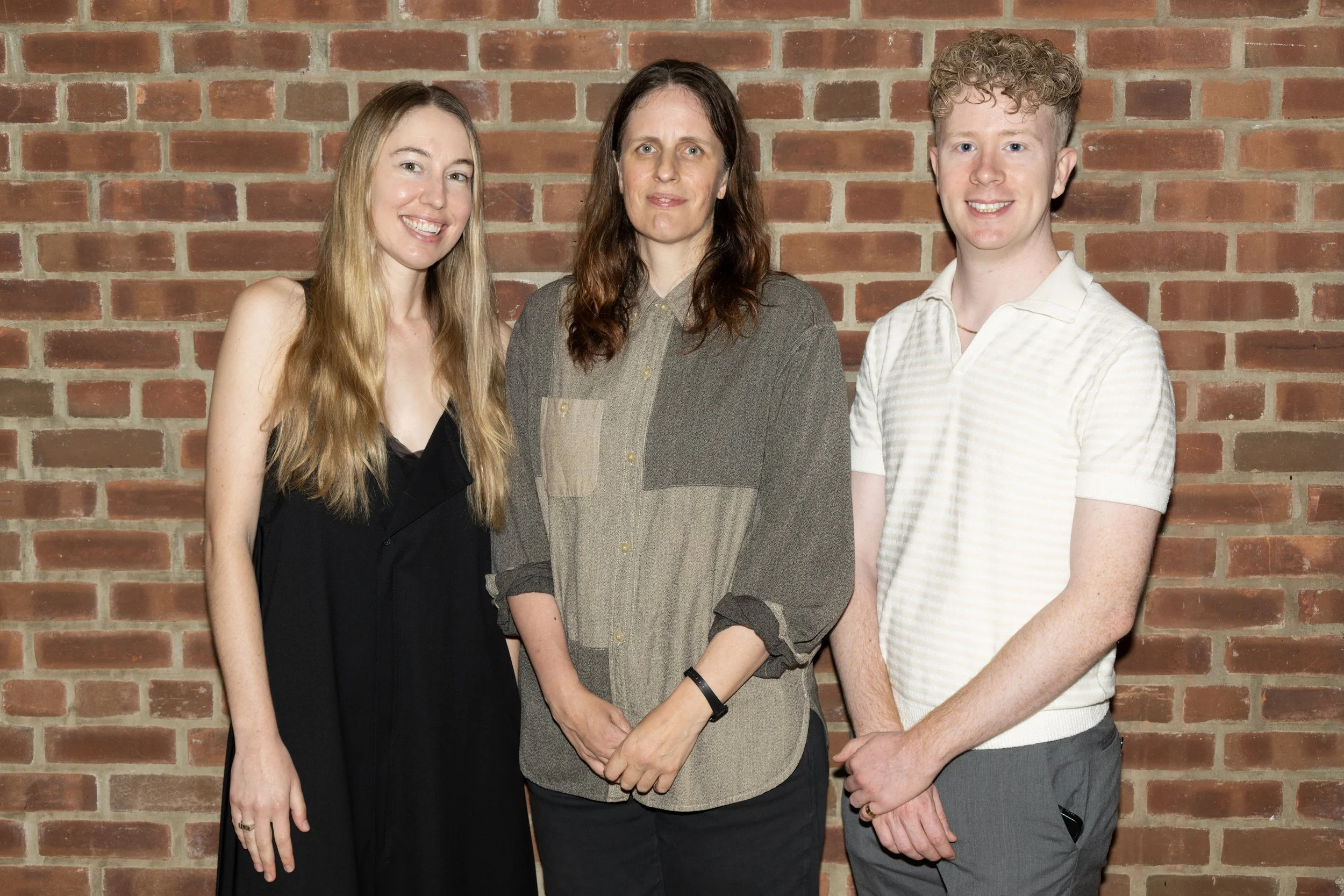
I Became We’s creative team: playwright Mona Pirnot, director Sarah Benson, and composer Jack D. Coen. Photo: Ahron R. Foster.
That plainspokenness comes through in Pirnot’s lyrics, which take on a diaristic, comical honesty. (“I Googled ‘how many eggs is a 34 year old left with,’ one goes.) When seeking a composer, it turns out Pirnot knew one all along: Jack D. Cohen performed a sound cue backstage during I Love You. Given how small that show’s company was, they quickly bonded.
“It’s full circle, me doing I Love You, back to the audience, and now Jack is going to be conducting, his back to the audience,” Pirnot said.
She is also excited to see how a chorus expands the kinds of artists seen in plays.
“We’re looking at a different faction of entertainers entirely, which I feel very proud of,” she said. “I’m really excited for these people with voices from heaven who do not work in theater, and a lot of them got into choral music because maybe they grew up religious and maybe aren’t any longer but don’t have an opportunity to sing secular music. It meant the world to me, after the workshop, when a few of the singers told me, ‘We don’t get to do stuff like this, thank you, we’re so excited.’ I was so grateful.”
Through the chorus, Pirnot is sharing her inner thoughts through many performers, instead of just one. “The only way I know how to contribute [my writing] is if it’s really really specific, almost to the point of it almost being alienating or bizarre,” she said. Otherwise, “what’s the point of my voice?”
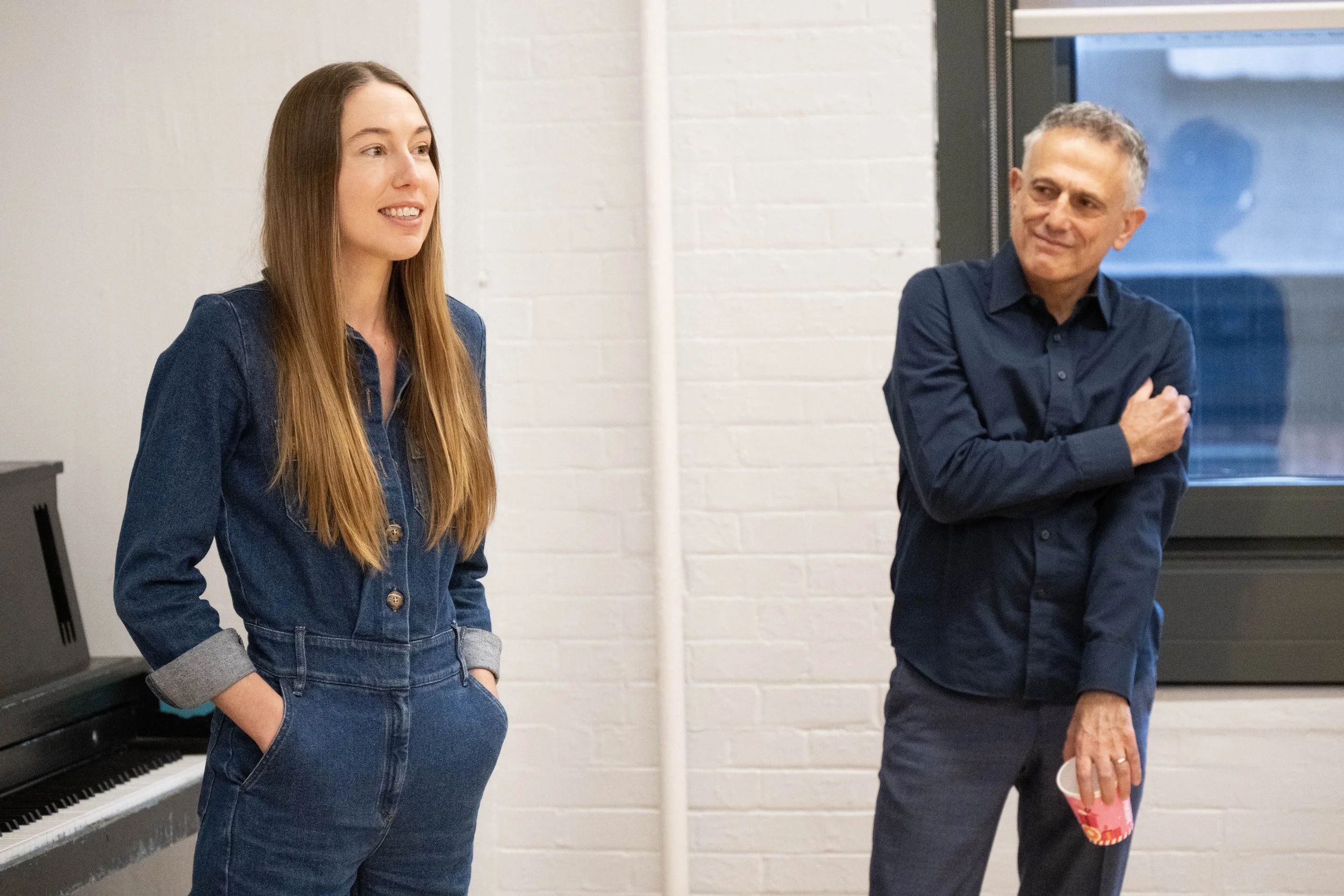
Pirnot wrote the play I’m Assuming You Know David Greenspan for actor David Greenspan before knowing if he would perform it. Photo: Ahron R. Foster.
Her voice has created a distinct archive of her early 30s; at any point she can tap back into a certain age and experience what has not just been lived but filtered through creation.
She recently did a one-night only benefit performance of I Love You and “it was very strange to revisit it and hear things that felt so vivid that I now felt distant from,” Pirnot says. “And there are things about Greenspan already that feel funny to me because they feel a few years ago, so I have wondered, too, how I’ll feel about this play where I’m asking this question. In X amount of years if the answer is yes or no, if I end up not having children or I do, this will be a really intense thing to revisit.”
There is a fearlessness in not only asking those questions but in inviting an audience to also experience them in inventive new forms. Plays have been Pirnot’s opportunity for self-understanding, and “I’m gonna tumble ahead un-self-consciously as long as possible,” she says. “I like dealing with the raw mulch material of my life.”