

How “Mexodus” Is Building a Musical for the Future
Brian Quijada, Nygel D. Robinson, and director David Mendizábal are treating theater as something to pass on — across cities, platforms, and audiences.
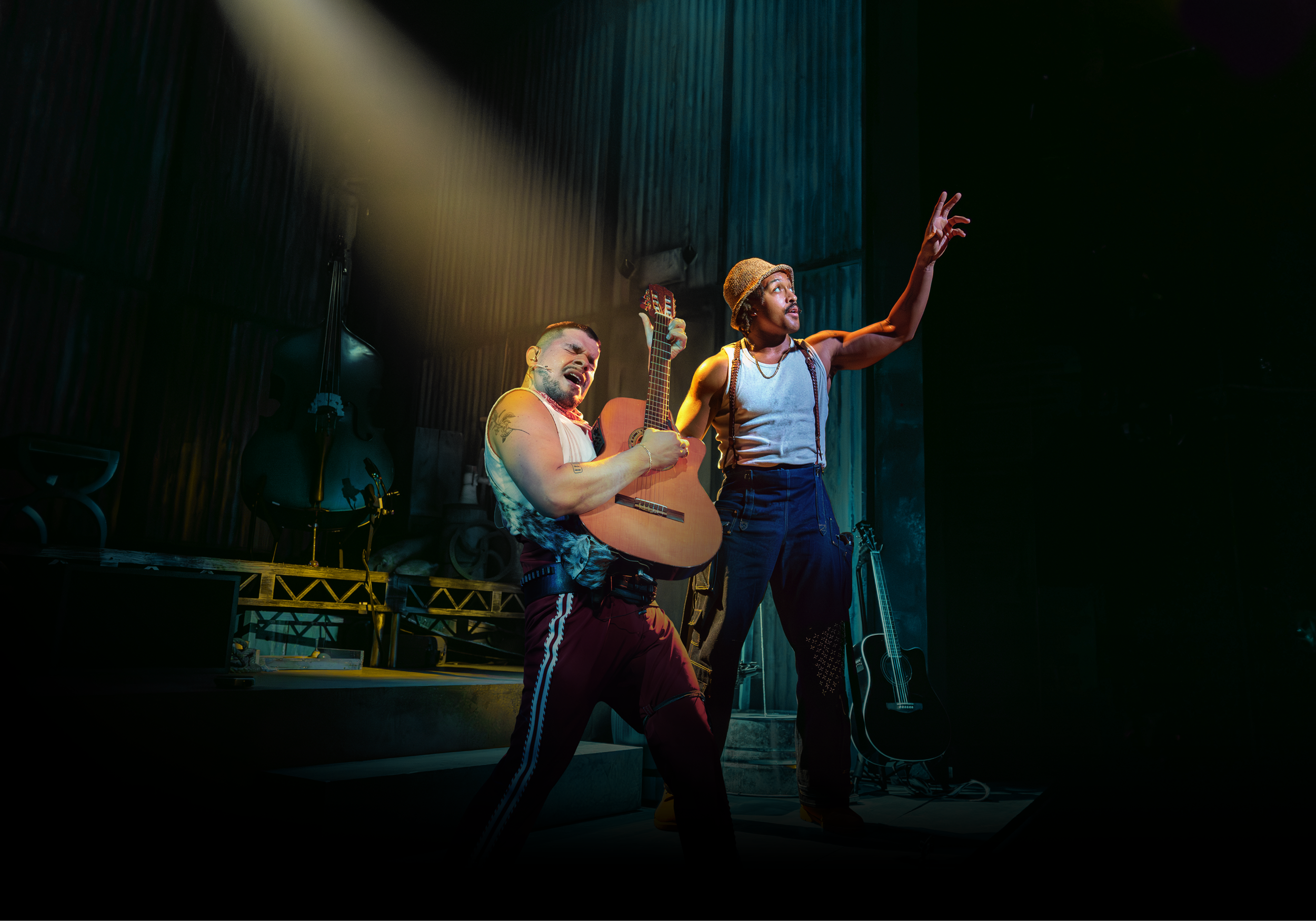
Brian Quijada and Nygel D. Robinson, the creators and stars of the new musical Mexodus, now at the Daryl Roth Theatre after a run last fall at the Minetta Lane Theatre (presented by Audible). Photo: Curtis Brown.
When Mexodus had its New York premiere last fall, its creators wanted to avoid the usual expectations that accompany a new American musical. Their production wasn’t meant to fit an existing pipeline — it wasn’t a tryout for Broadway. Instead, Mexodus arrived in New York as a project in purposeful motion: a piece that had already been shared across years, cities, and multiple productions, hurtling toward new platforms.
Brian Quijada and Nygel D. Robinson’s vibrant musical two-hander tells the story of Black freedom seekers who traveled south to Mexico on a little-known branch of the Underground Railroad. Just as that story unsettles familiar narratives from American history, this musical challenges assumptions about how theater should be prepared, performed, produced, and promoted.
The development process for Mexodus was a product of the COVID-19 pandemic. Quijada and Robinson built the songs remotely by trading tracks, and then shared them on YouTube long before their first in-person workshop. The live-looped score, recorded and layered in real time at each performance, has few precedents in American musical theater.
The New York premiere was unusual, too: Mexodus was only the second full-length musical presented by Audible at the Minetta Lane Theatre, after Dead Outlaw, which moved to Broadway last spring. And when the full recording comes out on Audible on April 16, Mexodus will become the first show to test an audiobook release as a promotional tactic for an ongoing New York run. (The production is currently being reprised at the Daryl Roth Theatre through June 14.)
So far, Quijada and Robinson’s willingness to do things differently has paid off. Their YouTube videos didn’t go viral — the most popular one has around 3,000 views — but they gave the writers a proof of concept they could show to potential collaborators. Liz Carlson, then artistic producer at New York Stage and Film, sent them to the director David Mendizábal, who had just worked with Quijada on a Zoom reading of another project. She asked if they had heard of the other side of the Underground Railroad — how 5,000 to 10,000 enslaved people escaped to Mexico, where slavery had been abolished in 1829. “I was like, ‘no!’” Mendizábal says. “That’s so wild! Why wouldn’t we know that?”
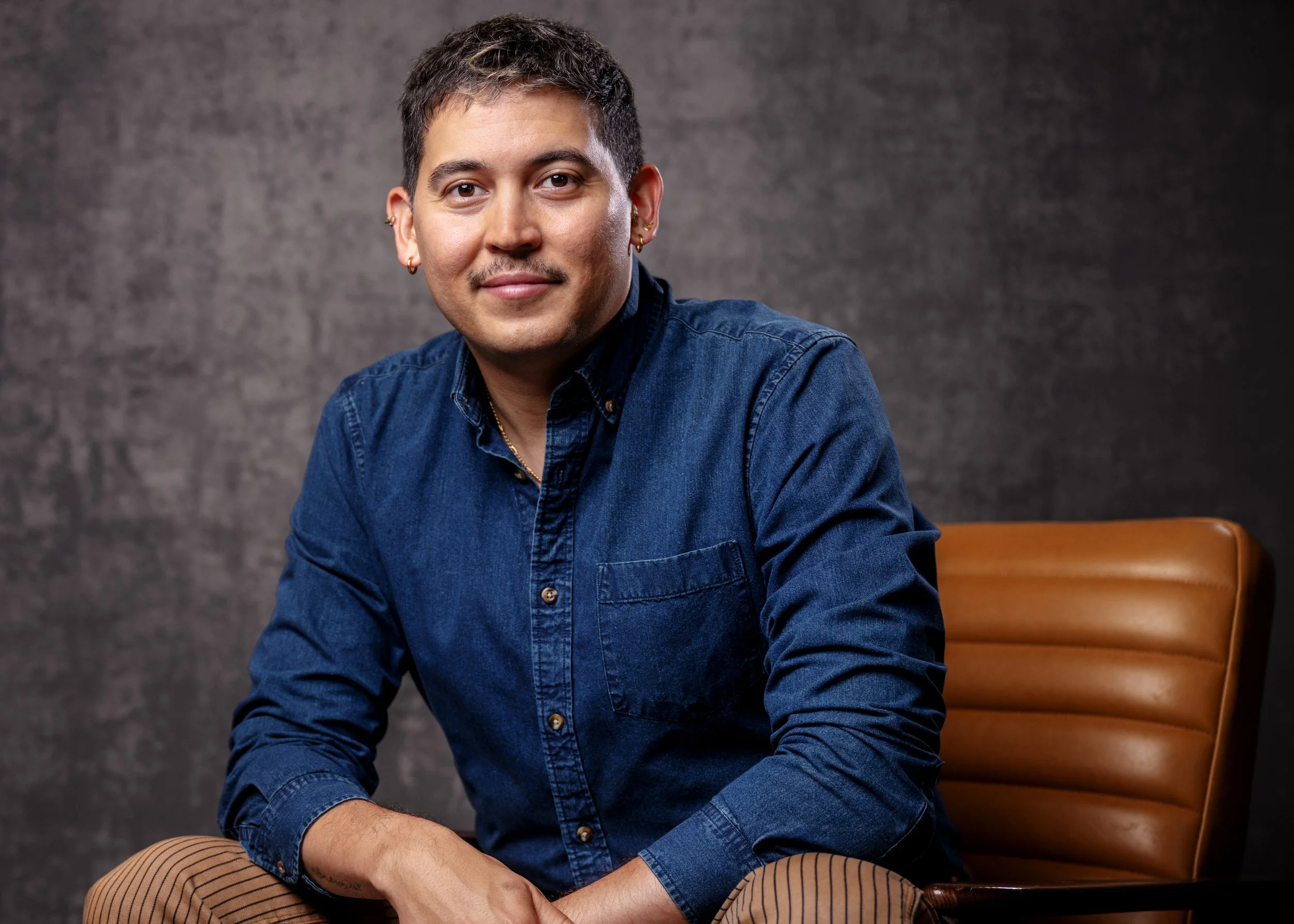
Mexodus director David Mendizábal, who joined the project after seeing Quijada and Robinson’s YouTube videos and wanting to learn about the “other side of the Underground Railroad.” Photo: Ben Krantz.
As Mendizábal agreed to direct a reading of the show, that question became foundational. The director saw the project as an opportunity to interrogate how historical knowledge is transmitted. “It’s our task to pass this on by word of mouth because we were not taught about it,” they say.
Robinson and Quijada shared that sense of responsibility. As they figured out how to tell a story that isn’t often told, Mendizábal explains, the creative team also wanted to engage audiences that aren’t always invited into the theater. “We wanted them to feel radically welcome,” they say, drawing a comparison to the communal level-setting of playwright Dominique Morisseau’s “Rules of Engagement” for theatergoers.
To achieve that goal, they worked with Robinson and Quijada to open the show with a welcome message — not a stodgy voiceover, but an engaging introduction that helped audience members know what to expect. Robinson and Quijada give the audience members permission to be themselves, even yelling and dancing if they feel so called (though they ask guests to turn off any phones to avoid “extra sound effects” in the live mix). By naming the rules — and loosening them — the production gives first-time and infrequent theatregoers a warm welcome.
***
The creative team has taken an open-source approach to their storytelling. Instead of withholding information from the audience in service of a neat narrative package, they explain the history they’re working with at the top of the show. As Robinson and Quijada sing in the opening number, “Two Bodies”:
Nygel. So, tonight, we’re gonna guide you through
This story from the past
Brian. Of the Underground Railroad that led south.
Nygel. A story we’ll pass down by word of mouth.
They apply the same philosophy to the looping technology, foregrounding the process that goes into crafting each song. The two performers create their score in real time, from building blocks like upright bass, backing vocals, and any form of percussion you can name (drums, spoons, washboards, and even the set) to guitar, keys, trumpet, accordion, and harmonica. The stage is scattered with recording tools: loop pedals so the musicians can start and stop recording at any moment, and a giant wheel they can crank to change the tempo of a track.
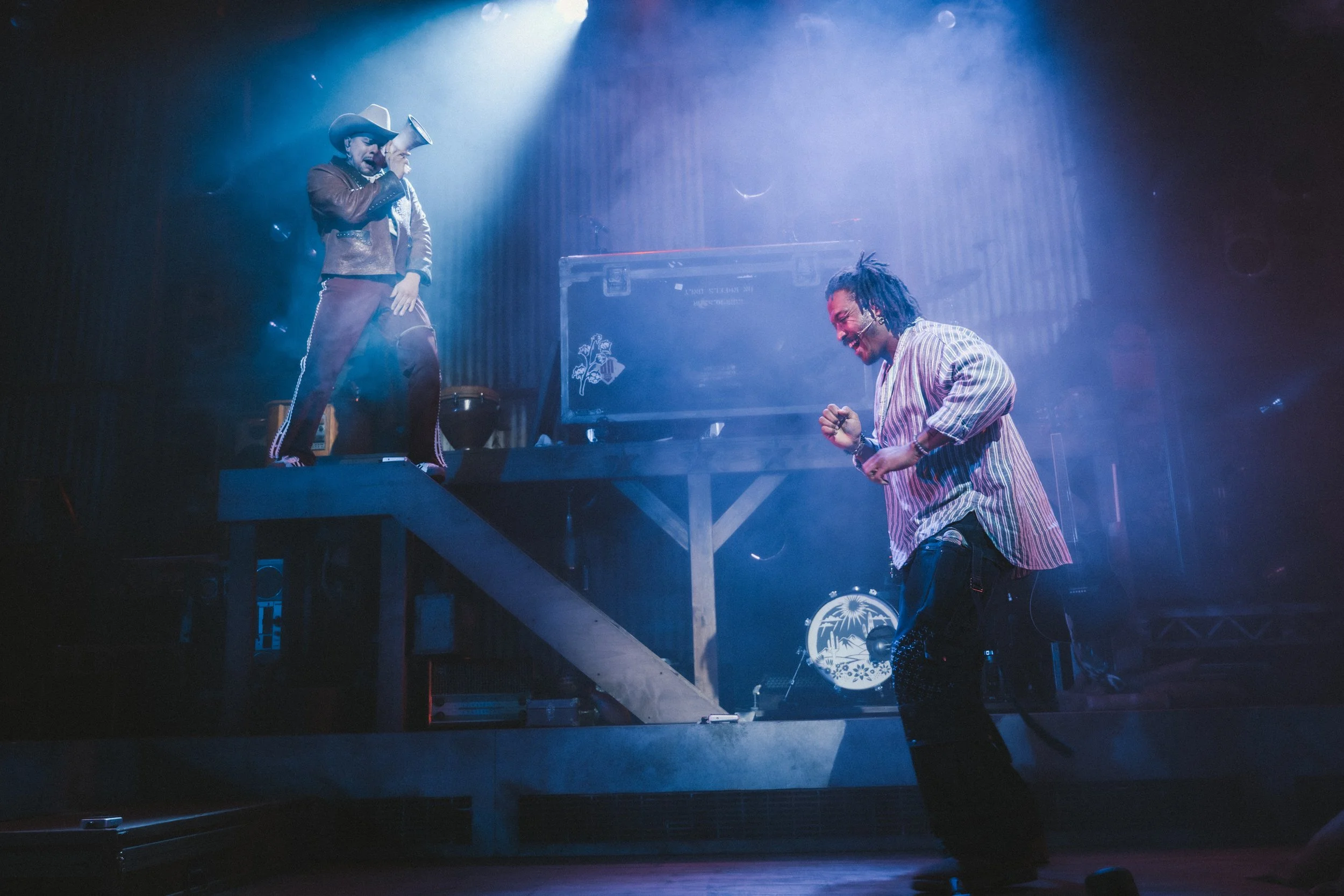
Quijada and Robinson create a live-looped score, in real time at every performance. Photo: Thomas Mundell.
When they met Robinson, Mendizábal says they knew almost nothing about looping. “I’d seen it in performances, but I didn’t really understand how it worked,” they explain. Mendizábal says the writers found that exciting: “They were like, ‘Awesome! That’s exactly what we want: most of the audience isn’t going to know about looping, and we want someone to help us communicate what we’re doing.’” The director worked with sound designer Mikhail Fiksel and set designer Riw Rakkulchon to make the recording process as transparent as possible.
Producer Ben Holtzman sees the artists’ commitment to open, accessible storytelling as essential to the show’s longevity and success, and as essential to the industry at large. “The power of theater is in the way that it can educate, inspire, and uplift,” says Holtzman, who has produced the show’s commercial runs (and its upcoming tour) as a leader of P3 Productions, along with Sammy Lopez and Fiona Howe Rudin. “We have to be building the next generation of audiences,” he explains, “because that’s the only way that this art form is going to sustain and that we’re going to be able to keep moving forward.”
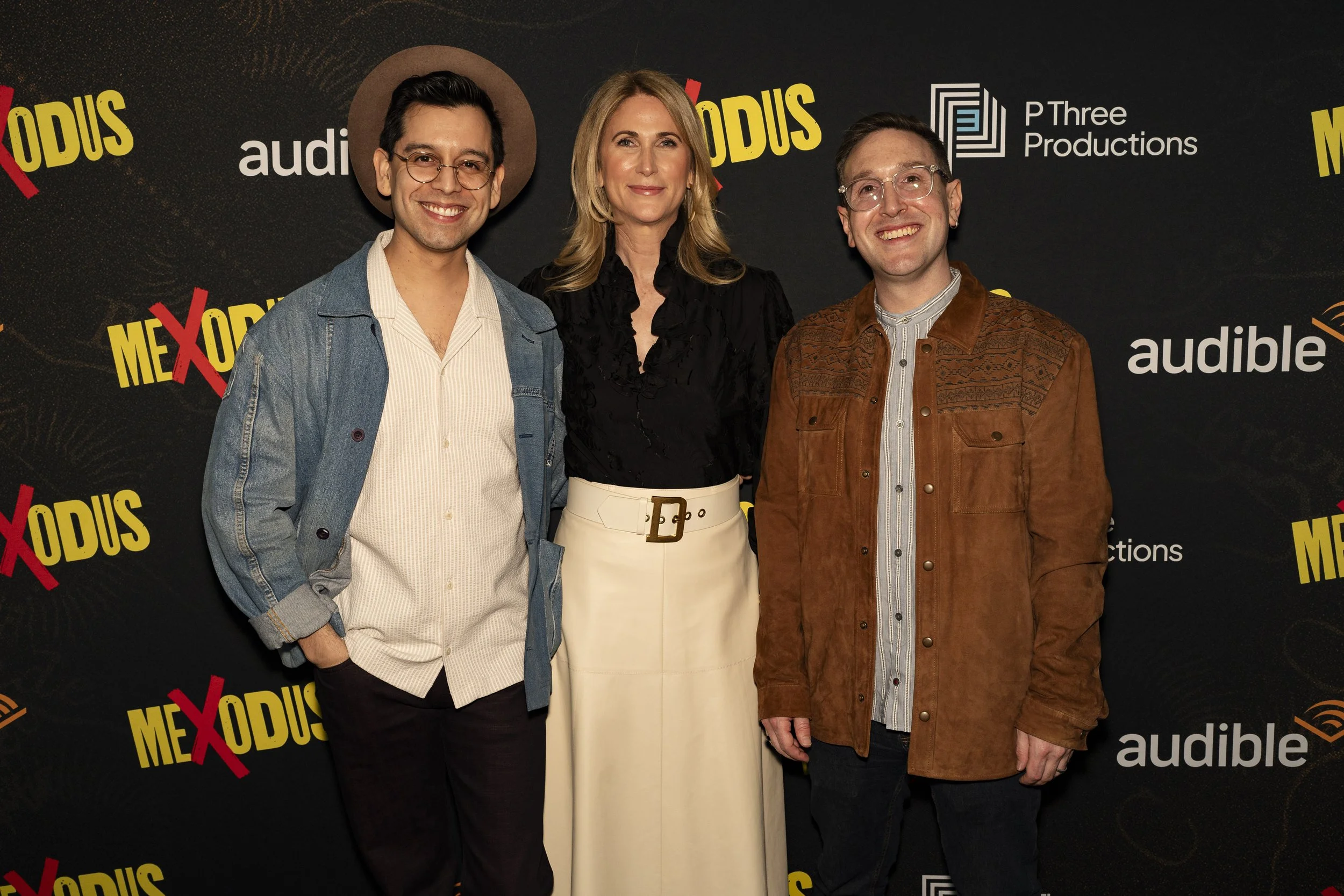
Sammy Lopez, Fiona Howe Rudin, and Ben Holtzman of P3 Productions, which has produced the commercial runs of Mexodus. Photo: Marcus Middleton.
For Holtzman, that starts with investing in traditional pathways for audience engagement. He grew up seeing theater through New York City public school programs, and he thought Mexodus was a perfect show for students. Working together with the Movement Theatre Company, where Mendizábal is one of four artistic leaders, P3 launched the “MEXPass” initiative to bring public school students to the show. The show has also organized talkbacks with public figures like Karine Jean-Pierre, who was the first Black woman to serve as White House press secretary.
These efforts have been effective. Statistics shared by the production team indicate that Mexodus is reaching much more diverse audiences than the typical show: Compared to other Off-Broadway shows selling tickets through Telecharge in the first two months of 2026, Mexodus had the highest proportion of African American ticket buyers and the second-highest proportion of Hispanic buyers. Mexodus also has “the lowest average household income of any show in the dataset,” according to a publicist working with the production: roughly 37 percent of ticket buyers have a combined household income of under $100,000, while the average is 25 percent.
***
But in-person engagement strategies are only one part of a much bigger picture. Holtzman says his team has made a concerted effort to build a broad audience, starting with pitching the show to Audible for a partnership. P3 was excited about Audible’s theater space, its “built-in audience,” and its commitment to engaging new programming. Holtzman says that partnership has paid dividends. “It really snowballed,” he says.
The audiobook site, which is owned by Amazon, helped support the show’s complex audio setup and engaged its Latin America team to help promote the show, something no other New York theater producer could offer. They even found the show a performance slot at South by Southwest last month, making Mexodus the first musical ever presented at the weeklong festival.
The performance at South by Southwest overlapped with the first week of performances in the show’s current run at the Daryl Roth Theatre, but Mendizábal says the strain of preparing simultaneous performance was worth it. “This festival is about the intersection of art and entertainment and technology and music,” they say, shouting out understudies Alan Mendez and Trent Lawson for holding down the fort in New York. The director says it was “thrilling” for Mexodus to be recognized as a theater piece that met that mission while pushing for social justice through storytelling — and to get a chance to present the piece in Texas, where “half of the play takes place.”
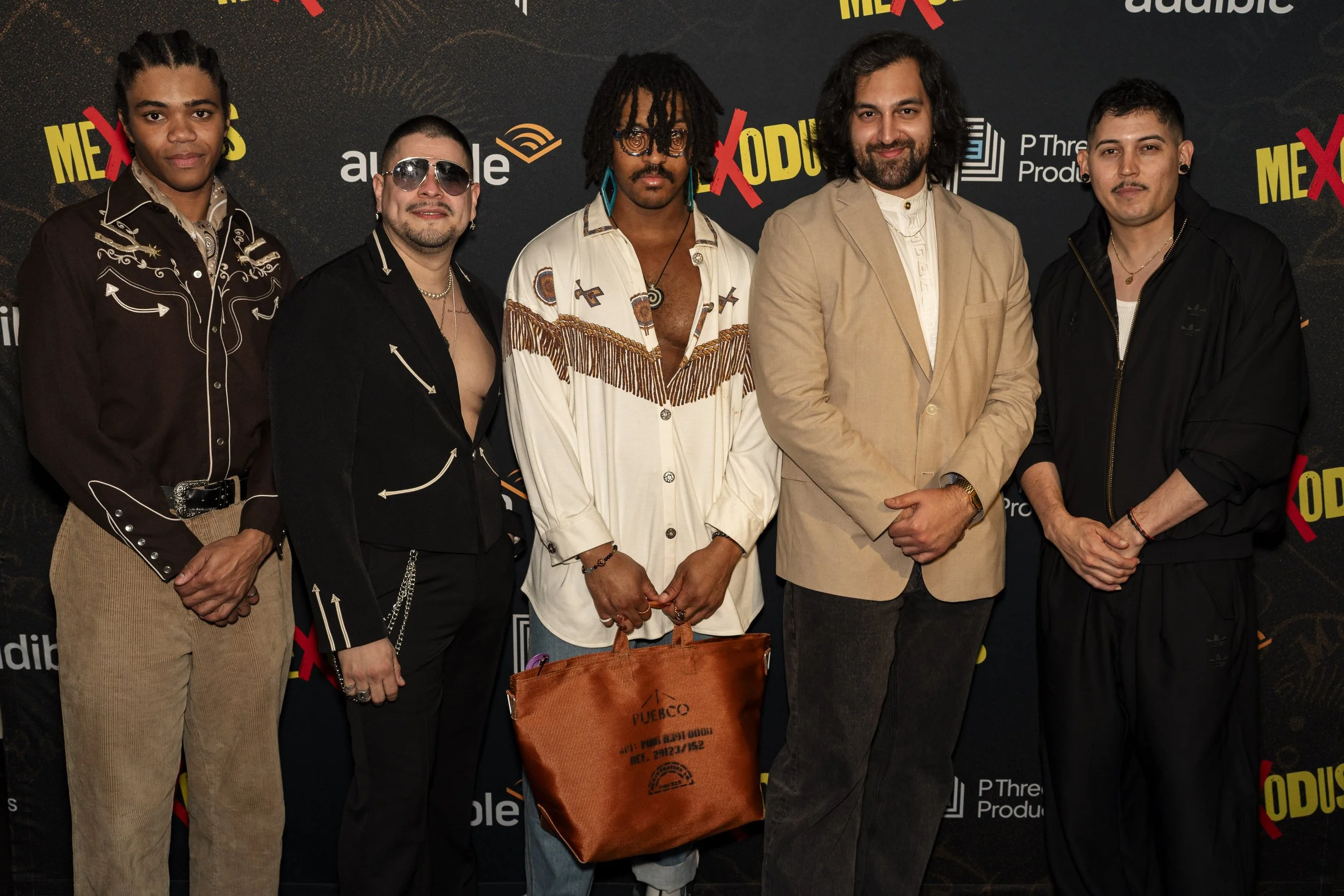
Trent Lawson, Brian Quijada, Nygel D. Robinson, Alan Mendez, and director David Mendizábal on opening night of Mexodus at the Daryl Roth Theatre. Photo: Marcus Middleton.
As the production continues reaching out to new audiences, it is arriving at a major inflection point: the release of a full audio recording on Audible. While countless musicals have harnessed the power of cast albums to sell tickets, Mexodus is the first to release a full audiobook version while the show is still running. For some in the theater industry who have long been leery of pro-shots and movie musical adaptations cannibalizing ticket sales, releasing this recording might seem risky.
But Holtzman takes a different view. “I’m a believer that it only helps. If people listen to it and they love it, they’re going to want to see it,” he explains. Mendizábal agrees, saying the audio version and the stage production offer unique artistic experiences, and that Audible’s producers made “slight tweaks” to be sure the recording could stand alone as a “radio play” — such as making words more descriptive for listeners and “fleshing out the sonic world” to communicate things achieved by lighting onstage. If anything, it’s just a way to reach another audience: audiobook listeners, who skew younger and more diverse.
***
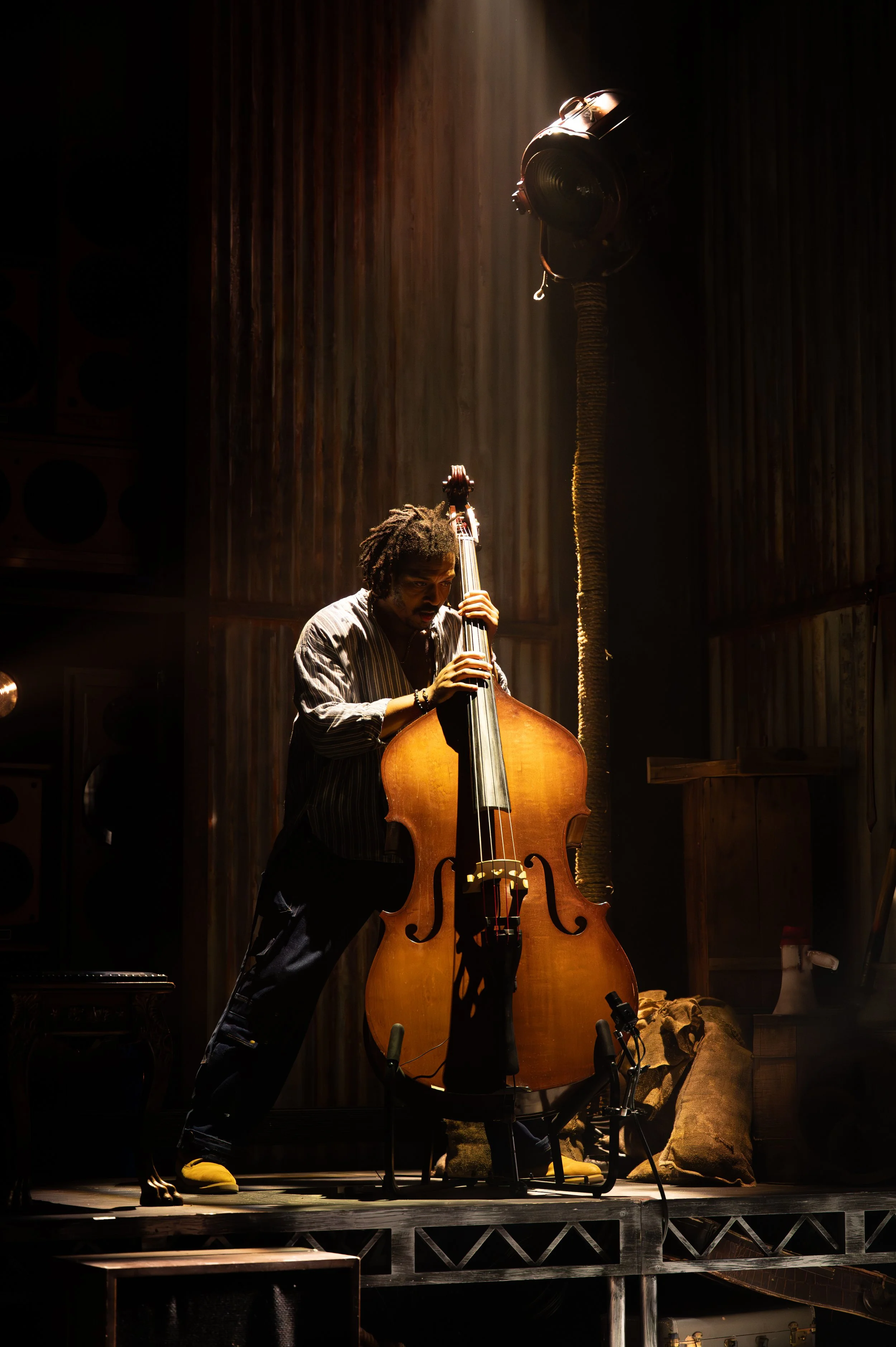
Robinson on the upright bass, one of many instruments each performer plays. Photo: Thomas Mundell.
This experimentation with new technological platforms also connects Mexodus to a fascinating strand of musical theater history. The historian Doug Reside is the curator of the theater division at the New York Public Library, and in his recent book Fixing the Musical: How Technologies Shaped the Broadway Repertory, Reside argues that shows tend to endure when they make use of the dominant media formats of their era.
“The musicals that enter the repertory,” he explains, “were produced at a time when there was a technology that could capture the essence of a piece and distribute it widely.” The rise of integrated book musicals in the mid-twentieth century aligned with the release of new extended-play records, allowing listeners the chance to hear long collections of songs. In the 1980s, CDs eventually offered even more play time at a lower price, enabling listeners far from Broadway to hear near-complete recordings of sung-through megamusicals like Les Misérables and Cats.
Reside says complete cast recordings featuring most of a show’s script aren’t entirely new — Goddard Lieberson did it back in the 1950s, with a three-record set of The Most Happy Fella. But the way Audible optimizes its musical theater releases for audiobook consumers does reflect an attempt to use modern media to promote live theater. And in tandem with the range of strategies the show’s creators and producers have used to build a fan base, that approach might help put Mexodus firmly in the musical theater canon.
Mendizábal is proud of how far the show has come, and they say its success reflects collective effort, from the creative team, the producers, their new collaborators at Audible, and even the director’s partners at organizations like the Movement Theatre Company and the Berkeley Rep.
“Opening night at Audible felt like my wedding night,” they say. “It was like everyone you would invite and they were all a part of it.” For this production, that night wasn’t a finish line. Instead, it felt like the beginning of a long-term commitment to bring this show to the broadest possible audience.