

How Do You Adapt a Thousand-Page Encyclopedia of Sadness?
Leo Egger and Charlie Mayhew of the Eno River Players discuss turning Robert Burton’s The Anatomy of Melancholy into a wry Off-Off-Broadway meditation on grief, history, and surprisingly modern anxieties.
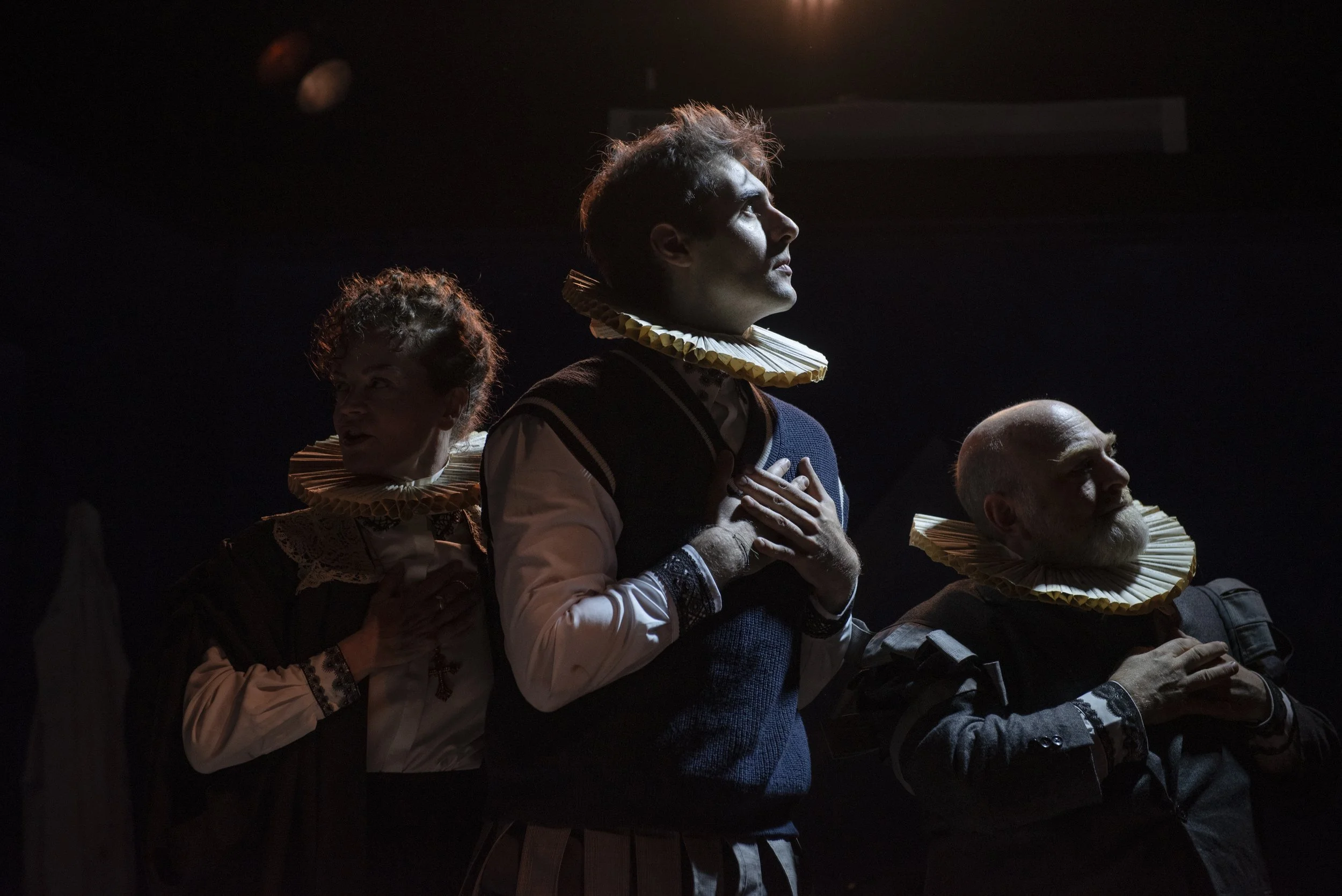
The Anatomy of Melancholy, a new play by the Eno River Players, features Pilar Witherspoon, Adrien Rolet, and Avi Glickstein. Photo: Ella Gillespie Bailey.
This past February, Leo Egger and Charlie Mayhew made a splash with their playwriting debut: the scrappy, formally inventive Twelve Minor Prophets, which played Off-Off-Broadway at JACK. The show follows a young man named Jesse as he grieves — and attempts to understand — his father by recruiting his college sketch-comedy troupe to re-stage the Book of the Twelve, a collection of prophetic texts from the Tanakh that his father studied.
As the play hopped from a puppet-show presentation of Jonah to a hardscrabble Western version of Joel and an Ezra Klein–adjacent podcast of Haggai, Jesse wrestled with questions of family, faith, and the moral crises of contemporary Jewish life.
The Equity Showcase presentation ran just two weeks and coincided with a major blizzard, but it still received a rave from Vulture’s Sara Holdren, who called it “bravely conceived,” “deceptively ambitious,” and “deeply moving.” Three months later, the playwriting duo and their company, the Eno River Players, are back with a new play that shares its predecessor’s historical roots, handspun charm, and genial wit: The Anatomy of Melancholy, a wry, three-person adaptation of a seventeenth-century encyclopedia of sadness by polymath Robert Burton, playing at IATI Theater in the East Village through June 6.
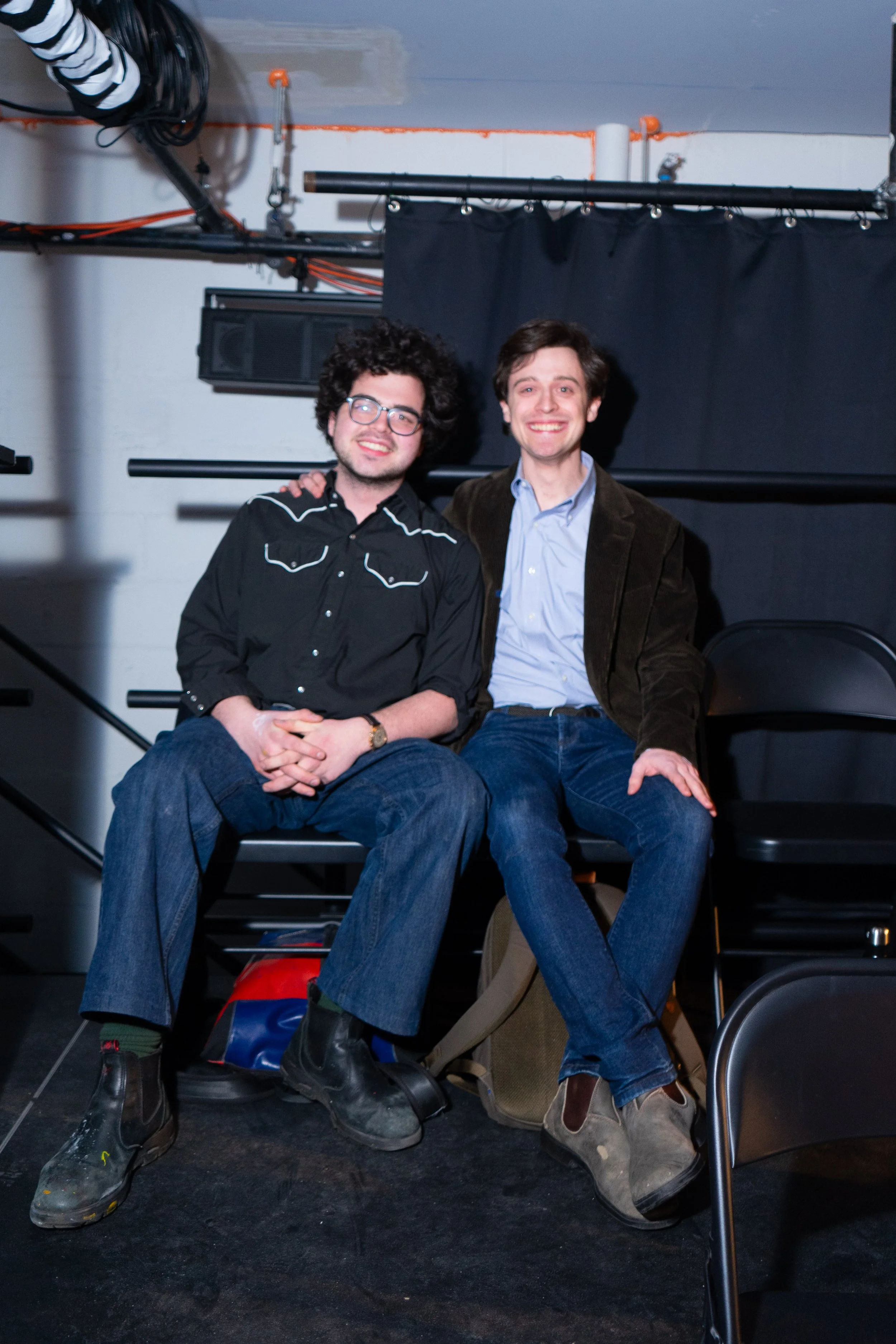
Leo Egger and Charlie Mayhew. Photo: Samori Etienne.
Egger and Mayhew met at summer camp, long before they started making theater together. “I was eight and he was nine,” Egger recalls. “So we weren’t super close, but I knew Charlie very well because he played piano. At summer camp, that’s like—” Mayhew cuts him off before he can finish the compliment. They became friends about a decade later, Egger says, when they reconnected as undergrads at Yale.
Their collegiate projects hinted at the magpie sensibilities of their more recent collaborations. Mayhew joined an improv group, helped with sets for a solo play about poet Frank O’Hara, and double majored in history and physics. Egger wrote a new adaptation of Plato’s Apology and directed classics like Coriolanus and The Government Inspector.
“We did a little sketch comedy together,” Mayhew admits. “More importantly, I was a fan.” First, he had seen Egger’s college directing work. He also knew of Eno River Players, the freewheeling classics company that Egger started as a community theater in Durham, North Carolina, when he was still in high school. After college, Mayhew saw the group’s first production in New York City, an adaptation of Gogol’s Dead Souls, at Target Margin Theater in Sunset Park in 2023. “I was not making theater at the time,” explains Mayhew; instead, he was doing climate policy research. “And I had this feeling in the audience — that if I don’t try to make theater with Leo, I’m going to regret it for my whole life.”
Soon after, he wandered into a used bookstore on his way home from work and picked up the thickest book among the new arrivals: Burton’s The Anatomy of Melancholy. “Gentle reader,” said the opening sentence, “I presume thou wilt be very inquisitive to know what antic or personate actor this is, that so insolently intrudes upon this common theatre.”
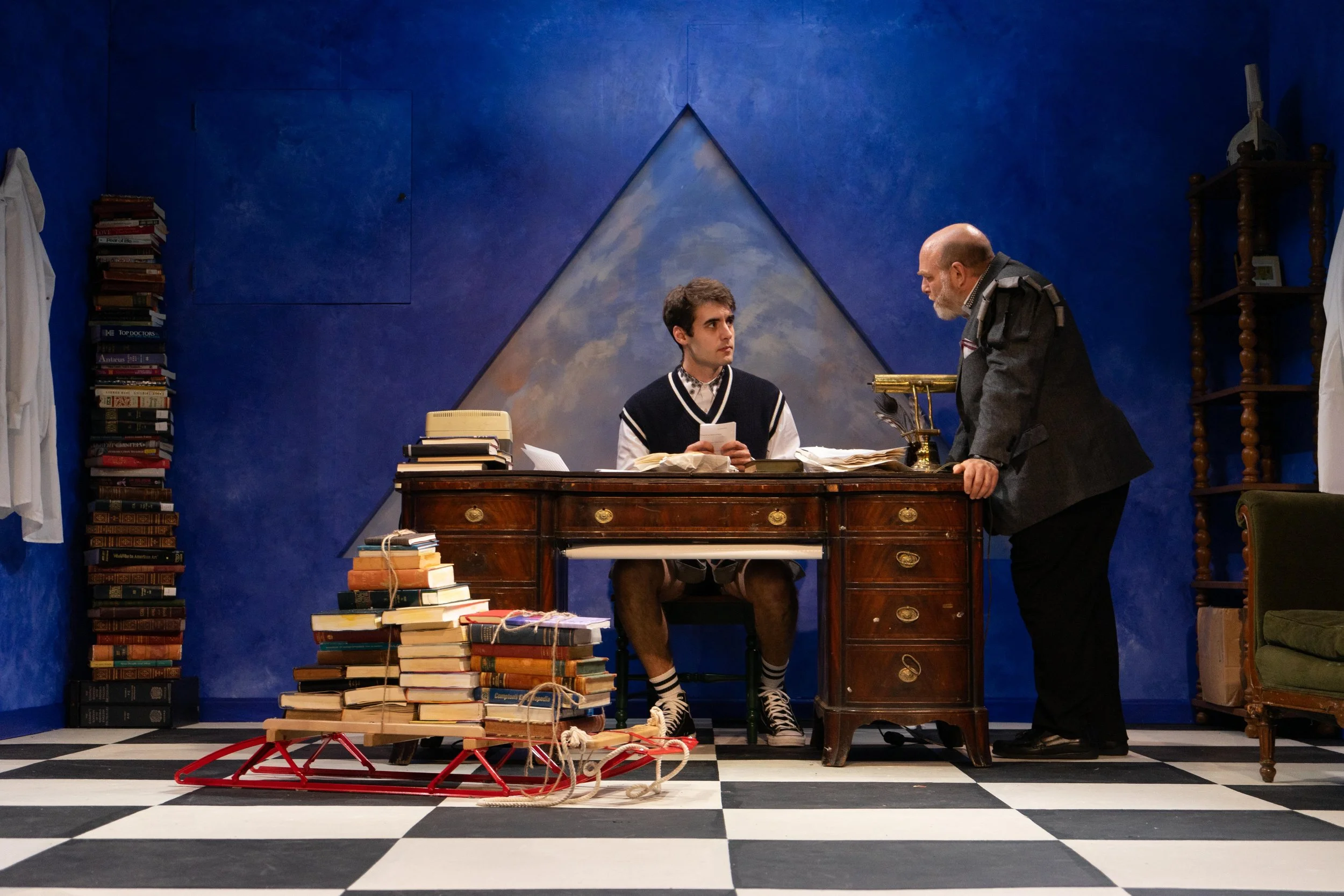
The Anatomy of Melancholy depicts author Robert Burton endlessly updating his encyclopedia of sadness for modern audiences. Photo: Samori Etienne.
“I thought, oh, this is the play with Leo,” Mayhew says. “We have to adapt this.” In retrospect, he says, it was “an unfounded intuition” — the book, well over a thousand pages and full of citations on the historical definition of “melancholy” and its possible cures, did not scream one-act play.
Nevertheless, Egger shared his excitement, and they began drafting a loose adaptation that puts Burton’s compilation of ancient thought on melancholy in conversation with The Little Prince, a nihilist penguin featured in Werner Herzog’s Encounters at the End of the World, and even (very briefly) the protagonists of The Fault in Our Stars by John Green. The play depicts three versions of Robert Burton in purgatory, endlessly updating the original Anatomy for a dwindling modern audience as he tries to understand the source of sadness.
“These texts are challenging. Some of them are explicitly violent and cruel. Some are confounding, confusing, alienating.”
Soon, they formalized the partnership: Mayhew officially joined Eno River Players, and they began to reimagine the company as a home for new work. The duo started writing Twelve Minor Prophets after taking up The Anatomy of Melancholy, but the two projects developed almost simultaneously. Egger suggested the former play’s biblical source material for reasons that echoed Mayhew’s interest in Burton. “I thought it seemed unadaptable and impossible, but I was drawn to the poetry,” he says. “These texts are challenging. Some of them are explicitly violent and cruel. Some are confounding, confusing, alienating.”
“And then, of course, what makes them challenging is that they’re about the land of Israel,” interjects Mayhew. “They’re about losing and regaining land.”
Egger and Mayhew can be unusually earnest in their approach to weighty material. They engage seriously with historical thought, looking for solutions to contemporary problems. That approach reflects the writers’ passions: Egger has been directing classics since high school, and Mayhew is now pursuing a PhD in the history of science at Harvard.
Despite the subject matter of their recent projects, though, they want to make entertaining theater for modern audiences. “I don’t think we’re trying to sneak anyone’s vegetables in,” says Mayhew. Their projects possess an undeniable sense of fun, a ravenous curiosity, and an impish ability to shift between silliness and solemnity without losing the thread of a thought. Mayhew says the heart of their project is “to make a joyful and affirming and entertaining eighty minutes that leaves an audience feeling respected and cared for.”
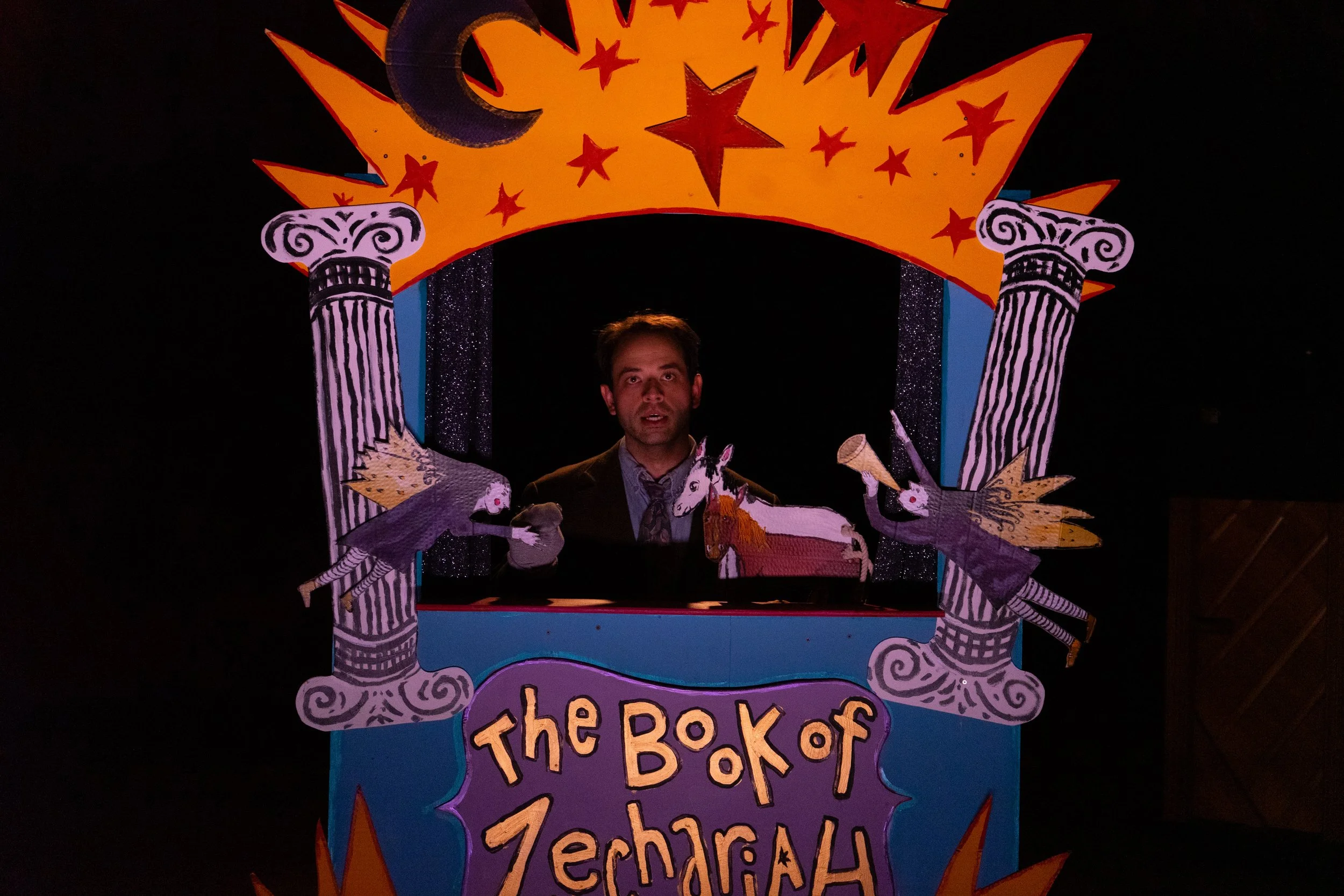
Twelve Minor Prophets, which premiered at JACK in February 2026, was called “deeply ambitious” and “deceptively moving” by critic Sara Holdren. Photo: Samori Etienne.
Egger agrees. “Our work is not always going to be about making sense of hard books, you know what I mean? That’s not the center of our mission,” he jokes. How these projects play with space and challenge viewers’ sense of reality is more intriguing to him. “The freedom you can create in the theater? That’s why I make theater,” Egger says. “The theater is the only place I know of — in my life — where I’ve had the experience that I’m looking at a mystery, staring at it, and I feel less alone somehow. I feel seen in some way.”
For Egger and Mayhew, adaptation is less about translating ideas across time and more about creating companionship between the past and the present. Their work asks what can happen when contemporary audiences sift through ancient anxieties for long enough to hear themselves echoed back.