

Emilio Madrid Never Stops Moving
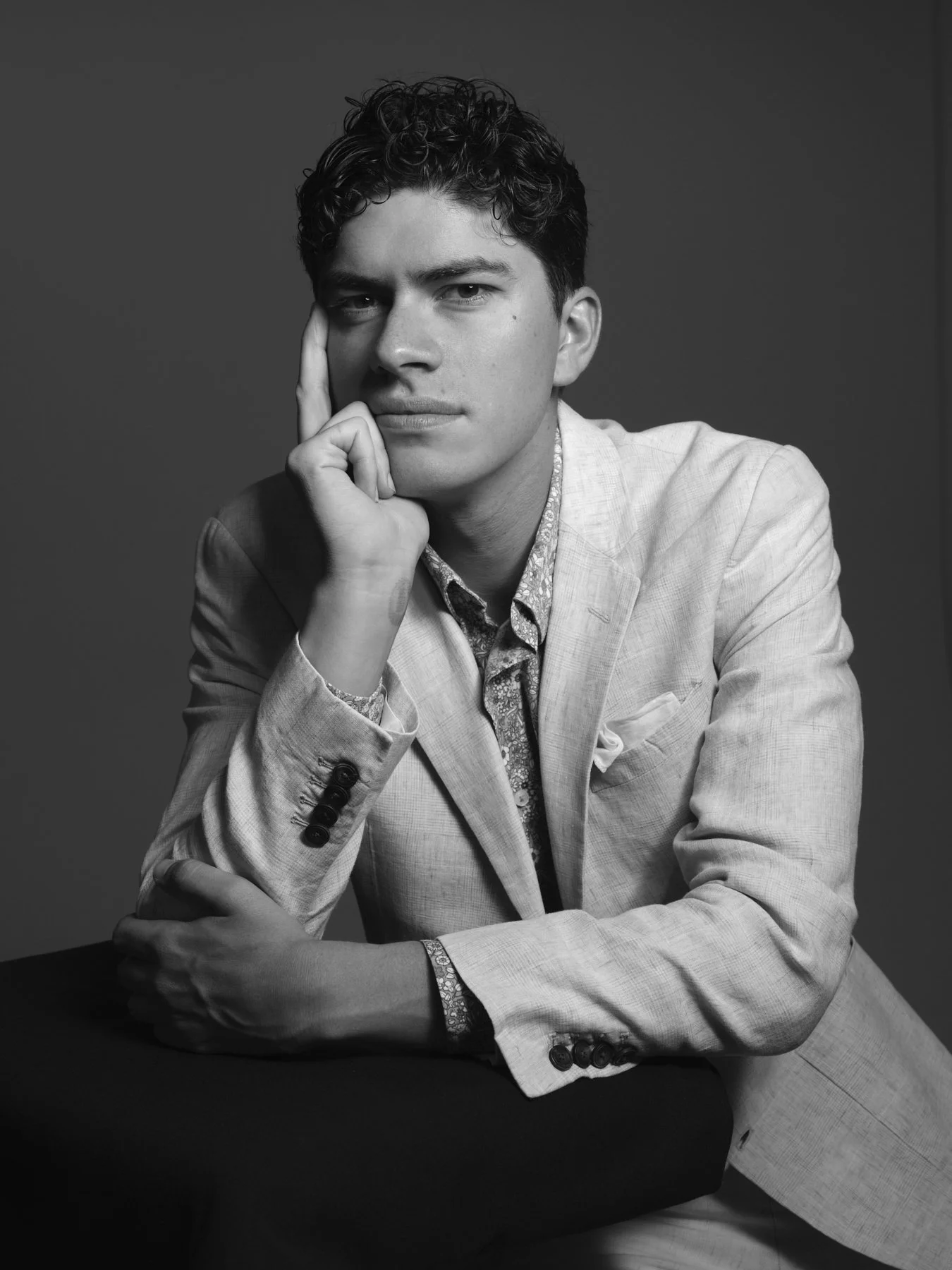
Emilio Madrid, one of theater’s most in-demand photographers, is white-knuckling it through awards season. Photo: Justin Bettman.
One recent afternoon — a sunny spring day, the perfect weather to trot the Highline and admire its fresh blooms along with hordes of amiable tourists — I found myself riding in a freight elevator in Chelsea. I was on my way to visit the studio of one of the most in-demand theater photographers in New York City, Emilio Madrid. As such, Mr. Madrid doesn’t have much time to stop and smell the roses.
On the day of our meeting, Madrid was running on a 47-day work streak. Though it’s fair to say that ten months out of the year mark Madrid’s “busy” season: its apex begins with the Golden Globes in January and ends with the Tony Awards in June; at the height of awards season, it’s typical for Madrid to work from 6 a.m. to midnight.
When he welcomed me into his studio, he betrayed no signs of fatigue, aside from a tinge of world-weariness in his voice — though that could be a side effect of his dramatic training. He apologized for the nonexistent mess, walking me past a freshly built hexagonal closet lined with mirrors, which his assistants had constructed with less than 48 hours notice for a last-minute shoot.
“Not many theater photographers have the infrastructure I do,” says the 30-year-old Madrid. He gestured around the sun-filled loft, the softboxes planted around the room like overgrown tulips, the elegantly draped backdrops, and the vanity stations awaiting the coming day’s bustle of makeup artists. “I don’t mean that to, like, peacock or anything,” he adds quickly. “A lot of the success is in the production aspect.”
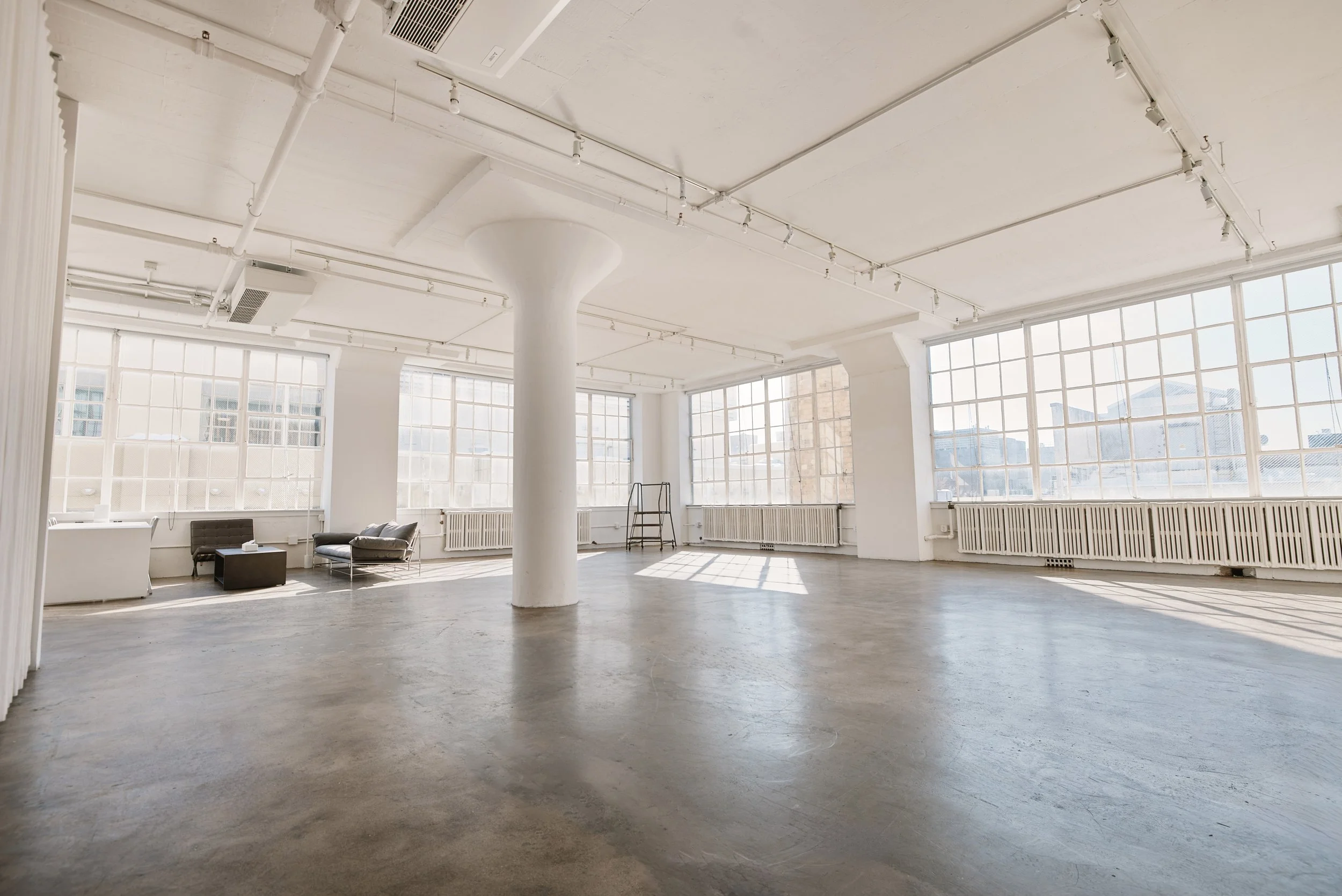
In 2022, Madrid opened Corner Studio, his photography studio, in a sunny loft space in Chelsea.
Emilio Madrid is not a name that you would know unless you’re in “the business.” Nor are the names Jenny Anderson, Matthew Murphy, Joan Marcus, Marc J. Franklin, Julieta Cervantes, and Evan Zimmerman. Yet, these are the people behind the visual identity of most of the shows currently on and off Broadway. They shoot the photographs that become the posters for a production, the ads you see while riding the subway (or while scrolling Instagram), the publicity stills in the review you read in the paper, the blinding screens you blink at while (God protect you) ducking through Times Square.
Madrid has shot key art and production photos for 10 shows this season, Death of a Salesman, Schmigadoon!, Well, I’ll Let You Go, and Weather Girl among them. After our interview, he was scheduled to shoot a portrait for an upcoming production of Cyrano and the poster for A Gay Masseur’s Guide to Happy Endings, a show that will be at Edinburgh Fringe. After that, editing. After that, a show. I ask if it’s for work or for fun.
He raises his eyebrows. “Work is fun.”
Madrid got his start as a professional photographer through his high school theater teacher. No, he wasn’t taking cast photos for Santa Barbara High’s production of The Drowsy Chaperone. Rather, his teacher’s wife, a real estate agent, learned that Madrid was a photographer and hired him to take photos of her listings. Soon, Madrid was taking his classmates’ senior portraits and photographing weddings.
He moved to New York City in 2013 to attend the New Studio at NYU Tisch. “I joke around that I was a theater major just so I could get all the actors to pay me to do their headshots,” Madrid says.
A self-described political junkie (he’s started his days with Politico ever since Mike Allen was sending out Playbook from his BlackBerry), it was an internship with Jon Stewart’s The Daily Show that sealed his fate as a photographer. Madrid was in his third semester at NYU, and the internship’s schedule was not compatible with the demands of conservatory training. He chose the internship, and followed it with another at Saturday Night Live, where he captured behind the scenes shots of digital shorts and live sketch rehearsals under head photographer Mary Ellen Matthews.
Though Madrid had dropped out of New Studio when he started with The Daily Show, he was still enrolled at NYU and acting in school productions. Paul Wontorek, then editor in chief of Broadway.com, was in the audience of a performance of Hairspray in which Madrid was playing Wilbur Turnblad. Leafing through the playbill, Wontorek read in Madrid’s bio that he was currently working in the photo department at SNL.
“The importance of writing a good bio,” Madrid reminds me.
Wontorek set up a meeting with him shortly afterward, a meeting that ended with an offer to become a staff photographer for Broadway.com. Madrid was twenty years old.
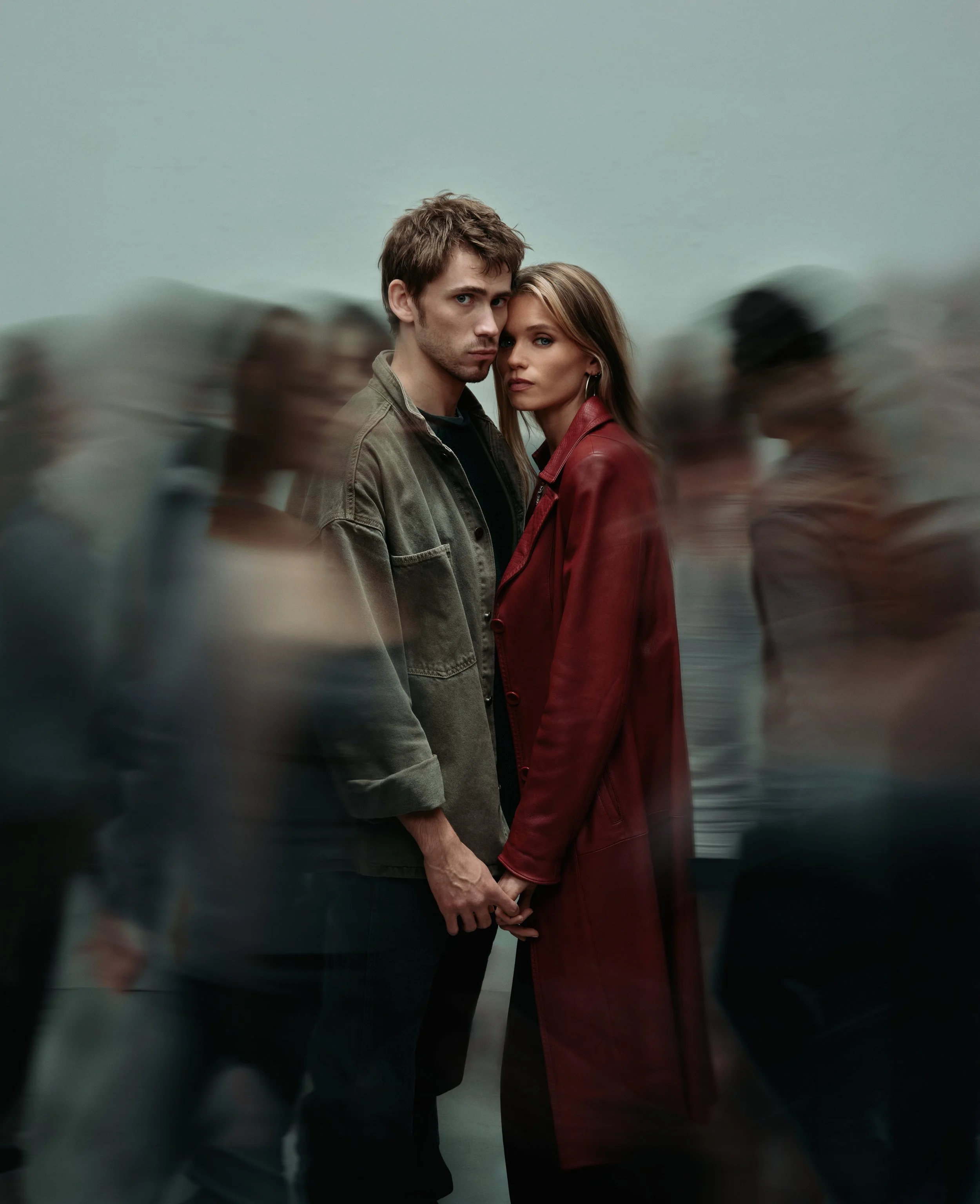
Madrid shot the key art for Joe White’s Blackout Songs, directed by Rory McGregor and featuring Owen Teague and Abbey Lee. Photo: Emilio Madrid.
“I was never trained in photography. It’s just the only way I’ve ever known how to make money,” Madrid explains. What that modesty obscures is the natural aptitude Madrid has for pulling off a shoot under tight confines — and the pleasure he gets from problem-solving.
Here’s how he describes mapping out Oscars Sunday in Los Angeles: “This person is at the Chateau [Marmont]. This one is at Sunset Tower. I know the best order to go to each hotel. I know where to park the car. I know I’m gonna ride a Lime scooter between these two locations. You figure out all these things that can compress and compress and compress.” Madrid moves his hands energetically, as if solving an invisible Rubik’s Cube. “You almost get the feeling of teleportation because you just know exactly how to change between all these places…. One year I hired a PA just to be a driver, so I could edit while we were driving between locations.”
“I was never trained in photography. It’s just the only way I’ve ever known how to make money.”
His record is photographing eleven subjects in one day.
“It’s a little addicting. It’s fun to kind of white knuckle it, when it all comes together at the last minute. Today is Friday, the Met Gala is Monday. I might be shooting two people. I might be shooting eight people. I don’t know. I’ll know on Sunday afternoon, and then it becomes my job to go, okay, how can I pull off those eight people in the two hours I have to shoot everyone?”
Madrid went freelance after COVID hit, and his first editorial commission was from Town & Country, shooting portraits of stir-crazy Broadway artists under lockdown. He opened his studio, Corner Studio, in 2022, and has been working steadily ever since.
Madrid credits his success to his managerial competence, bookkeeping skills, the production capacity of his studio, and his proximity to midtown. But there is an intangible, emotional factor at play too: trust.
“If your subject doesn’t want to spend time with you, you’ve lost the battle. Because they’re not gonna go with you anywhere you need them to go,” Madrid says.
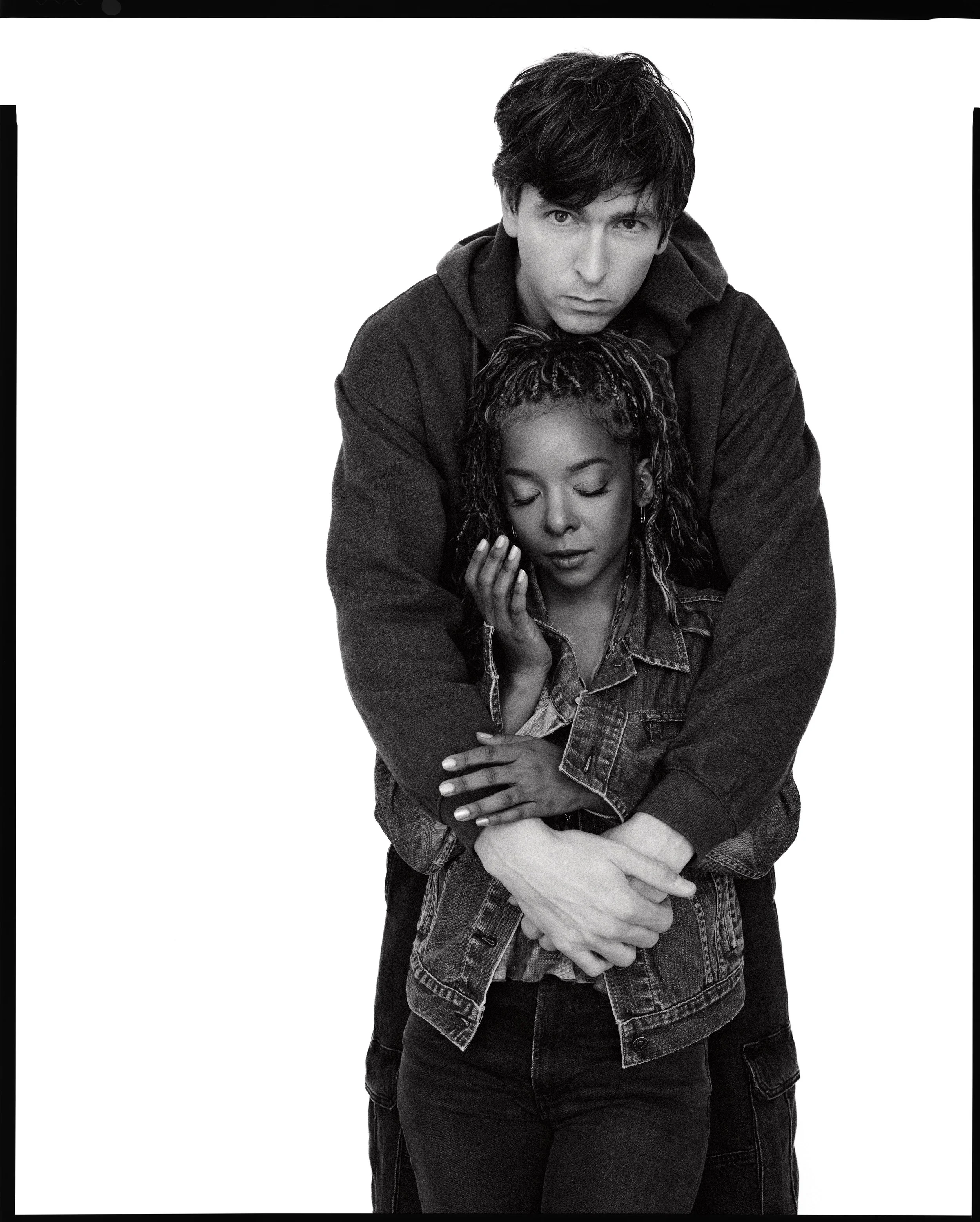
Two more subjects for Madrid: Nicholas Braun and Kara Young, who starred in Gruesome Playground Injuries by Rajiv Joseph at the Lucille Lortel Theatre. Photo: Emilio Madrid.
Whether he’s working with a seasoned Broadway veteran or an ingénue making their debut, Madrid attests that any actor has the capacity to freeze up on an editorial shoot, when the assignment is to be themselves (a sometimes uncomfortable request for people whose vocation it is to disappear into another person).
Madrid jokes that he is a conversationalist who takes photos. He talks shop with his subjects, discussing current plays and favorite directors, and will follow up a compliment about some deep-cut project from their past with a direction to turn a little to the left or drape themselves over the chair.
Around an awards ceremony, emotions run even higher. Madrid is shooting actors at their most vulnerable or tense, yet his connection to subjects creates a palpable ease to his photos. He was in the hotel room when Hannah Einbinder returned from the Emmy Awards, having just won for Best Supporting Actress in a Comedy. He captured her getting ready for the after-party: sipping champagne, silver alligator clips in her hair, salon smock over her Louis Vuitton dress as a stylist gives her a trim. The photos have all the giddiness of a slumber party. The camera feels incidental to their hanging out.
“I was an actor long ago,” he says. “So I have this sort of language of understanding and reverence for their work and the world that we’re in. If you can engender that feeling of familiarity, then you’ve won.”