

Emma Rosa Went and Olivia Rose Barresi on Collaborating Across 40 Projects
The director and star of Degenerates dive into the joys of Shakespeare, “virtuosic stupidity,” and being deadly serious about their craft.
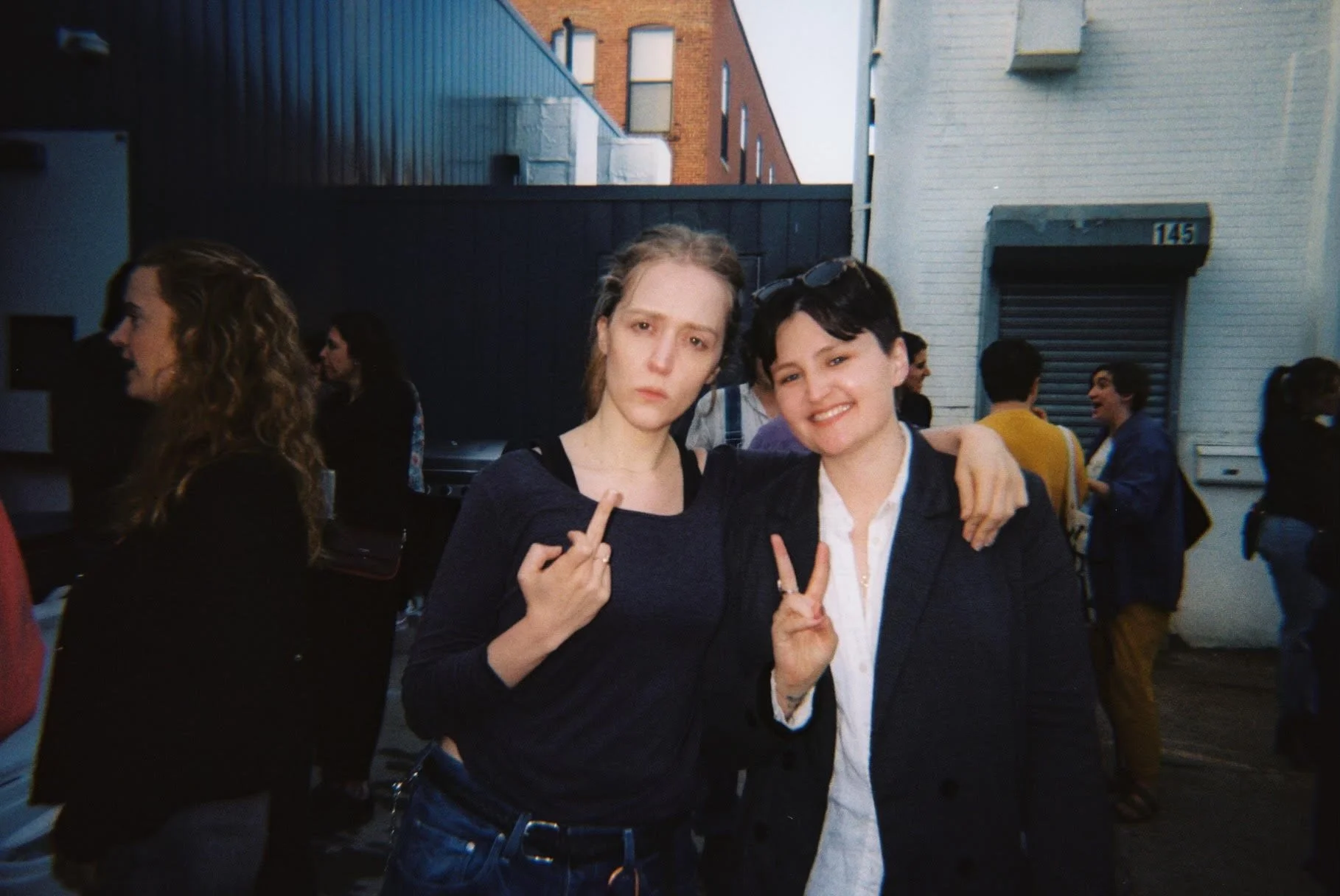
Actor Olivia Rose Barresi, left, and director Emma Rosa Went met in 2015 and have been frequent collaborators since: “the rest is history, sort of?” Photograph provided by Emma Rosa Went.
EMMA ROSA WENT: Hello, Olivia.
OLIVIA ROSE BARRESI: Hey, Emma. What’s up?
WENT: So we are on the floor of the Rosen Studio at Playwrights Horizons. We were gonna tell you guys, readers of The Hat, that we were on the roof at Playwrights Horizons, and we could lie to you because this is a print medium, but we don’t want to be disingenuous.
We tried to record on the roof, and then we realized that there might be too much wind and too many sirens and that we didn’t need to commit to the bit.
BARRESI: Not to deprive you of the beautiful sounds of the buses coming out of the Port Authority Bus Terminal, but…
WENT: So to that end, in preparation for this conversation, it is 2026. We’re at Playwrights Horizons. We met in October of 2015. I thought it would be fun to begin by asking you what do you remember of the day we met and the circumstances that brought us together?
BARRESI: I honestly remember finding the Playbill listing for the audition for Else Went’s (Emma’s spouse) play Boxcar. I’d just gotten out of school in London, and I moved back to New York City, and the Playbill listing hit me because they were people I had never heard of before. And something about the name of the play or the way the character descriptions were written jumped out to me, and I was like, “I don’t know what the fuck this is, but I need to attempt to meet these people and audition for this play.” Which is such a funny amount of weight as an actor to put on a fucking Playbill listing. But it did. I emailed them, sent my headshot, did the whole thing, got an appointment to audition at Champion Studios, which I think was on the 12th floor of a building on 38th Street.
WENT: Pour some out. It is gone, right?
BARRESI: They morphed it into ballroom-dancing class spaces. But I remember going there and walking into this little, tiny room at Champion Studios. And immediately feeling a sort of synergy with the people on the other side of the table, who were Emma Went, Else Went, and I think Daniella Benavides.
WENT: Yeah, who was producing for us at that time. So this was for Else’s play Boxcar, which was the first full production of a play of hers that I directed in New York City, and it was at the old Tank. This is like the different rings on a tree of like how long have you been in New York City in the theater? Which version of the Tank was the Tank when you were young? And it was the one at 46th Street next to the Actors’ Equity offices. And I very much remember the moment that you walked in [to Champion Studios]. Do you remember?
BARRESI: You have to tell this part. Because I was excited but miffed that I had been asked to prepare a side for what I perceived to be the wrong role.
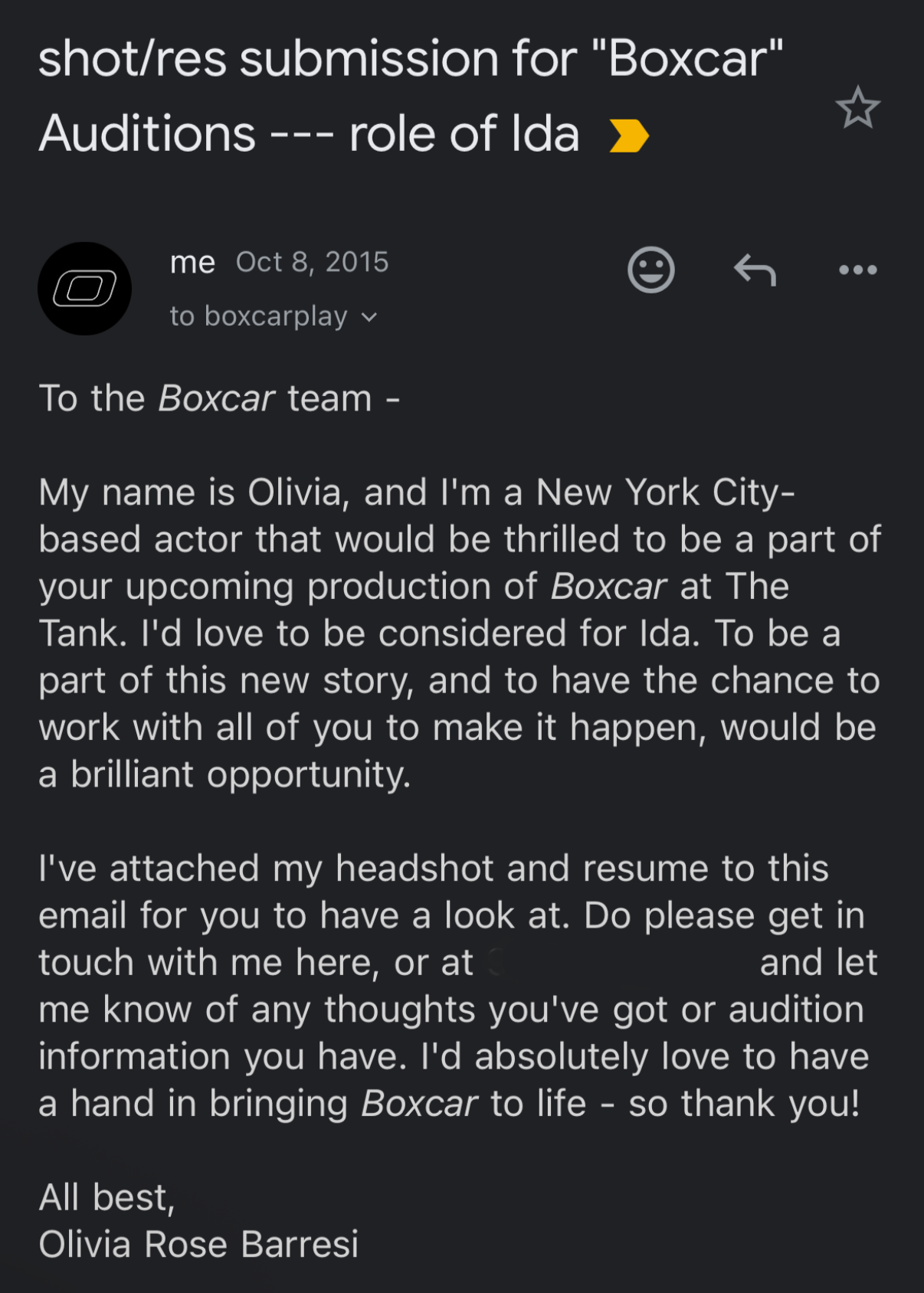
The beginnings of a decade of working together: Barresi’s original email to the Boxcar team after seeing a Playbill listing.
WENT: Boxcar is a four-hander. It’s a play for two men and two women, and it’s funny, we were just telling the story in the Degenerates rehearsal room the other day. The headshot that you submitted in 2015, something about the angle, made you look shorter and younger than you were.
BARRESI: I get that.
WENT: I remember looking at the resume and feeling like it was out of step with the girl in the photo in an interesting way. Because I was like, “This girl looks sort of ingénue-y and intense, but in a kind of orphan who just burned down the building kind of way.”
BARRESI: I don’t disagree.
WENT: There was a sort of feral quality about that photo. And you had just played Brutus in Julius Caesar, and Richard II at LAMDA. I remember looking at the classical roles on the top of the list, and looking at the face, and being like, “Who the fuck is this?”
Boxcar has two women, and one of them is sort of significantly younger than the other, and is kind of a feral runaway. And so we were like, “Okay, let’s try that.” Then I remember the moment that you came in and spoke, and my surprise, of being like, “Oh, that’s not what I thought that person was gonna sound like.” We of course didn’t know that you were thinking this, but even before you left the room, Else and I were writing notes to each other. Immediately in the room we were like, “We’re sorry. Read the other part.”
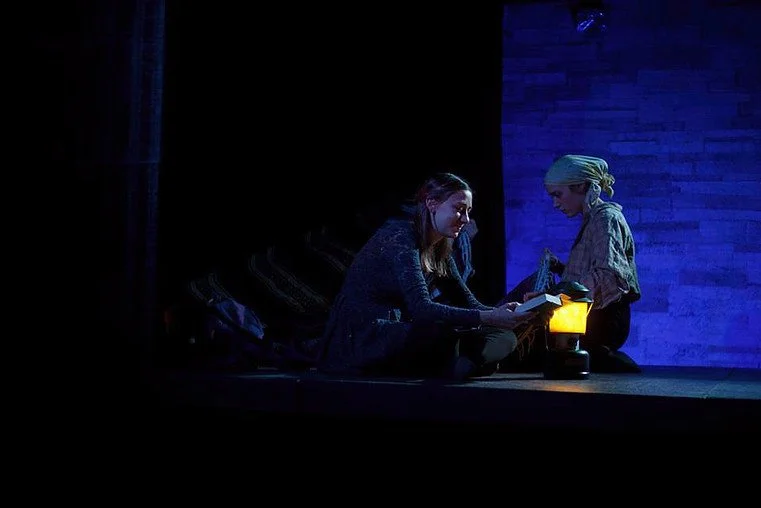
Else Went’s Boxcar at the Tank, 2016, directed by Emma Rosa Went and featuring Olivia Rose Barresi. Photograph provided by Emma Rosa Went.
BARRESI: And then I did, and then kind of the rest is history, sort of?
WENT: There has not been a year in the entire intervening decade where we haven’t made at least one thing.
BARRESI: Any time it’s relayed to anyone else, any other friends or colleagues or acquaintances, they’re like, “That’s insane.” And I’m like, “is it?”
WENT: At the Mercury Store spring party three years ago, when we were in the middle of the big run of workshops that led to Initiative being produced, somebody was like, “Whoa, you guys have had so many projects together recently. How many is that total?” And if you count workshops and readings, anything public-facing, the count at the time was 30. And we’ve made a lot of stuff since then.
BARRESI: We have to be approaching 40 by now.
WENT: I’m sure we are. In more ways than one, we are approaching 40.
BARRESI: Oh my. ... I don’t remember how old we are, but you know that.
WENT: It’s a myth.
BARRESI: It’s a myth. I assume most people are younger than me. Any time we’ve been in work scenarios where age comes up, I look at you and I’m like, “How old am I?” We are at a point where I do mark time through the projects. The “before this one,” “after that one.”
WENT: Part of what we should do is tell the people what it’s all about. We’ve made a lot of new work, and we’ve also made a lot of Shakespeare together. And quite a bit of it has happened not in New York City.
BARRESI: The first one, funnily enough, was Much Ado About Nothing.
WENT: It was 2016, and it was an all-woman production that I did at the Brick in Williamsburg. It was so fun, and you played?
BARRESI: Benedick.
WENT: Yes, you did.
BARRESI: Which was really fun.
WENT: It was still to this day one of the funniest versions of that speech at the end of the gulling scene that I’ve ever seen.
BARRESI: “I will be horribly in love with her.”
WENT: “Horribly in love with her.” Yeah.
BARRESI: When we got to Much Ado About Nothing, which was within the first year of our knowing each other, it felt like such a homecoming to be able to have a space that was like, “Wait, to be goofy and to be silly is part of the work and can indeed be the goal.” Also what an incredible lesson, what an incredible thing to forge with a collaborator, a confirmation of the fact that Shakespeare doesn’t have to be something to bow down at the feet of.
WENT: That was the first one, and then our next one was As You Like It, which we made at the Scranton Shakespeare Festival, which is a crazy place.
BARRESI: A place that neither of us had been.
WENT: They hired me in 2018 to do a production of As You Like It in which you played Rosalind. Just to locate ourselves for the reader, what were we, 27, 28? Middle 20s.
BARRESI: Yeah, that feels right.
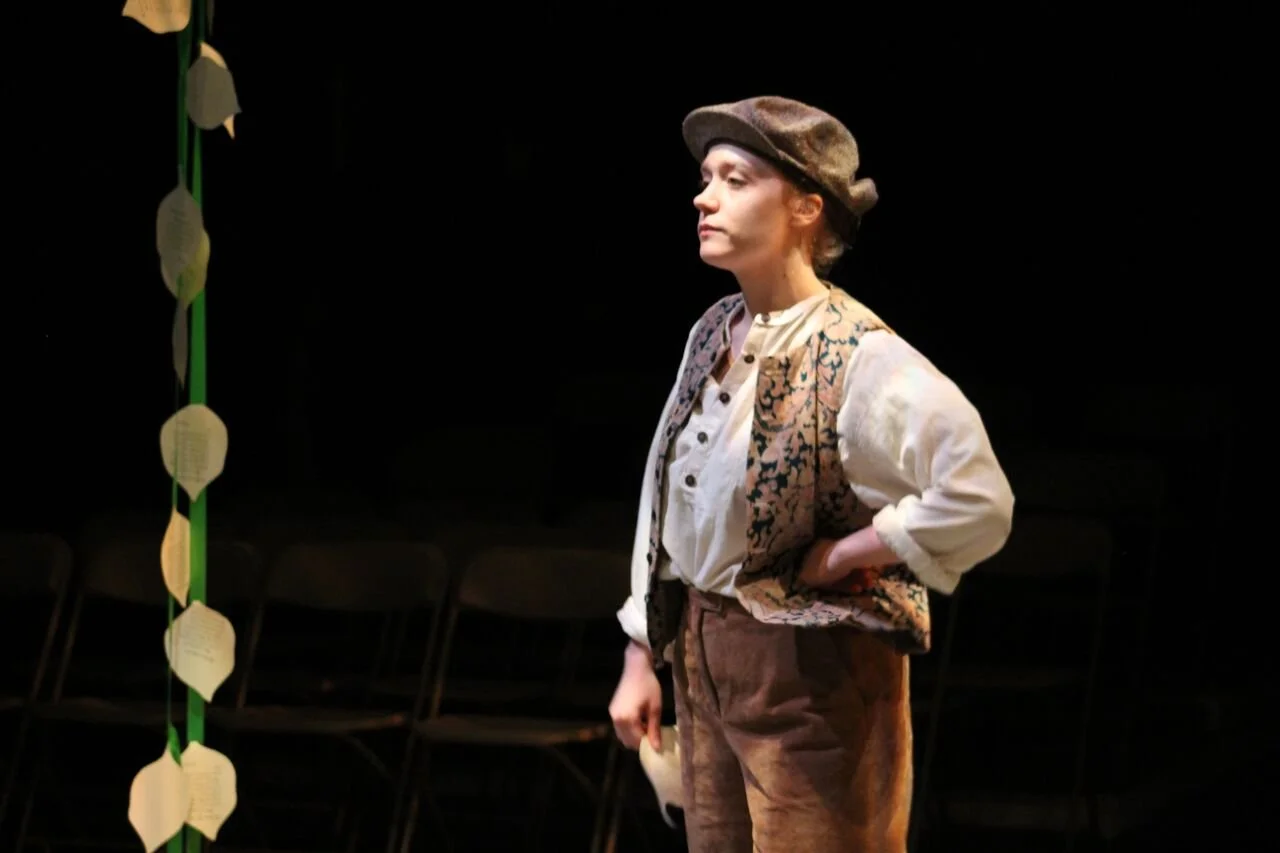
Olivia Rose Barresi as Rosalind in As You Like It, directed by Emma Rosa Went, at the Scranton Shakespeare Festival in 2018. Photograph provided by Emma Rosa Went.
WENT: That was our first job out of town together. And it was really fun.
BARRESI: It really did feel like we are going out into America to bring theater to the people. And I will say, Scranton, Pennsylvania, the people of Scranton, it felt like they were just excited to engage with the work. We couldn’t have asked for a better audience.
WENT: That’s something I really love about doing theater in towns across America that are not New York: people have a different point of entry to the work when they’re not constantly presented with the option to see plays.
Everybody here enters in such a spirit of, “Well, I could see a play any day of the week, so I better have a real reason,” you know? Whereas if you take a play to a community that doesn’t have a lot of access, those people are hungry and prepared maybe in a slightly different way. They have a more present need for the thing. It’s more special for them.
BARRESI: I totally agree. But also going out to a new place you’ve never been, in more nature than you’re used to, to do As You Like It, is only ever helpful.
WENT: It was what I needed at that point. 2018 was a big year for me because I had just done a couple of plays in the city. One of them was the premiere of Else’s play Old Names for Wildflowers, at the Tank. By that time, they had moved to the 36th Street location. And that piece was huge. It was a co-pro with the Tank, so it was sort of in the core season. And it was a big piece. It had a lot of people. It was a long play, it was a period piece, and in a way that people I think are coming to associate with us, it was full of sex and violence. It was an intense process and it’s a very dramatic play and there was something about having As You Like It sort of for dessert. Going to Scranton and doing As You Like It with you in that community was one of the first times as a director where I felt really proud of having tailored my vision to the resources in a really successful and symmetrical way.
I have a very vivid memory of walking down the street in Scranton on the way to one of the opening shows, and really feeling like, “I did it. I did what I set out to do here.”
BARRESI: I felt that as an actor as well. Like, by nothing but the sweat on our backs or whatever the fuck, we pulled that together in such a gigantic way. We must have talked about it at the time, but I don’t know if we ever got into the fact that we did something in that production that I first saw in a production of As You Like It in 2009 that was one of my most formative theatrical experiences as a person.
WENT: What was it?
BARRESI: I saw an As You Like It at the Globe, I think in 2009, alone, standing in the stalls. And of course they rained love notes down that Orlando had written from the balcony. So they just covered not only the stage, but everyone standing and watching, and that is definitely an image I will never forget. But then we got to do it in Scranton, for Orlando’s love notes.
WENT: We performed As You Like It on the stage at the Scranton prep school. And it’s a kind of well-funded private high-school program. And one of the things about working in any room in an educational building or a setting like that outside of New York City is that you get tools that you wouldn’t get in New York until you’re in a space like Broadway or a certain kind of Off-Broadway house. That room had a fly system. And I had never been able to work with a fly system before because I didn’t have any money. One of the exciting things about that production was the way that we manifested Arden and the way that certain things flew in. We did it in the alley, the audience were on the short sides, and on the long sides there were these curtains of streamers made of surveyor’s tape.
And in Orlando’s moment right before he distributes the poems, the letters all over the forest, we flew a streamer down over the actor, and it was attached to a bag that was rigged to drop all of these love letters that were shaped like leaves. And so he yoinked the rope, and then all of these love letters that were in the shapes of leaves rained all over the deck.
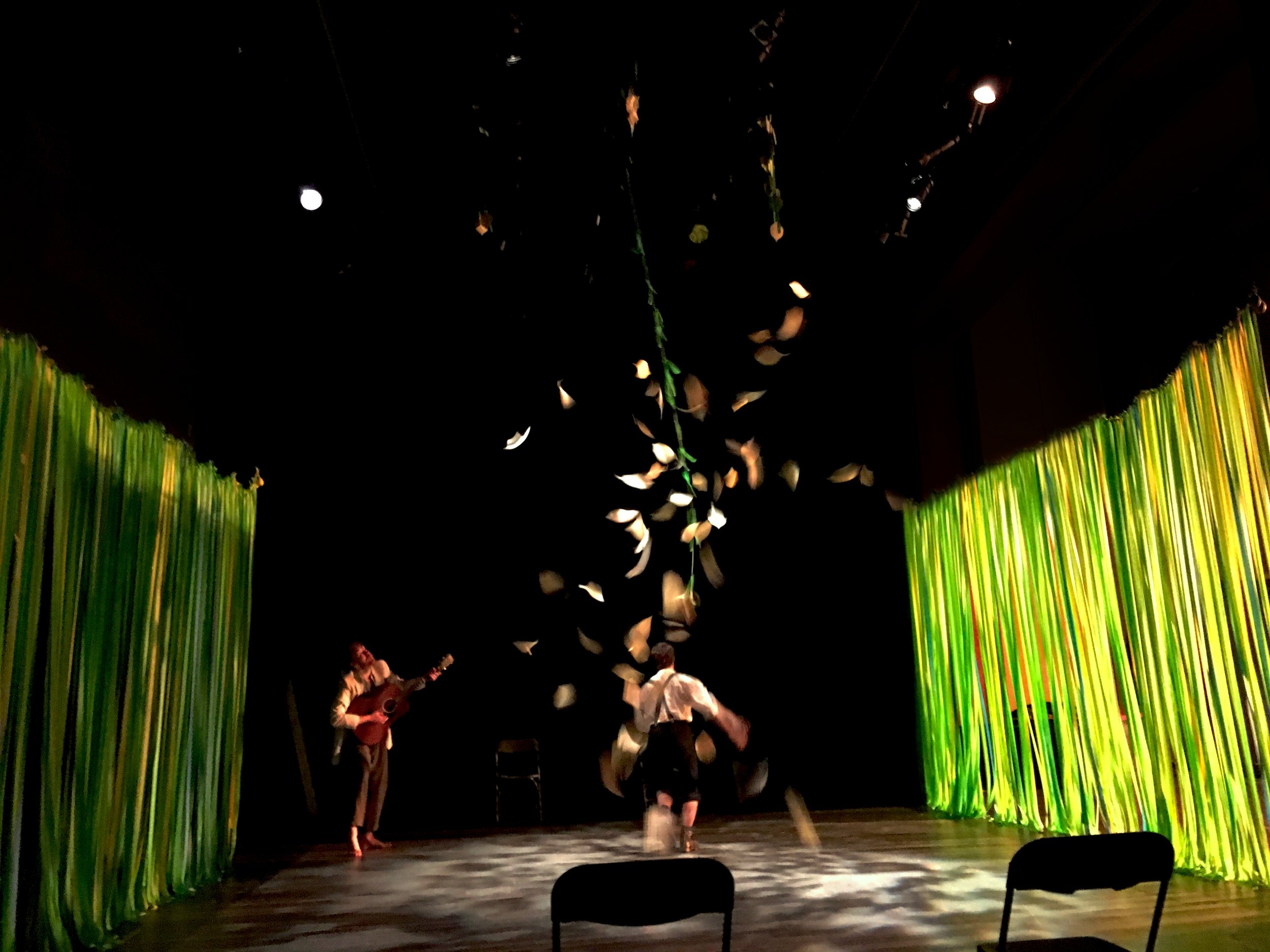
Orlando’s love letters, shaped like leaves, rain down in the 2018 Scranton production of As You Like It. Photograph provided by Emma Rosa Went.
BARRESI: It was incredible.
WENT: I was proud of it. And actually, interestingly, if people saw my production of As You Like It for Mobile Unit for the Public Theater this summer, we weren’t able to manifest that image because it’s an open-air touring show with no ceiling. But there was a little homage to the Scranton production in that production in the sense that when the gate opened and we moved from the court into Arden, the upstage backdrop was a curtain made of tape.
BARRESI: And it was fantastic.
WENT: Our friend Will Cary was in both the Scranton production with you and he understudied all of the male roles in the tour that I just did. When Will saw the tape when the gate opened he looked at me and he was like, “Ohhh,” just ’cause it reminded him of that show.
BARRESI: I never would have thought that highlighter green and yellow surveyor’s tape would be something that would make me feel so good.
WENT: Remember when we got a little bit high the day that we were creating that curtain? Us and a couple of other people, as we were unspooling the tape, it was sort of off-gassing like a plastic fume smell. And it was quite horrible. But that was in the days when we were definitely constructing or helping to construct our own scenic objects.
BARRESI: One hundred percent.
WENT: Getting high on our own tape, as it were.
BARRESI: Worth it.
WENT: The following year we did Richard III at Scranton, which was a very exciting experience. And then 2020 happened, which is its own thing. But we did a Zoom play that was actually quite successful during that time, and we did a radio play for Scranton of Henry IV. And then in 2021, our first production back from the pandemic was A Midsummer Night’s Dream, and we did that at Playhouse on Park in West Hartford, Connecticut.
BARRESI: I know that Rosalind is the female Hamlet, and I don’t disagree with that. But is it fucked up that sometimes I wonder if Helena is actually, like, weirdly the rival to that?
WENT: Let’s talk about that.
BARRESI: This is a crazy thing to say.
WENT: I was gonna ask you, and obviously this is a broader question that can loop over Shakespeare and new work. But I have a feeling that you’re gonna wanna talk about Helena. One of my questions was, do you have a favorite or favorites of our collaborations?
BARRESI: I am one of those people that feels like A Midsummer Night's Dream is a perfect play. I say that as an individual who as a child was like, “I’m too cool for this. I don’t get it.” It was only when I got older that I realized that I feel like it is this perfect jewel box of mirrored actions and souls and people. And in that, there are some opportunities to just be virtuosically stupid.
WENT: “Virtuosically stupid” is a phrase that I would love to underline.
BARRESI: Hugely. Yes. And virtuosically stupid does indeed speak to half of the things that we have done together. That spirit is genuinely really important. And for A Midsummer Night’s Dream, very human.
WENT: I was just remembering being in the audience one day when you said the line, “I’m as ugly as a bear.” As you said that, this woman out loud—and it’s funny ’cause it wasn’t like a gasp or a word, it was a whole sentence—this woman in front of me turns to her companion and goes, “I feel like that sometimes.”
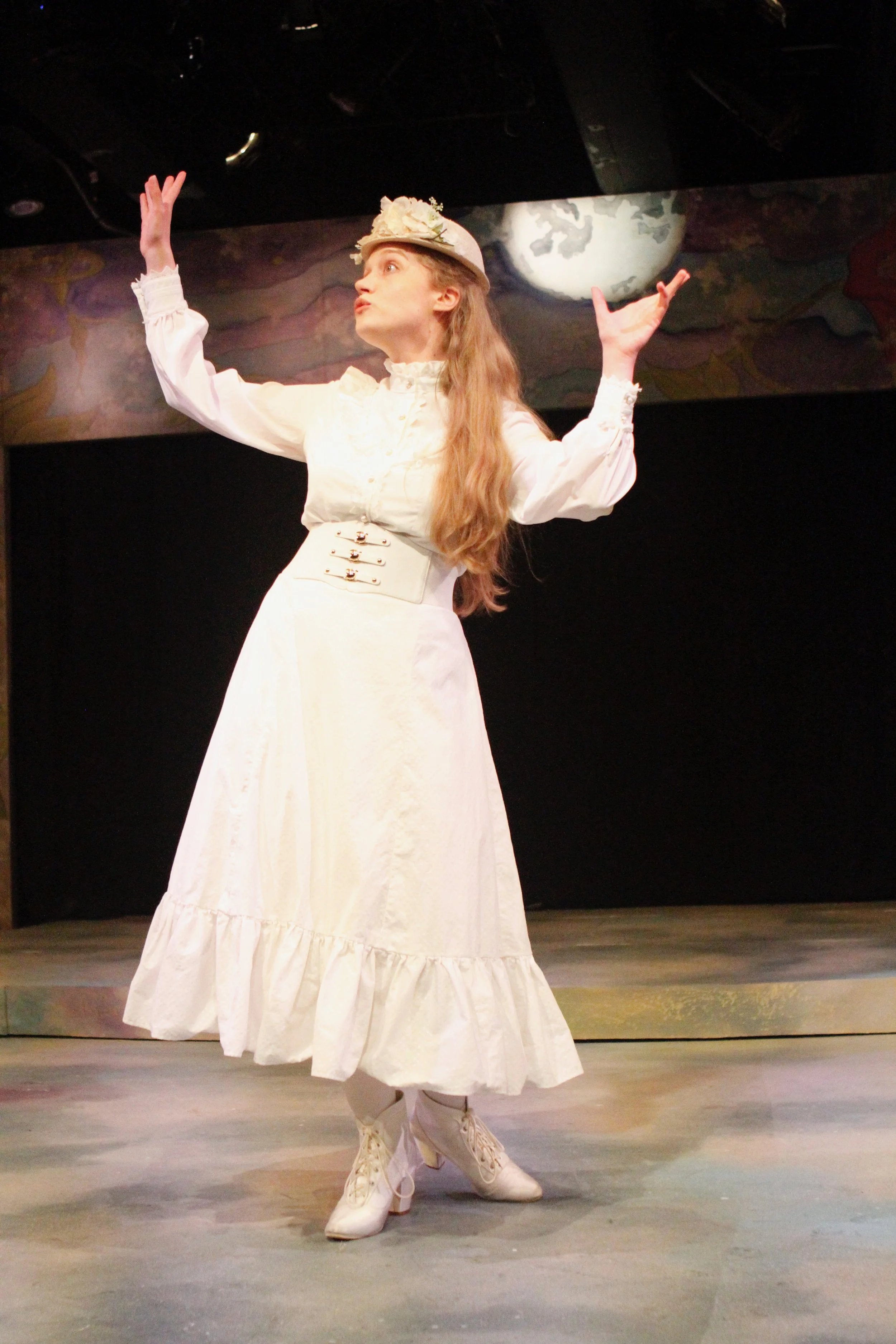
Olivia Rose Barresi as Helena in A Midsummer Night’s Dream, what she calls a “perfect play.”
BARRESI: And I feel like at best, that is what Helena needs to evoke in people, and I don’t understand why directors, productions, actors, why people insist on Helena being an ugly duckling. Because it does not make sense textually at all. Why should we assume that she’s lying when she says that her and Demetrius dated? Because everyone else also agrees with that.
WENT: That’s right.
BARRESI: Why are we assuming that she and everyone, and their entire community is wrong about the fact that they dated, they were in love, and she’s hot?
WENT: That’s right. And so weirdly, just to editorialize for a second, that is not the prevailing attitude in production. You and I constructed a very different take. And the moment that epitomizes it for me is the moment in the speech at the very beginning, her first direct address to the audience after Lysander and Hermia have been like, “We’re gonna go. Keep our secret. Bye.” And then we actually did a thing where you stepped off of the little proscenium that was part of that set design. You made the first overture toward the audience in that production, and we brought the lights up, and you made direct eye contact with everyone, and we were like, “Oh, whoa, she’s talking to us.”
And the line in the speech where she says, “He will not know what all but he do know,” and the way that you looked at us for confirmation for “what all but he do know” was like, “I’m hot shit, right, everybody?” And everybody agreed.
BARRESI: And off we went.
WENT: We were like, “That’s our girl,” in a way that I think that’s not how people engineer Midsummer often. As I’m flipping through my memory Rolodex of all of these performances, one of the things that ties in all your performances is that you are an actor who has a very specific ability to be with an audience. The art of relationship crafting with an audience is a really specific part of performing. It was also true of Initiative, which we should talk about.
BARRESI: Yes. Which itself was about 10 years…
WENT: There’s lots of different numbers that are floating around in the ether, but it is only almost 10 years for some members of the company, but you are one of those. Else wrote the first draft of the thing that became Initiative in 2016. So this was a pretty jam-packed year, because we met at the end of 2015, we did Boxcar in the top of 2016, you and I did Much Ado, and like three, four weeks later, we presented the staged reading of the thing that was the first script of Initiative, also at the old Tank, and it was called Saving Throw then, which is a different RPG term.
BARRESI: And there was a janky microwave somewhere on that floor.
WENT: It was actually a popcorn machine that sat by the booth.
BARRESI: We popped popcorn and we gave it to the, like, 12 people who were there. And it felt so weirdly right.
WENT: It did. And the members of the eventual Initiative company who were in that reading were you and Harrison Dunsmore, who went on to play Ty. Harrison was reading a different role, but you were reading Clara, the OG-est draft of Clara. The initial kind of gesture of what became Initiative was the whole play took place in the basement. And it was a very different version of itself. And then we put it away for a couple of years while we all did other things. And then when Else had a fellowship at Playwrights Realm in 2018–19, that was when we came back to the script, and she revamped it, and it accordioned out in that kind of tremendous way.
And in 2018–19, we added Andrea [Lopez Alvarez], who played Kendall. And Greg [Cuellar], who played Riley, and Carson [Higgins], who played Lo. And I think that’s it. Harrison stayed with it. You stayed with it. And then in 2023, when we did the reading at the Spotlight series at the Public, that was when we added Jamie Sanders, who played Tony, and Christopher Dylan White, who played Em.
But back to the relationship with the audience. I think people would be pissed if we don’t talk about Clara.
BARRESI: People probably would be.
WENT: For them among us who are our friends and fam who saw Initiative, Clara has a unique role in that script. That production is concluded, so I feel like we can talk about the ending without feeling like we have to guard—
BARRESI: Skip a few paragraphs ahead if you don’t want to know, reader.
WENT: Part of Clara’s relationship with the audience is that after the cataclysmic tragic event—after the car crash that kills Lo and Riley at the end of act three…
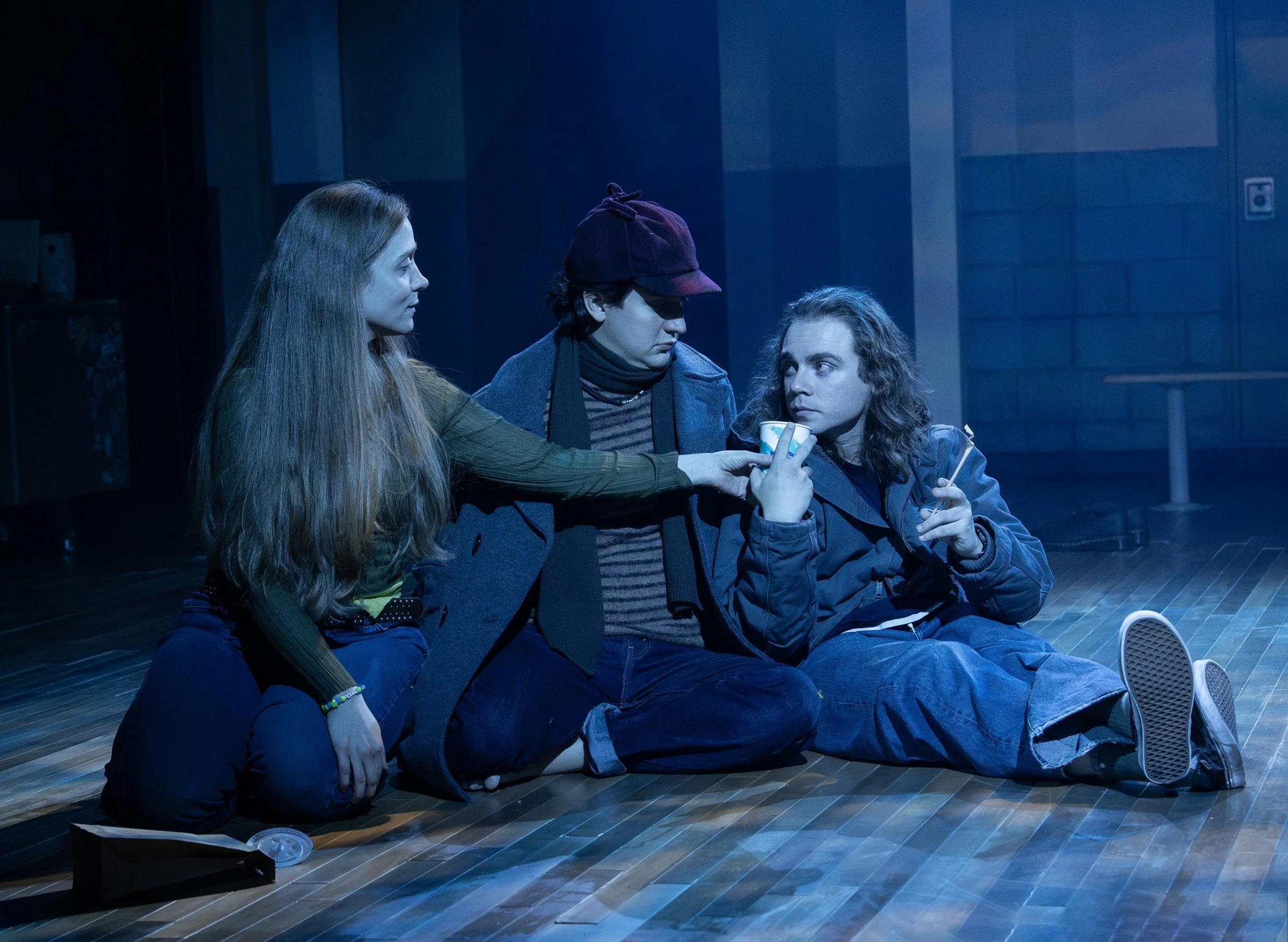
Olivia Rose Burresi, Greg Cuellar, and Christopher Dylan White in Else Went’s Initiative at the Public Theater, directed by Emma Rosa Went. Photo: Joan Marcus.
BARRESI: The two people who, in a sense, have been the most important to her life as a teenager.
WENT: Lo and Riley die at the end of Initiative, and the final gesture of the theatrical shape of the play is that Clara has to perform a valedictory speech to her graduating class, which is where we brought the house lights up, and you had to do about six or seven-minute—
BARRESI: Is that how long it was?
WENT: It’s a big speech at the end of the play to the audience who have been on the five-hour journey with you, now in house light so you can see them. In a way, it was that gesture that we built the entire set design around. Initiative is a very multi-location play. Quite early on, some of the first design conversations we were having were about what room was gonna be the sort of envelope of the scenic design. And the only idea I ever really had was it’s the high school gym, because really we’ve been in the gym with Clara all along.
BARRESI: We did joke that we were doing a Glass Menagerie, and she was Tom. But in a sense, she really was.
WENT: She is in a way, yeah.
BARRESI: I mean, with the audience, of it all—oh, man, how do I put this? There were certain nights when the lights would come up, and I would look at people to do the speech, where I felt earnestly like I was psychically damaging them. To look at them and take them in where they were at, which was already by that point relatively distraught given the passing of these two major characters and everything we had been through. But I hope, and I think, and I know you felt this way, we did arrive at a place where I needed them as much as they needed me. We needed to actually hold each other and hold each other’s gaze in that moment and walk out of that space with the hope between us.
WENT: It was always such an important part of the shape of the theatrical event because it’s aftercare. And actually, Else and I think about aftercare a lot as part of how a drama is created. I think about it a lot in Degenerates, of course, for reasons that people will soon come to understand.
And without giving too much away, you are also part of the instrument of the aftercare in Degenerates as well.
BARRESI: And I feel that very much. It feels important.
WENT: And it is. And Initiative would be too violent an experience without the valedictory speech.
It was live processing, as you were saying, of you needing them, them needing you. It was an acknowledgment of the emotional commitment that everybody has made to the room over the past five hours. And you were the vessel through which that commitment was acknowledged, and, lovingly withdrawn.
BARRESI: Absolutely. I think they needed to be seen in what they had gone through.
WENT: And in a way thanked, and in a way commanded to rise. Told to leave the room.
BARRESI: And while that doesn’t happen in Degenerates per se, it does feel important that there is—it is hard to say without giving too much away.
WENT: It is. I was genuinely just inspired by the idea of you speaking with the audience when we were talking about Shakespeare. And it just struck me how important that is, how resonant that is, with what you’re here to do in Degenerates.
In our work, if there is a person with a unique relationship to the audience, it is often you. I would like to turn in a way to the triangle of you and me and Else as a collaborative machine. I think it has to do with your specific attributes as a performer, and your grounded-ness and quality of presence that is direct and accessible to the audience.
But also there’s a meta whereby I feel like Else and I instinctively at this point use you to communicate to the audience. Because you are part of us, and so you are part of the dramaturgy. You are also often the voice of the play because you are one of the voices of the team. You are speaking out of the apparatus of the thing that made the play in a different way than anyone else.
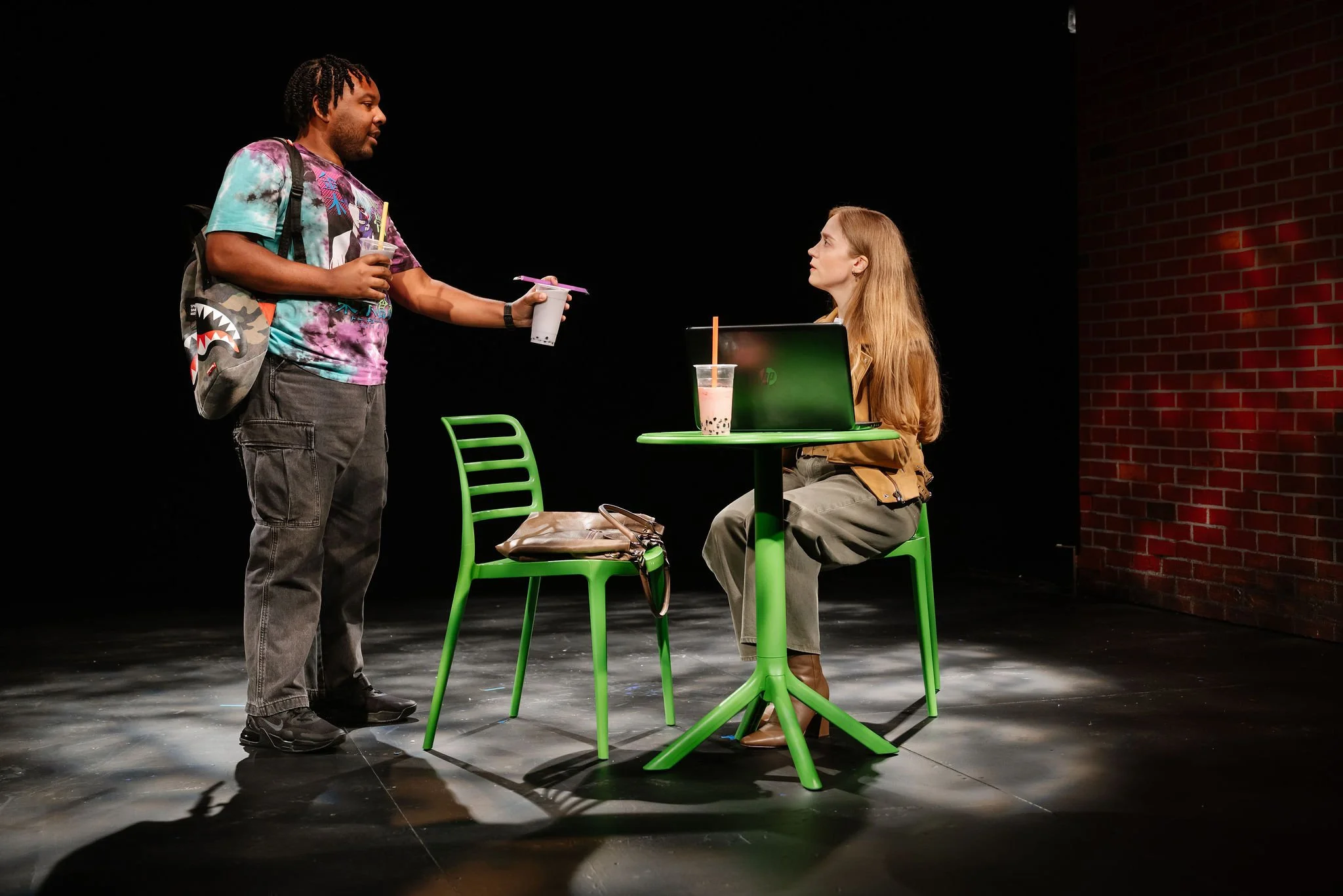
Tyler Nowell Felix and Olivia Rose Barresi in Degenerates at Playwrights Horizons. Photo: Jackie Abbott.
BARRESI: Wow. Oh my God, I don’t even know how to respond to that. But I feel it deeply in my bones, and I think it is true. And I think people will feel that in Degenerates very much.
WENT: In a different way than they felt it in Initiative. But it’s a similar principle.
BARRESI: Aesthetically and communicatively, there are ways in which me and you are quite different as people. But something that makes you very unique as a director and something that we have found in common that has carried us through these 11 years has been that you are always going to be a director that advocates for the complicated choice of, what if these two people loved each other?
WENT: Any two people.
BARRESI: Yes. Like earnestly any two people. As a hallmark of your process, you create a space that is incredibly close and charged in the safest way for the actor to actually make that sometimes scary, sometimes awkward, sometimes confronting choice of, instead of playing that I hate this other character—my sibling, my love, the person I’ve dated, whatever—I feel safe enough in this space that Emma has created to experiment with, what if I do just love that other person?
And I do not think that is a choice everybody makes all the time. Sometimes it can feel more interesting to choose hate in a strange sort of way.
WENT: People assume that conflict requires that heat or resistance. I’m thinking about Degenerates now because we ran the play today, and I watched the play today for the third or fourth time this week, that love is so much more frightening than hatred. And risk is actually what creates drama, not attack. Not malice. Real drama is always about risk, and nothing is more risky than loving.
BARRESI: Exactly. And I think you are unique in that. But you create the optimal conditions for every actor to actually try that on.
WENT: Thank you. I hope that is a part of a hallmark of my process. I would love to think so.
BARRESI: I have a question for you. You’re going to have to remind me of something that you first shared during one of our Initiative workshops in 2024. But you also shared it during this very interesting, beautiful, I hope we get to do it again, adaptation of Three Sisters that Else wrote, that we worked on in the summer of 2025. I’m putting it out to the universe.
WENT: That’s on our bucket list. Let’s do it.
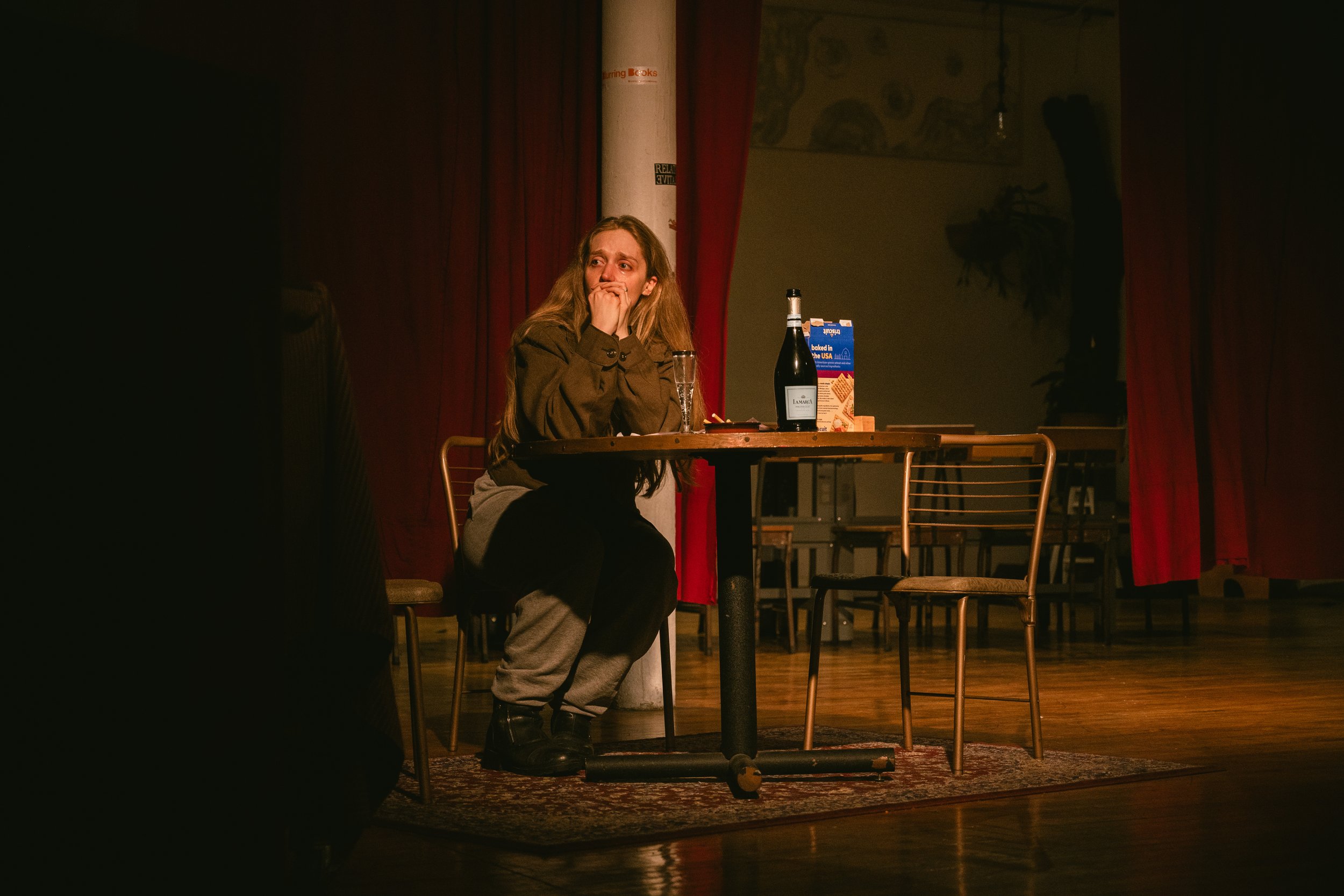
Olivia Rose Barresi is Irina in Else Went’s adaptation of Chekhov’s Three Sisters, directed by Emma Rosa Went, in 2025. Photograph provided by Emma Rosa Went.
BARRESI: You shared a quote from an essay about the refinding of the images in which one’s heart first opened.
WENT: I was quoting Sam Mendes in a New Yorker article from years ago quoting, I think, Camus. And the quote was, “A man's work is nothing but this slow process of rediscovering those two or three great and simple images in whose presence his heart first opened.” That’s what it is.
BARRESI: Off the dome, can you give me one or a couple of those images for you?
WENT: In the theater, specifically? Or anything?
BARRESI: It could be any art.
WENT: One of them was in a production of Midsummer I saw when I was probably 12 or 13 at OSF. My dad, I think, would have taken me to that show, and it was an image of Puck in a lighted chair. The chair was full of lights. And all I remember is the silhouette of little fairy lights. And this man, I think it was an old Puck—I love that choice.
And he was in this chair, and the chair got pushed out into the center, and it was covered with vines and flowers. It had all these little lights in it, and there was something so beautiful about this little guy recumbent on this chair, and just the chair itself and what it looked like. It was one of the first indelible theater images that burned into my memory, and I remember thinking, “Oh, that's amazing. I love that.” There's so many.
BARRESI: We can’t reduce it to one for either of us. But give me another one.
WENT: This is also an OSF design choice, so I feel like I’m copping out in a way ’cause there’s so much more. It was the first August Wilson I had ever seen. I would’ve been a proper teenager, like 16, 17. And I saw this production of Gem of the Ocean, and it was a pretty naturalistic set—for people who know August Wilson’s Pittsburgh Cycle, Gem is one of the ones that takes place in a house, and I think it’s the furthest back in his decades cycle. And the set had a wooden floor, slatted floor and walls, and you could see through the window the landscape beyond, and the garden.
BARRESI: Yeah.
WENT: The play is named for a slave ship that brought the ancestors of the characters to the Americas in the transatlantic slave trade, and it’s obviously a horrifying and sort of spectral presence in the play. There’s a moment where a character is forgetting their roots or something, and the character Aunt Ester, who is this sort of mystical figure who’s, like, 200 years old, says, “You gotta take a ride on the Gem of the Ocean.” And this production did this design choice where as soon as she said it, there was this crack of thunder and crashing of waves, and then this creaking, like the deck of a ship.
The light changed dramatically, and the set became the ship, and all of this light that hadn’t been used yet shot up through the boards of the floor.
BARRESI: Oh my God.
WENT: It was so extraordinary. I remember being absolutely rocked to my core, absolutely riveted, because it looked like a house one minute, and as soon as she said it, all this light rocketed through the floor. I was like, “Holy shit, that is what directing can do.”
BARRESI: And you’ve been chasing that in your art ever since.
WENT: I have, in a lot of ways.
BARRESI: Ever since you shared that quote, and earnestly in advance of this interview, I’ve been thinking of that quote in the same type of vein.
WENT: What’s one of yours?
BARRESI: I’ve got two simple ones, but they’re not theater.
WENT: That’s cooler.
BARRESI: No, no. It’s all as cool as each other.
WENT: What do you got?
BARRESI: The one is from this piece of music that I learned and got to sing when I was in high school. We’re similar in that we were choir kids.
WENT: I went to choir camp, even.
BARRESI: That’s incredible. I first heard it in 10th grade, and then I got to sing it at this concert in Stamford, Connecticut, at this church called the Fish Church. It was a very Brutalist architecture church, but it was in the shape of a fish. We rented it out and actually got a small orchestra to play John Rutter’s Gloria.
WENT: Gorgeous.
BARRESI: It has three movements to it, and there is a particular movement of it in part two, where there is no singing and it is just like two trumpets and like a flute. It is about a minute of this quite long choral and orchestra piece that I think about all the time. There’s a moment in Initiative where something is flown in from the ceiling.
WENT: The amulet?
BARRESI: Yeah.
WENT: You can say it.
BARRESI: In D&D world, there’s an amulet that is flown in from the ceiling. Not a moment about, like, the mystery of faith per se, ’cause it wasn’t about that. But I would think of this piece of music from John Rutter’s Gloria, movement 2, every time it happened. I carried the image, the music, with me since I was quite young. And it has now been made real through the art that we’re doing together in this moment. That’s one of mine.
WENT: That’s beautiful.
BARRESI: I will send the people at The Hat the music. I'm gonna say it’s, like, 45 seconds.
Other than that, do you fuck with the poet Billy Childish, or no?
WENT: I do.
BARRESI: I don’t know why. It’s such a different lived experience to mine as a human. Billy Childish was, like, my poet as a middle schooler and high schooler. And I think about “I Am the Strange Hero of Hunger” quite a lot because I think it spoke to me at a time when I knew I felt a pull toward being an artist, but I didn’t understand why or what that meant. Billy Childish is writing through that poem that to be an artist is to identify with every artist that has been or ever will. And they will always move through you, but you’ve moved through them.
WENT: That’s amazing.
BARRESI: “Every living breathing artist who dares to draw God on this planet.”
WENT: Yeah.
BARRESI: That was a quote. That wasn’t just me. It would be amazing if I wrote that.
WENT: It would be an amazing flex. It’s a good practice, identifying what are your two or three great and simple images in whose presence your heart first opened. I’m so glad that you reminded me of that quote.
Now, I know we have to wrap up because we’ve been talking for eight million years, even though we could easily talk for eight million more years. I asked the great Christopher Dylan White, our mutual friend, what would be interesting for us to talk about, and one of the things they asked was what re-attracts us to each other over the course of our long collaboration.
BARRESI: I would say creating the space where, what if everyone did love each other and what does that do? That's a huge one for me to you.
WENT: Remember when you said “virtuosic stupidity”? We’re both very not afraid to be silly as people and in the art, but actually I think the most true, most shameful secret we share—the molten core of who each of us is as an artist and connects what we're here to do—is that we’re both actually deadly fucking serious about it.
BARRESI: Yes.
WENT: About the craft of it, and also the mission of it. Neither of us are people who are walking around here on this earth being like, “I don't know, theater is just a thing.” You know what I mean? We’re actually both, I think, very un-casual, even though we’re goofballs and ridiculous humans, but neither of us are casual in any way about the way that we approach what we’re here on this planet to do.
BARRESI: I wholeheartedly agree. It is the Billy Childish “Strange Hero” of everything. From a young age we both seem to have decided that it does actually make complete sense to pursue art, not only as a practice, but as a manner of living and as a way to generate and put out good into the world. Because it is worthy.
WENT: Absolutely. I think about Clara in this—and I think about your role in Degenerates too—as someone with that quality of seriousness that Else and I and you also have, of mission and of a desire to connect truthfully with the audience. We have a thing that we want to say, and someone has to make direct contact with the people in the theater and say the thing that needs to be said.
And for us, the person saying it is you.
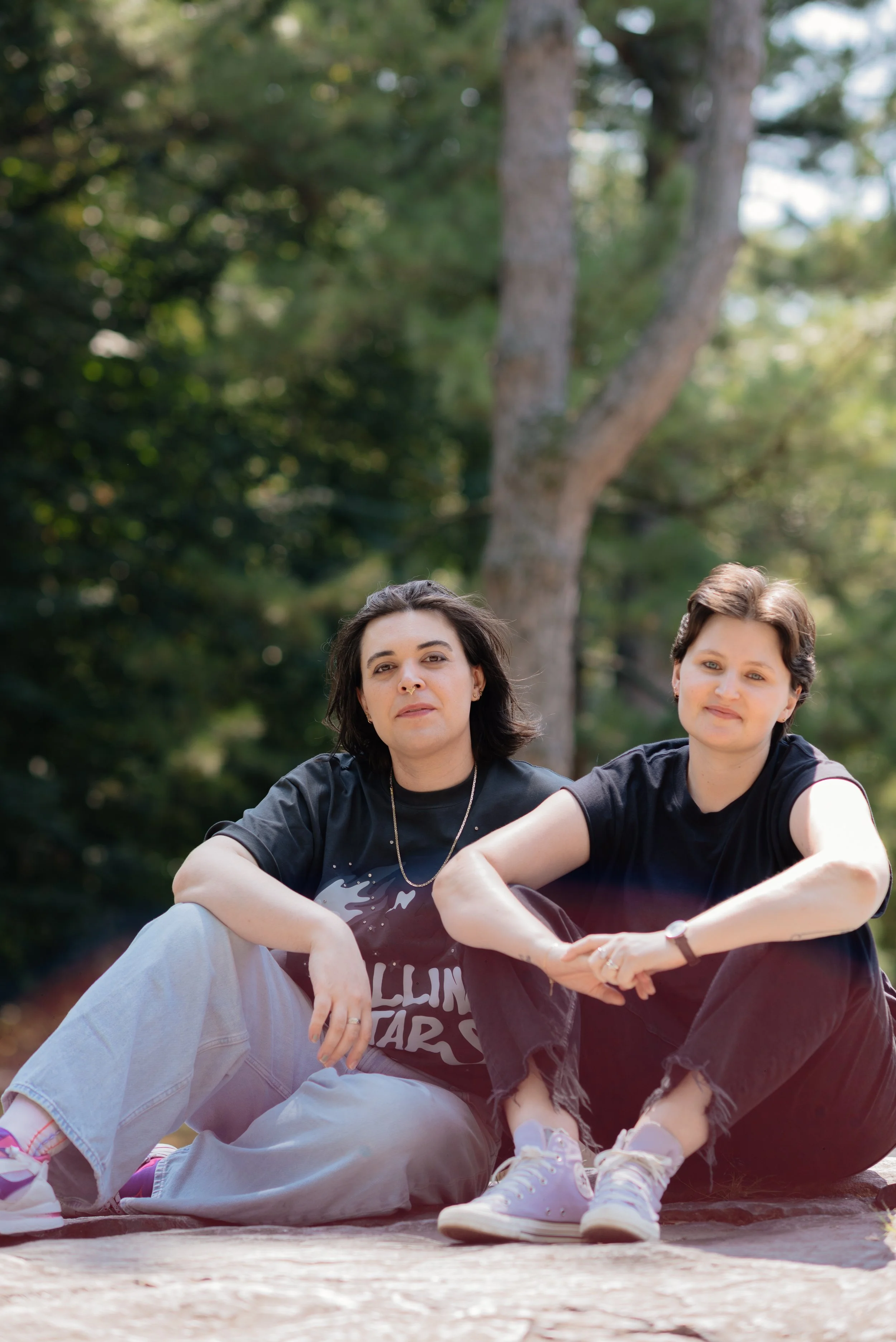
Else Went and Emma Rosa Went ahead of Initiative’s run at the Public Theater, after ten years of development. Photo: Jackie Abbott.
BARRESI: Thank you. I feel a lot of things. I feel like it is an honor and a privilege, but I don’t think there is any universe wherein I could do that if it wasn’t for the spark that is created in the space between us. And I cannot believe it came from finding an insane Playbill listing. But earnestly, the spark is what keeps us going.
WENT: Yeah.
BARRESI: And the virtuosic stupidity.
WENT: That’s part of it.
BARRESI: The aesthetic differences which are so exciting, ’cause I feel like so much is created in the ways in which Emma and Else and I, the three of us, are quite different from one another. And that’s always fascinating. The only thing I could possibly add is a thing that re-attracts me to working with you consistently is that I don’t think you’ve ever met a human heart that you haven’t been curious about.
WENT: Thank you. I hope that is true. I think we share that curiosity. It reminds me of something that the great Sarah Lunnie, also, I think profiled in this issue of The Hat, summarized to me recently about my own work, but about Degenerates in particular. She bracketed that idea with the phrase, “I am human. Nothing human can be alien to me.”
BARRESI: Exactly.
WENT: I think that’s something that we all believe, as a collective. I am human. Nothing human can be alien to me.
BARRESI: That’s the word.
WENT: That’s the word, and that’s the quest.
BARRESI: I wanted to end with something really dumb.
WENT: Okay, go.
BARRESI: They’ll probably cut it out.
WENT: They can cut it if they want. Do it anyway.
BARRESI: Since we’ve met, in the last 11 years, Emma and I, along with Else, have done this thing called the Essence Game, wherein you provide three vaguely related things to the other person. And the other person assigns one of the three to themselves, you, the giver, and then whatever third person there is.
WENT: So are we gonna do you and me and Else?
BARRESI: Yes.
WENT: Okay, great. Essence Game me up.
BARRESI: This one’s very imagistic.
WENT: Okay, go.
BARRESI: Fallow field. Disused mill.
WENT: Classic.
BARRESI: Moss-covered henge.
WENT: Did you just say moss-covered henge to me? Fallow field, disused—
BARRESI: Mill...
WENT: And moss-covered henge. Okay.
BARRESI: This one’s hard.
WENT: This is really hard. Do you have an answer in your mind?
BARRESI: No.
WENT: Okay, off the top of the dome, I would say Else is a fallow field. You are a disused mill, and I am a moss-covered henge.
BARRESI: I said the same thing for Else, but the other two—that one’s tough. On a different day, I could be the mill.
WENT: Or vice-versa.
BARRESI: Okay. Writers at Villa Diodati in summer 1816.
WENT: Yes! Oh my God, this is the question it’s all been leading to. Go.
BARRESI: Mary Shelley...
WENT: Yeah...
BARRESI: Percy Bysshe Shelley. And Lord Byron. No one’s John Polidori.
WENT: This is hard. No one’s John Polidori, and I thank you for that, ’cause that’s unattractive.
BARRESI: No one wants that.
WENT: Okay. Else is Mary Shelley. And the question is which one of us is Percy and which one of us is Byron. I think you might be Percy and I might be Byron.
BARRESI: I would’ve said the opposite.
WENT: You’re right. This is the real question, then we will finally end this long, long thing. Do you feel like you’re more likely to die in your essence in a lightning storm in a rowboat, which is how Percy Shelley died, or of the Spanish flu in revolutionary Spain or some shit, which I’m pretty sure is how Byron died, or, like on a Greek island or something. He was in the Mediterranean and he, like, had a cold.
BARRESI: That sounds like me. You know?
WENT: Also Percy Shelley wrote “To a Skylark,” which is one of my favorite Romantic poems, so there you go.
BARRESI: I think you might be Percy.
WENT: Also I’m married to Mary, so there you go.
BARRESI: Makes total sense.
WENT: That means when I die in a rowboat, Else will have to wear a locket that has a vial of my blood around her neck or some shit, which is what Mary Shelley did when Percy died.
BARRESI: I think she would.
WENT: She would. And on that note, it’s been real, Byron.
BARRESI: It’s been real, Percy.