

How Playwrights Spend Their Time
Four writers track a week of writing, teaching, procrastinating, and trying to make art fit inside ordinary days.
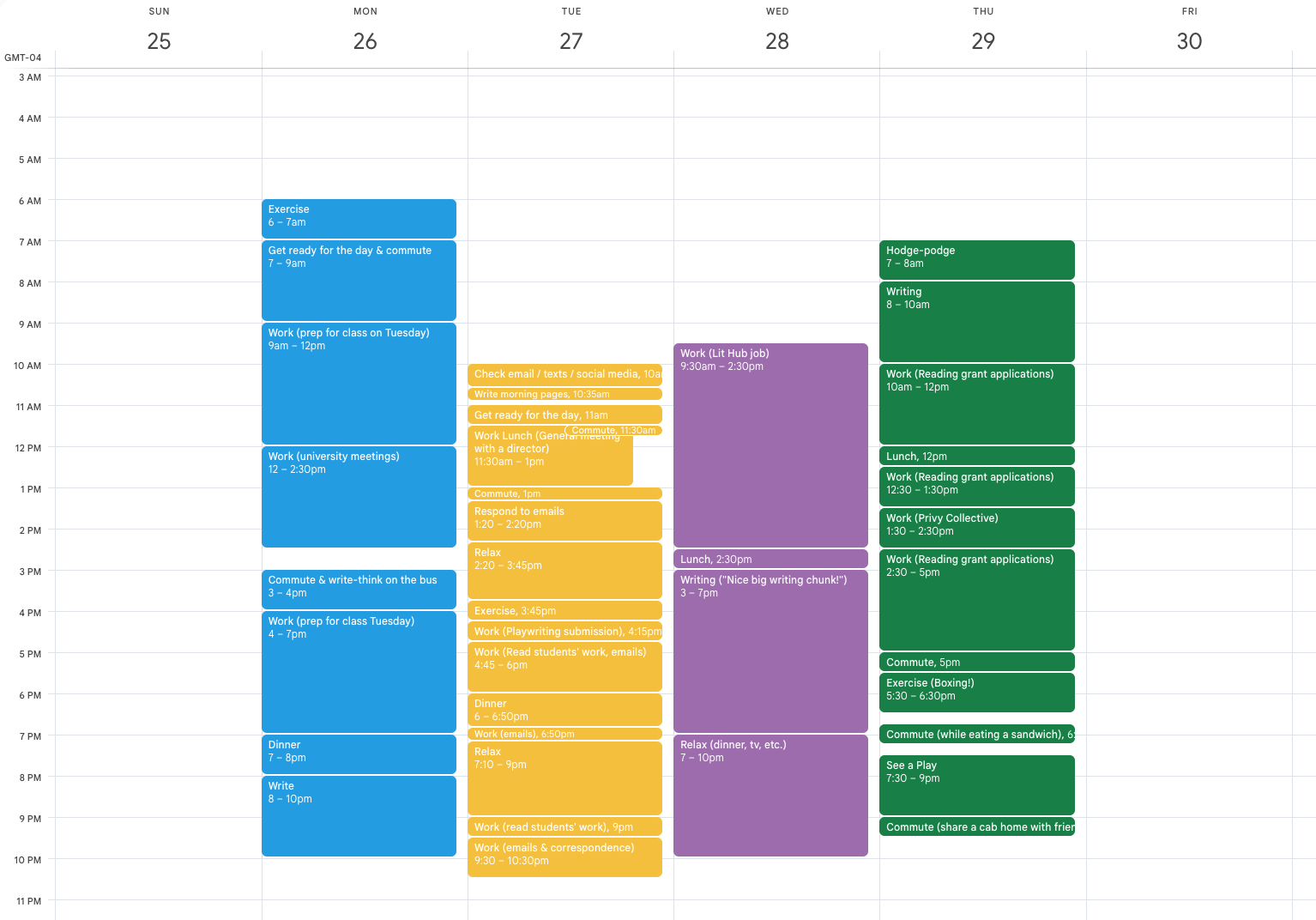
One day from each playwright — Deepak Kumar, Benjamin Benne, Brittany K. Allen, and Bailey Williams — visualized side by side.
Playwrights frequently bend time. In their work, they can raise and set the sun at will. When it comes to their daily lives and creating their work, however, they have the same number of hours in a day and the same number of days in a year as anyone else. But it doesn’t always feel that way.
We’ve all seen an intricately crafted production or maybe even had a hefty stack of new pages dropped in front of us and wondered, “When and how is one writer possibly getting this done?” As a New York–based playwright myself, I’ve experienced firsthand the onslaught of activities, jobs, and — too often, in my case — stacks of dishes in the sink begging for attention. My approach? A color-coded calendar broken down into categories like writing time, workout, friends & fam, and “jobs (the grind).”
Even so, I often feel in awe of the ways I perceive other artists are spending their time. What are their secrets?
Well, lucky for you, I’m nosy as hell and decided to ask.
I reached out to four working playwrights — Brittany K. Allen, Benjamin Benne, Deepak Kumar, and Bailey Williams — to better understand how they were each spending their time. I requested that each playwright track their time over one week in January, including when they were writing, working, exercising, or — in the case of Bailey Williams — playing “Video games :( I need to be a Viking :( .”
I put their responses on a calendar to get a visual sense for how their days unfold; but note that every single playwright warned me, “This was a strange week.”
Besides a universal sense of hustle, the four time logs looked wildly different. One playwright has a wife in another city, meaning two flights are a monthly occurrence. Another playwright has several theater jobs that fluctuate throughout the year. Another playwright spent a weekend doing a Paula Vogel–style Play Bake-Off with their playwright boyfriend, which was inspiring and also led me to ask several questions about jealousy inside playwright-playwright relationships. (But that’s another article.)
What struck me most was seeing how intentional everyone was. Yes, they knew their calendars would be seen by others; but even so, there seemed to be a very deliberate purpose behind the ways everyone spent their most precious resource. This intentionality was bolstered by self-awareness: all four writers have a strong understanding of what makes their process work.
Here’s what the four playwrights had to say about time.
MALLORY JANE WEISS: You spent a week tracking your time. Looking back, did anything surprise you?
Bailey Williams: I had the immediate urge to send it to some of my friends and family as proof. To be like, this is why I’m having such a hard time. Because I feel like I’m simultaneously always underemployed and overemployed — and the underemployed is really obvious, and the overemployed is kind of harder to explain.
Brittany K. Allen: Reflecting after the fact revealed a lot more wasted time. Or not wasted, maybe that’s a negative word to put on it, but there were hour chunks I couldn’t quite account for that, on reflection, were like … you were in your email, and drafting an email for two hours, I guess.
Deepak Kumar: Yeah, it’s so annoying how little time I have for writing. My life is structured around quarters in the school year, and this quarter has been a real kick in the ass in terms of how much time I have to do any writing stuff. It was sad, so thank you for that. [Laughs]
If a typical day or week doesn’t exist for you, when do you feel most like a playwright?
Benjamin Benne: I’m a binge writer, so I usually block off, like, one to two weeks, and just write every morning from when I wake up until, like 3 to 5 in the afternoon.
Brittany K. Allen: I guess when I have a whole afternoon and nothing to do, because it takes me a really long time. I do a lot of re-reading.
Bailey Williams: It took me a long time to be able to say, I’m a playwright, that is what I do. Just because I don’t make very much money from it doesn’t mean that’s not what I do. This is at the end of a two-month period of being incredibly distracted and involved with the Exponential Festival, and doing a lot of Exponential work for December with our fundraiser, and then January, the festival itself. I knew I wasn't going to write for these two months, and I just decided to be okay with it. But I was able to be okay with it because I spent all of November at the Albee Foundation, where I wrote every single day for at least five or six hours a day. Having those chunks of months actually ends up making a lot of sense to me. And what we’re seeing in this calendar is when I start to feel like a writer again. Especially the interchange of procrastinating writing, panicking, and writing a lot.
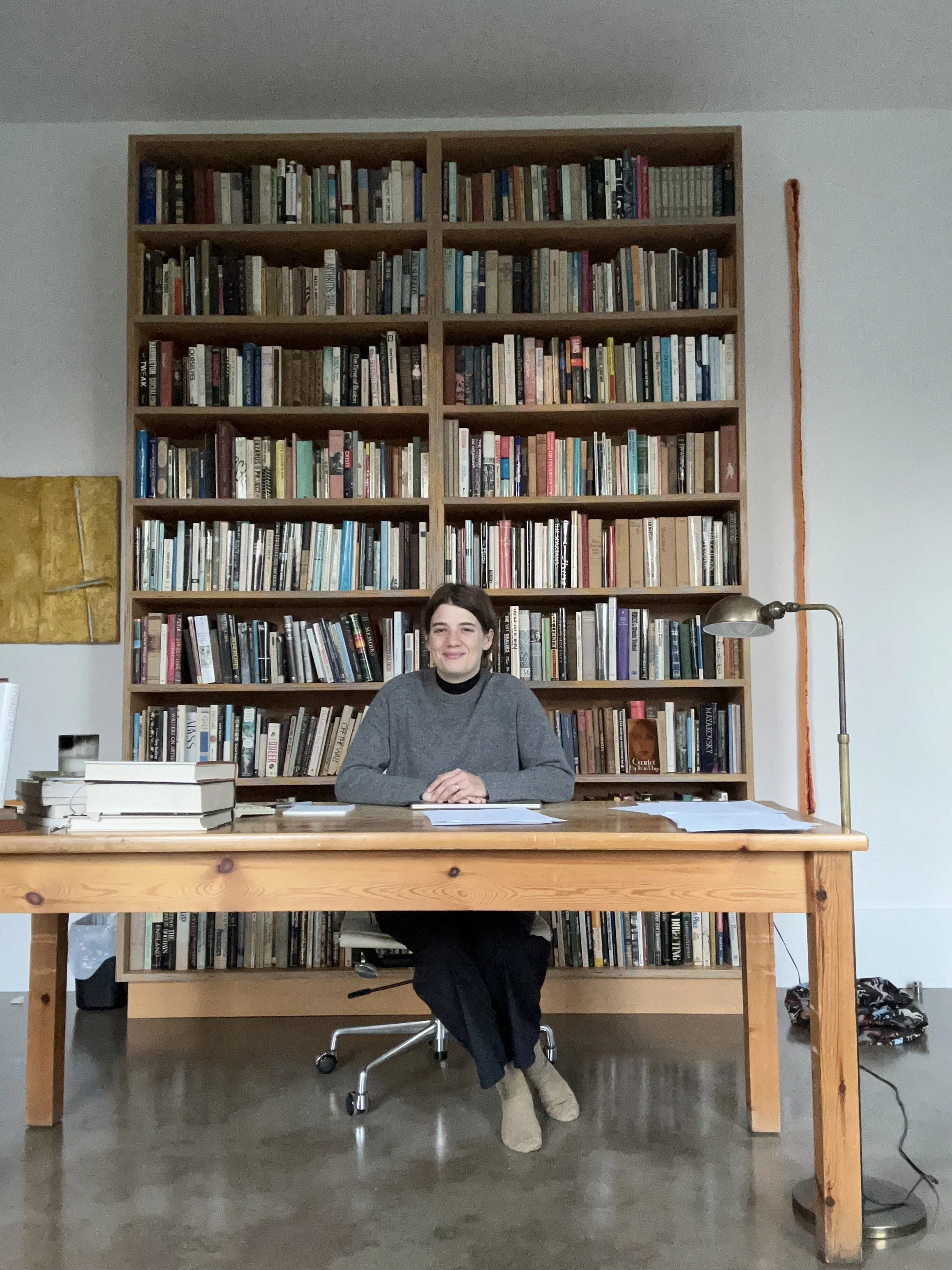
Bailey Williams, alongside a few excerpts from her time log.
“7:00–10:00 am — Hodge-podge. Sending and receiving emails about Exponential Festival, fretting about the news, and drinking three cups of coffee.
4:15–6:00 pm — Video games :( I need to be a Viking :(
10:00 pm — Anxiety spiral about play, wider industry, personal relationships, life until now.”
If you could change anything about how you spend your time, what would it be?
Deepak Kumar: I love teaching, but it’s just so much prep time, because I’m teaching a new class. I’m doing all this new stuff, I’m unfamiliar with all these things, so I have to learn them, and then teach them.
Bailey Williams: I feel the best when I wake up and I leave my bed. This winter, it has been very hard for me to leave my bed. I think it’s a symptom of winter and busyness, but I would love to leave my bed at 7:30 and go to the kitchen or desk. That would be great.
Brittany K. Allen: I feel really, really lucky in my job structure at the moment. But I wish I didn’t have to do it in the morning. It feels best on days when I start in a foggy headspace and go right into writing. Shifting into writing after having to be on the internet, and read the news, and be in culture is harder. If I could do my day job in the afternoon and write in the morning, I think that would be lovely.
“8-8:30am - Yoga :-)
8:30am-1pm - Lit Hub (day job!)
1-2pm - Lunch, shower, miscellaneous email spiral...
2-6pm - Writing, with light distractions interspersed - eventual concentration achieved with Pomodoro Method
6pm-8pm - Dinner, social time with boo, evening in thrall to VEEP”
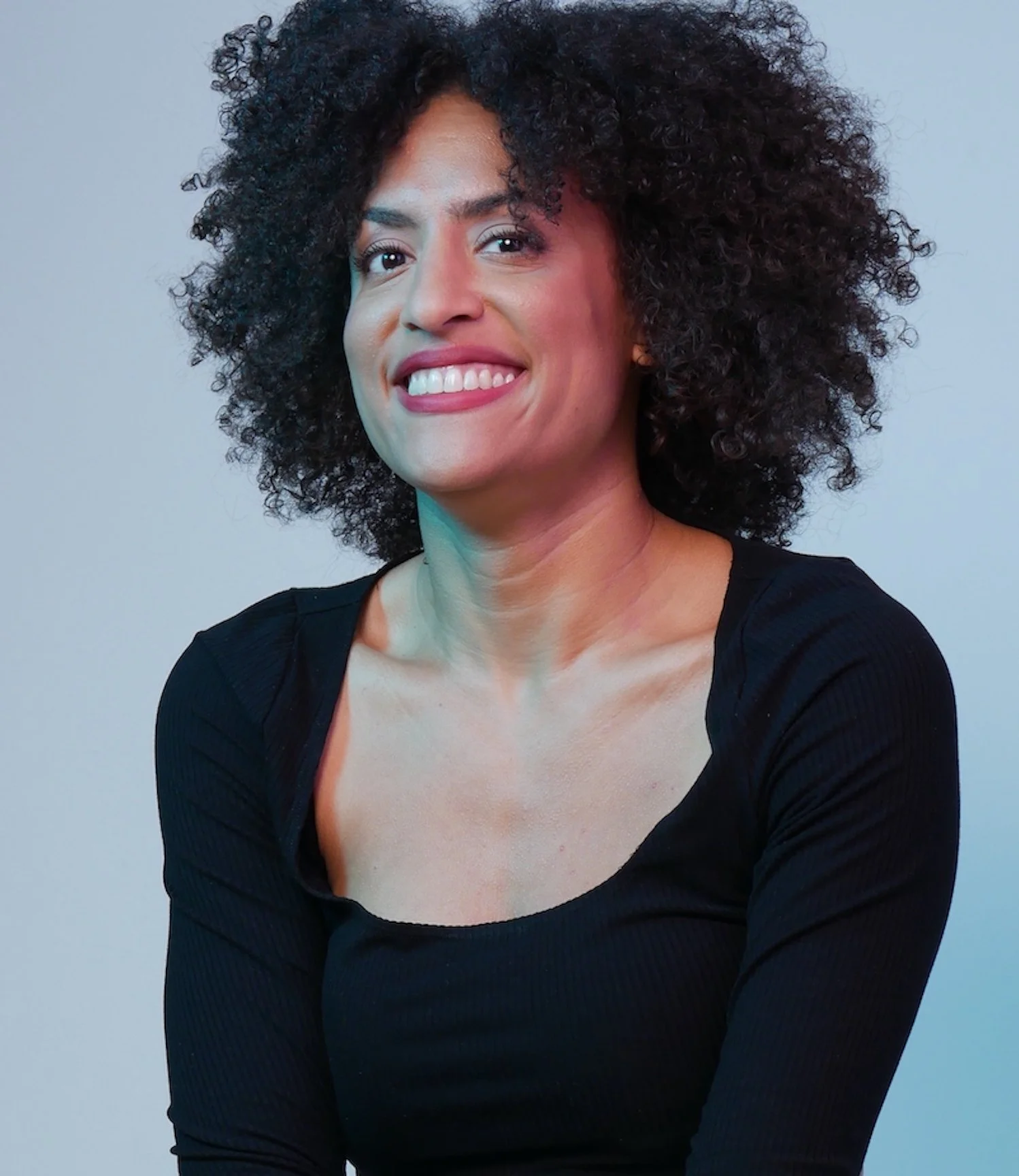
Brittany K. Allen, along with a Monday from her time log.
Is there any cyclicality to how you write?
Benjamin Benne: So much of it depends on how far out I am booked. And if I know that I have commitments, what are the spaces of time on my calendar where I could fit something in? I had a weird year in 2025. It was January, and I was like, there’s nothing on my calendar. Absolutely nothing. That made it the most difficult to plan for, because it was like, Oh my god, I’m just staring down the abyss of unlimited time. That was tricky. I was like, I need to create a structure for myself in terms of creative output, so I started doing The Artist’s Way again.
Brittany K. Allen: I have a problem with very irrational, unreasonable goal setting. I feel like at the beginning of every month, I’ll be like, I’m gonna finish this short story, I’m gonna revise this play, and I’m gonna outline this novel. It’s like, no, you’re not! I think a lesson of this process, and in general, that I’m trying to work on is just working on one thing at a time.
Bailey Williams: I know that December and January are not writing times, and I also kind of know that August is not a writing time. Every year, I’m disappointed in myself because I don’t write anything in August when I have more time than ever to write, but I’m just simply not going to write when it’s that hot out. It’s not for me.
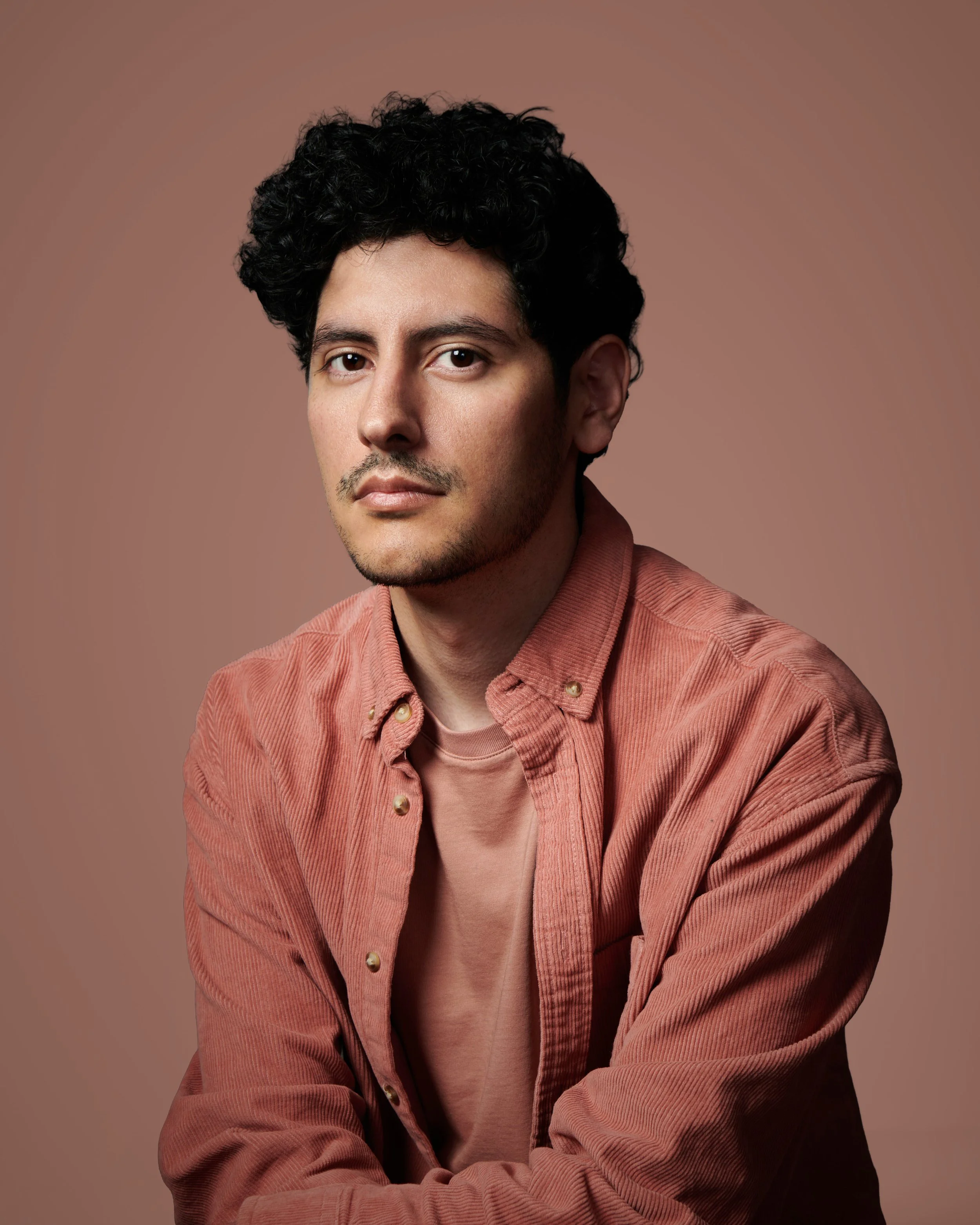
Benjamin Benne, with a Wednesday from his time log.
“9:45 check email / texts / social media
10:10 make the bed
10:13 email
10:18 morning pages
10:36 email
10:40 breakfast
11 exercise
11:30 shower
10:45 get ready
12:00 transit
12:30 lunch with Sarah Ruhl
1:50 transit
2:15 emails / texts / correspondence
3 break
3:45 emails
4 read students’ work
4:50 emails
5:10 dinner
6 production meeting
7 relaxation
7:50 prep for teaching
8 teaching
10 decompress”
Do you think you write more or less than other playwrights at your career level?
Benjamin Benne: It’s hard to know other people’s outputs. It’s not something I ask often, either. I assume most people write, like, one new play a year, and that’s sort of what I aim for, and usually the average for me is actually a play and a half each year. There are just years where output feels like a lot more, and then there are some years now where it’s like, oh, nothing new manifested, actually.
Bailey Williams: I probably write less, but I imagine that’s everyone’s answer. I don’t know, I definitely think this last month, I wrote less. In November, I was probably writing more than most people. Sometimes I look at a play, and I go, I don’t remember writing this. I know I worked so hard on it, and I spent so many hours agonizing, and I have next to no memories of writing.
Brittany K. Allen: I know some people who I think are faster, and some people who are slower. So maybe I’m in the middle. That’s really interesting, though, what other people call “productive,” because you ever go to two consecutive readings of something, and you see how people work as a change artist? Some people are like, this is a page one rewrite, and I did it in three weeks, and others are like, here are two wonderful new scenes, you know?
Deepak Kumar: Definitely less. Definitely less. I think I write way less than the average playwright at my career level. I feel like I’m writing as if I’ve won a Nobel Prize — like, I’m writing at the fucking glacial pace. Are you kidding me? I’m writing literally, like, just languidly. And I’ll say this too: I don’t think I would do anything differently, even if I didn’t have a day job. I think I would be the exact same person. That’s just the pace at which my brain can process these things. It may be a little faster, like, logistically. But creatively, I don’t think I’m getting anything else out of this guy.
“8–9:30am — class
10–3:30pm — meetings (back to back)
3:30–5pm — long walk / write think
5–6pm — get ready for midterm grading
6–11pm — midterm grading
11:30pm — crash”
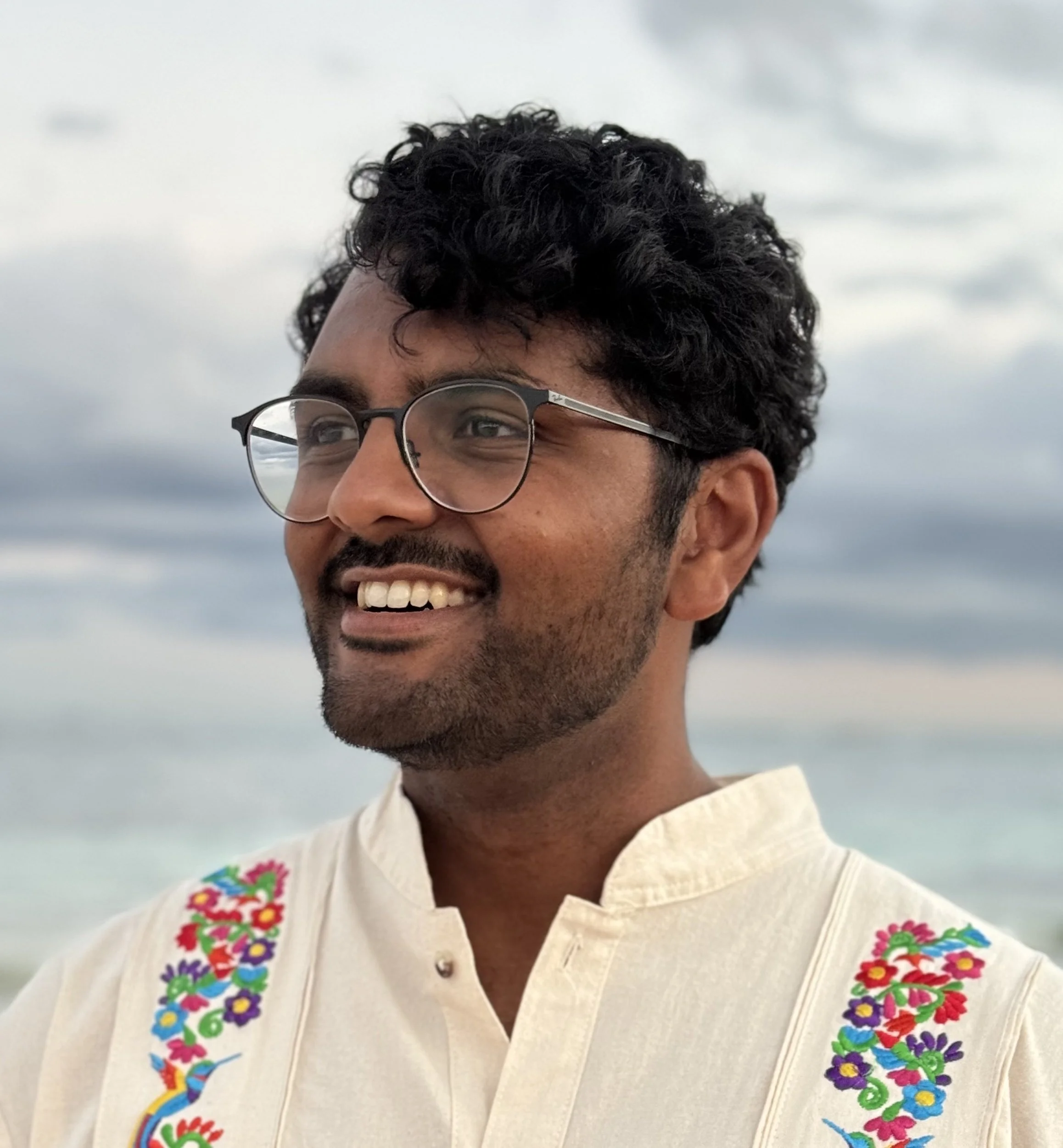
Deepak Kumar, and a Thursday from his time log.
If you had to give advice to a playwright about how to best spend their time, what would it be?
Benjamin Benne: Not on your phone.
Bailey Williams: I think it’s about not having any judgment about the system that works for you, but sort of figuring out what your system is. There is no one solution. It’s just about how you prefer to manage your time.
Deepak Kumar: Make sure you use the time that you’ve got. You can spend time feeling badly about the fact that you don’t have time. Or, you can just say, I only have four hours. Four hours is a lot of time. If you went to the gym for four hours a week, every week, you’d get ripped in, like, a year, you know?
Can you define time in one sentence?
Bailey Williams: I’m trying to think of something I both believe in and feel is true. Time is a really elaborate hallucination that convinces us that we’re in more control than we are. Time is ultimately how you notice time. I don’t think it’s any more complicated than that.
Brittany K. Allen: I feel like it’s some kind of proportion between you and the rest of the world. What does that mean, though? What is time?
Benjamin Benne: At some point, I wake up, and at some point I go to sleep, and then I have to do it again. And that tells me that some time has passed.
Deepak Kumar: This is fucked up. That’s honestly my answer. It’s‚ I don’t know, it exists. Time is time. It’s measured in seconds, how about that?
These interviews have been edited and condensed.