

One Year After the NEA Cuts: How Off-Off-Broadway Is Holding On
The National Endowment for the Arts grant cancellations disrupted budgets at theaters across the country. A look at how some of New York’s innovative venues are adapting — and finding ways to keep going.
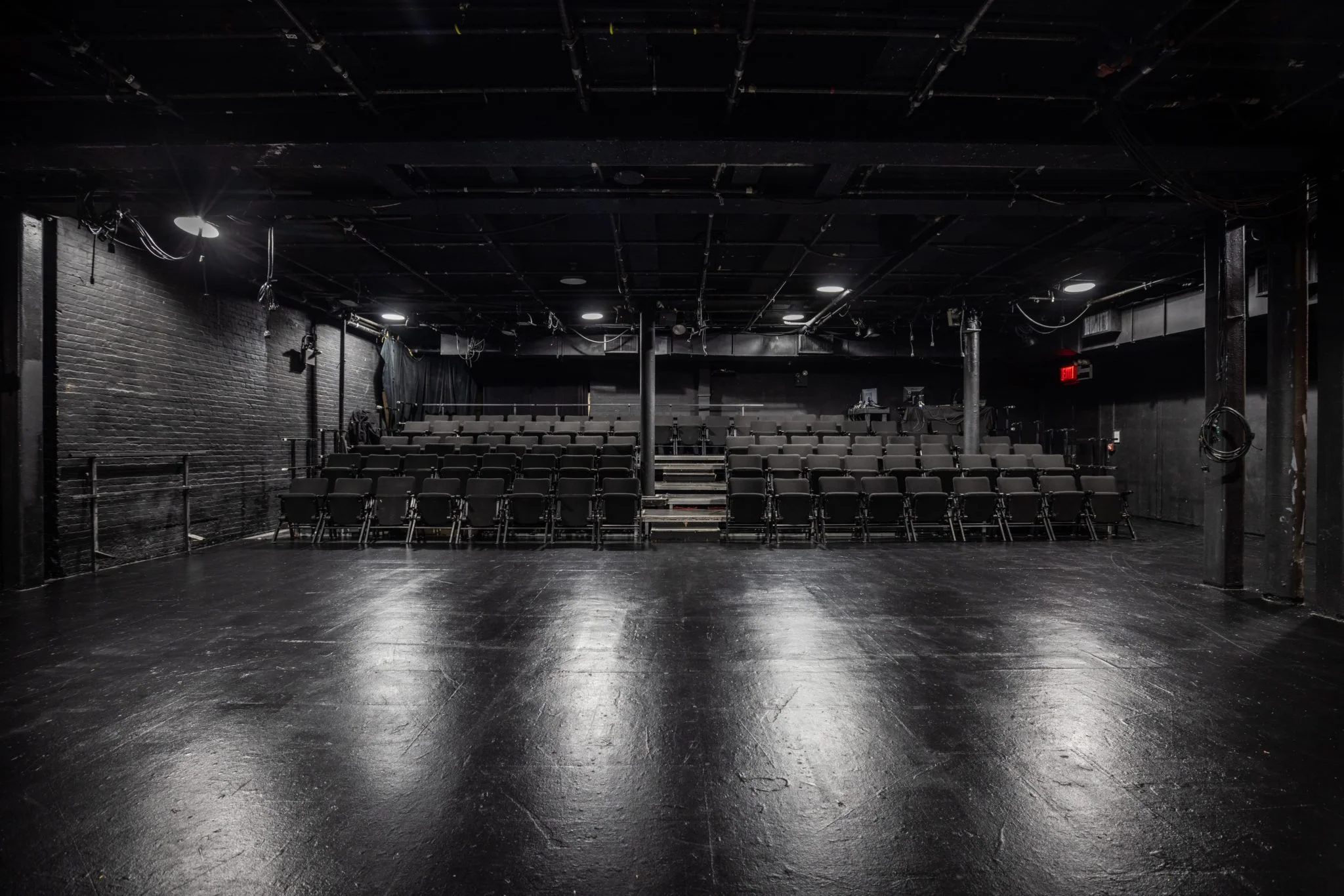
The main stage at HERE Arts Center, founded in 1993, which presents multi-disciplinary performances co-produced with small theaters.
On a late October night in Brooklyn, a dark room with chairs arranged in a circle sets the scene. A toy piano and giant origami stars rest on the floor, tulle dresses hang from the ceiling, and a wall invites audience members to paste the Sanrio stickers they received upon entering. Music begins to play and dancers appear, following a main performer, Sugar Vendil, and imitating her playful movements. The performance moves quickly, evoking memories of each season of the year, as the performer — who acts like a little girl — plays, imagines, dreams, fears, and experiences.
This is how Antonym: Scenes of Childhood was presented at JACK, a theater in Clinton Hill, Brooklyn, well known for its commitment to underrepresented communities and independent artists willing to blend art and activism to represent pressing social issues. This blend is present in their new production of Extra01dinary Aliens, a show about the US immigration system and the difficulties of being accepted through the talent visa program.
But now JACK is scrambling to keep this vital commitment alive. In May 2025, the National Endowment for the Arts (NEA) abruptly canceled the grant that JACK was slated to receive this year.
The cancellation of the grant was part of the Trump administration’s wave of grant cancellations for cultural and artistic organizations showcasing projects that promote diversity, equity, and inclusion.
In February 2026, the NEA published a new open call for grants, with updated criteria and objectives that make some theaters doubt whether they want to bother applying.
The abrupt and politically vindictive grant cancellations represent a serious challenge to an Off- and Off-Off-Broadway community that has been struggling, and persevering, since the pandemic, when audiences stopped attending performances regularly and labor demands increased. In 2023, The New York Times reported a drop of half in the number of shows Off-Broadway, and a 59 percent decline in box-office grosses.
“Nonprofit theater companies used to rely heavily on their subscription audiences,” Joey Monda, president of the Off-Broadway League, told The Hat. “As years have gone on and government grants have diminished, nonprofit theaters have had to migrate into a more commercial structure, and their artistic risk can be compromised.”
The impact at JACK
For years, JACK has relied on funding from the NEA, the New York City Department of Cultural Affairs, the Howard Gilman Foundation, and the Jerome Foundation, among others. Early in 2025, the team received confirmation that its NEA grant would be renewed for a ninth time (the first was awarded in 2016, and it has been renewed annually thereafter). But in May, the organization was notified that the $35,000 grant had been canceled due to updates in the NEA’s “grantmaking policy priorities.”
The letter stated: “The NEA is updating its grantmaking policy priorities to focus funding on projects that reflect the nation’s rich artistic heritage and creativity as prioritized by the President. Consequently, we are terminating awards that fall outside these new priorities.”
For the 2026 NEA grant some of the new guidelines include a five-year, rather than a three-year, list of the applicant’s previous arts programming, a 1:1 cost-share requirement, and priority to projects honoring and celebrating the 250th anniversary of the United States. The concern among some applicants is that a history of arts programming related to issues of diversity, equity, and inclusion might not sit well with reviewers and could lead to the rejection of their grant applications.
JACK had planned to use the $35,000 that was rescinded for general operations.
“The money was for our presentation season, to support the new season with new artists,” said Amen Igbinosun, executive director at JACK, who started his role the same week the NEA cancelled the grant for the theater. This was to include “sign language interpreters for performances so our space could continue to be more accessible for everyone.”
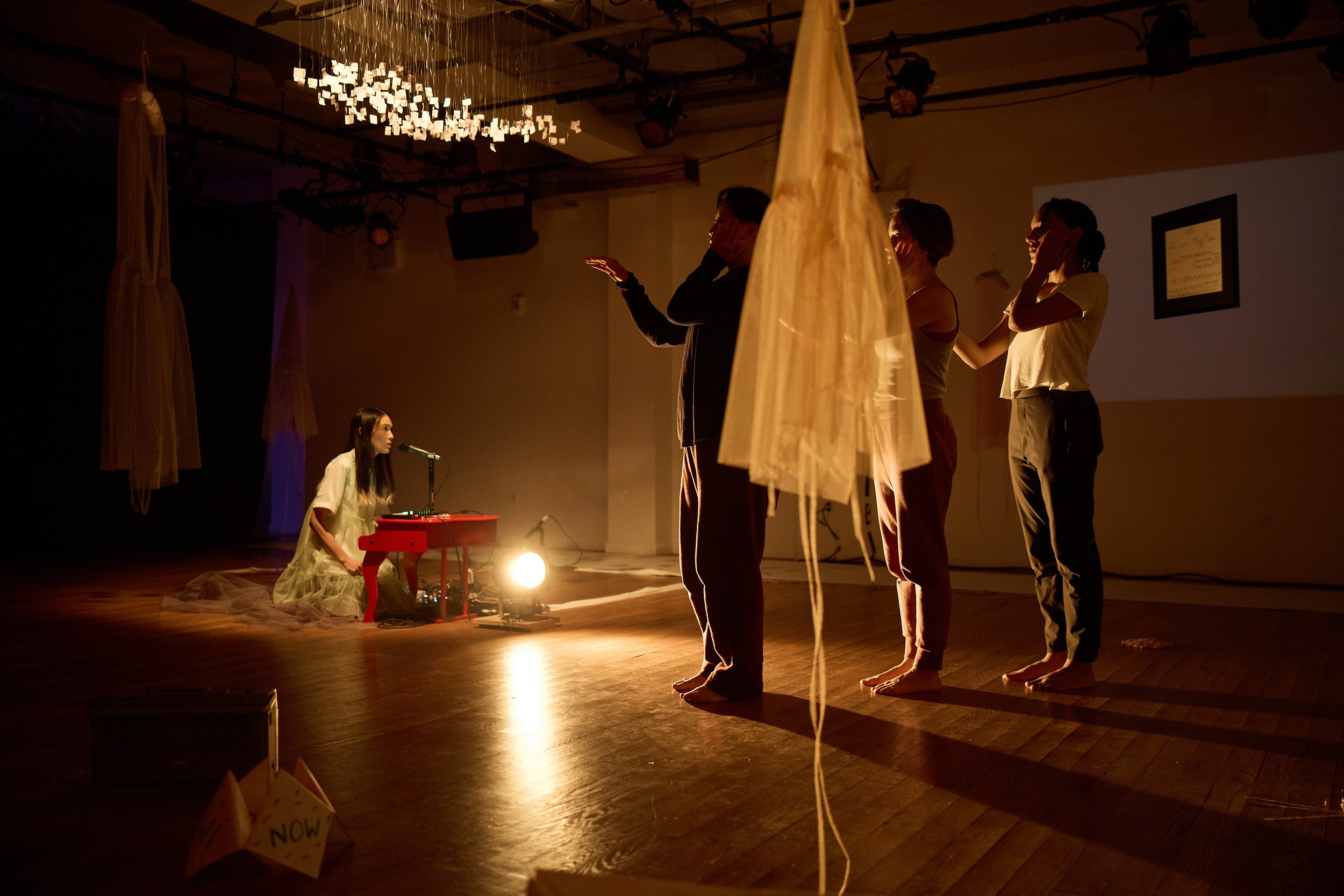
A moment from Sugar Vendil’s Antonym: Scenes of Childhood, performed at JACK in Clinton Hill, Brooklyn. Photo: Eric Hodgman.
According to JACK’s Form 990, the tax document required for nonprofit organizations, 79 percent of its revenue comes from grants, while only 12 percent comes from program services. In 2023, Jack’s budget totaled $329,150, with $160,815 coming from government funding. Of that amount, $35,000 came from the NEA, with the remainder from city-level grants. The theater’s largest expense is staff salaries for three employees (two full-time and one part-time) and payments to artists presenting their work.
Without the NEA grant, Jack has had to make difficult adjustments.
“We are renting out the space for rehearsals or productions so that independent artists can have space to do their work. We went from a place that programmed something every month to doing things quarterly,” Igbinosun said. “We also had to downsize, and double down in the things that we do. It’s exhausting, and it is taxing on the staff.”
JACK actively supports the artists it presents by collaborating with them more than once. “There’s a lot of barriers and gatekeeping in this field, but the way JACK works is not the way any other theater operates,” said Cara Hagan, artist and creator of Mama Piranha, which ran at JACK in June 2025. “There’s a sense that once you’ve been an artist there, you’re part of the community, and they want to find ways to keep supporting your work.”
Hagan is scheduled to return to JACK in fall 2026 with a new piece, Scary Stories to Tell in the Dark. The show was pushed back because the theater’s reduced programming has already filled its calendar.
JACK’s team has decided to seek other funding and not apply for the NEA grant, because they feel it won’t be granted.
“Applying for these grants, it’s work, it takes time,” said Igbinosun. “So allocating time, effort, and resources for something that we know we’re not going to get.… We are collaborating with other theaters and producing companies to be able to do some of the shows that we had in mind.”
Looking elsewhere for funding
While some theaters received the news of the grant cancellations as a surprise, What Will the Neighbors Say? (WWTNS) had been expecting it since Trump’s reelection. WWTNS is a small theater based in New York City that presents research-heavy shows with a strong political focus. In the first months of 2025, they had an ominous feeling that the $15,000 the NEA granted them was not safe. So they decided to start looking for options to cover the expenses for their production of At the Barricades, a play about volunteer soldiers who fought in the Spanish Civil War against the fascist government of Francisco Franco. When they received the cancellation notice, they were ready to take action.
“One of the criteria was honoring the armed forces of America or reflecting veteran stories, which the Spanish Civil War play does,” said Sam Hood Adrain, co-artistic director at WWTNS. “It celebrates the amazing heroism of volunteer soldiers from all over the world, including American soldiers. So we appealed and they rejected the request. Then, we secured a loan to pay for the show.”
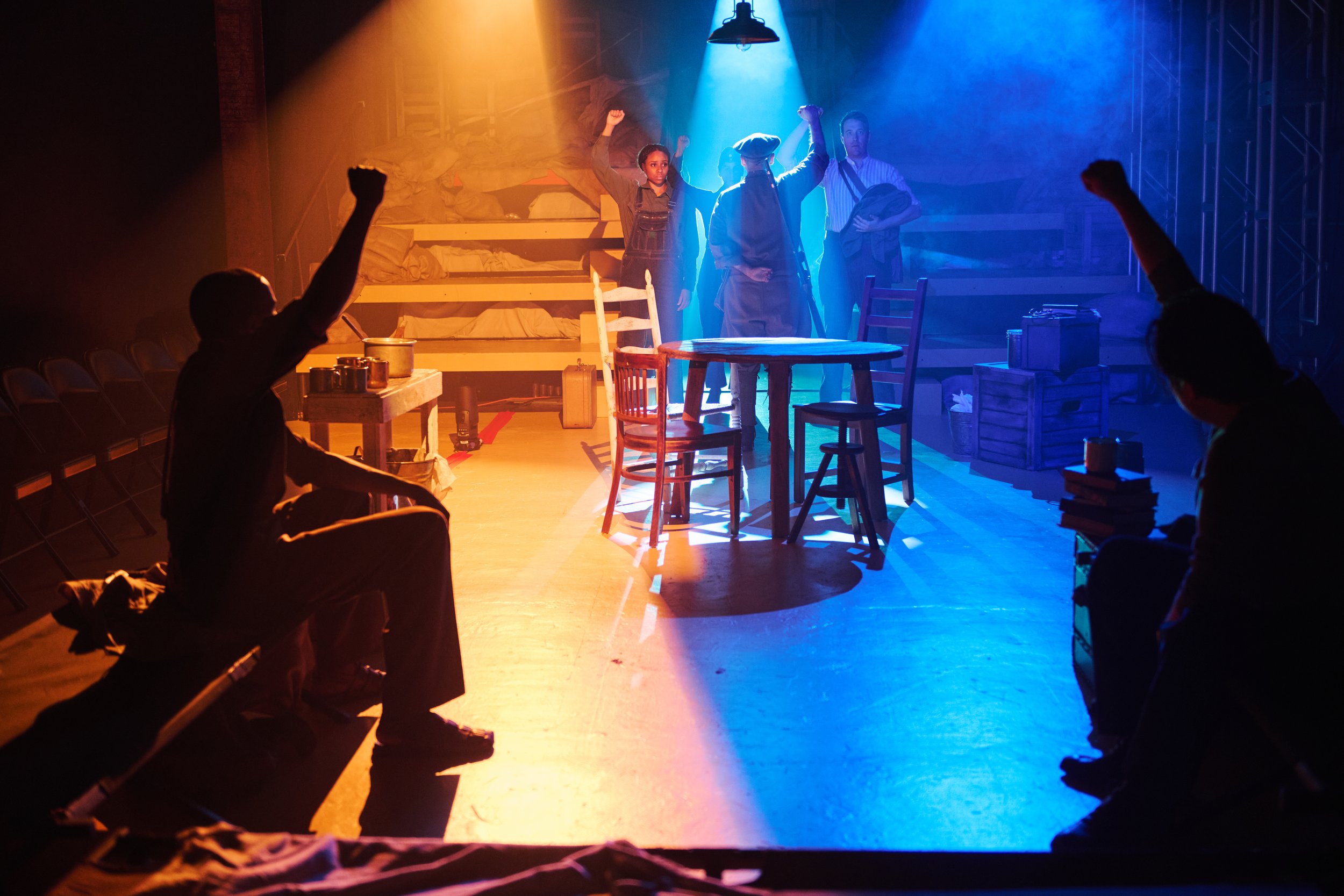
The company of At the Barricades, produced by What Will the Neighbors Say? at MITU580 in Brooklyn. Photo: Pablo Calderón-Santiago.
The theater spent $50,000 on the production, so the gap left by the cancellation of the NEA grant amounted to 30 percent of the expenses. WWTNS found funds for the production from different sources: success at the box office, a No Interest Loan from IndieSpace, an emergency grant from the Foundation for Contemporary Arts, and a grant from the National Arts Relief Fund (a program that belongs to Americans for the Arts and was created to support organizations affected by the NEA grant cancellation).
“Because these organizations emerged, we were able to take more risks with our upcoming world premiere co-production [Beauty Freak] that we’re doing in the spring,” said Hood Adrain. “And we have chosen not to apply again to the NEA grant this year, because our views on key issues differ from the funding priorities of the administration.”
***
IndieSpace is an independent theater advocacy organization that offers grants, loans, and funding programs to support artists and community-based organizations. Its applications are always open and easy to complete, and recipients are usually selected through a lottery system to make the process more equitable.
“The devastation of the changes by the [Trump] administration has caused a wild uptick in emergency loan and grant program applications, but also in our mental health grant,” said Randi Berry, executive director of IndieSpace. “When you have been depending on an NEA grant year after year and then you suddenly lose that work, there are multiple implications: your ability to pay for your food and home, and your mental health.”
IndieSpace’s loans have zero percent interest and, if approved by the board of directors, the funds are disbursed within 48 hours. But the cancellation of the NEA grants also impacted IndieSpace’s Professional Development and Community Connections programs, which were partially funded with the NEA grant funds that got cancelled. For now, those programs have been frozen and are undergoing restructuring.
While organizations like WWTNS decided not to apply for an NEA grant this year, other small theaters like HERE Arts Center are giving it another shot.
“We will apply again because it’s the people’s money, so we believe it should be ours,” said Annalisa Dias, co-director of HERE Arts Center. “But, we are planning to rely less on government funding sources.”

HERE Arts Center co-directors Lanxing Fu, Annalisa Dias, Jesse Cameron Alick, and Lauren Miller (who left the organization in January to focus on political organizing). Photo: Zayira Ray.
For HERE, the cancellation of their grant was not shocking, as the organization viewed it as a promise rather than a contract. Founded in 1993, HERE has the mission of presenting multi-disciplinary performances and they co-produce with small theaters. It has a shared leadership administrative model and is focused on countering the inequities that exclude “individuals and communities from opportunities based on race, gender, disability, sexual orientation, class, age, and geography,” as articulated in their mission statement.
After HERE heard that the money would not be disbursed, they shared the situation through their social-media channels and received individual donations, as well as increased funding from other philanthropic organizations that were already supporting them, such as Americans for the Arts, the same organization that supported WWTNS.
However, even with individual donations and increased funding from private philanthropies, it is hard for arts institutions to cover the cumulative gap of around $36.8 million that the 2025 cancellations left.
“Private philanthropies can’t fully cover a gap for the federal government,” said Berry. “They might be able to plug a hole. The problem is small-budget organizations don’t have big philanthropy connections, right? So there isn’t really a place for them to go. Still I found [philanthropies] to be very open, and trying to think of what the appropriate use of their resources might be in this moment of multiple emergencies.”
As the federal government’s commitment to the arts radically changes, it’s the city’s smallest stages — often its most daring — that are left most exposed, sustained for now by an ecosystem of collaboration, shared space, and hard-won outside support.