

Judy Kuhn on Acting through Song, Taking Risks, and Reviving “The Baker’s Wife”
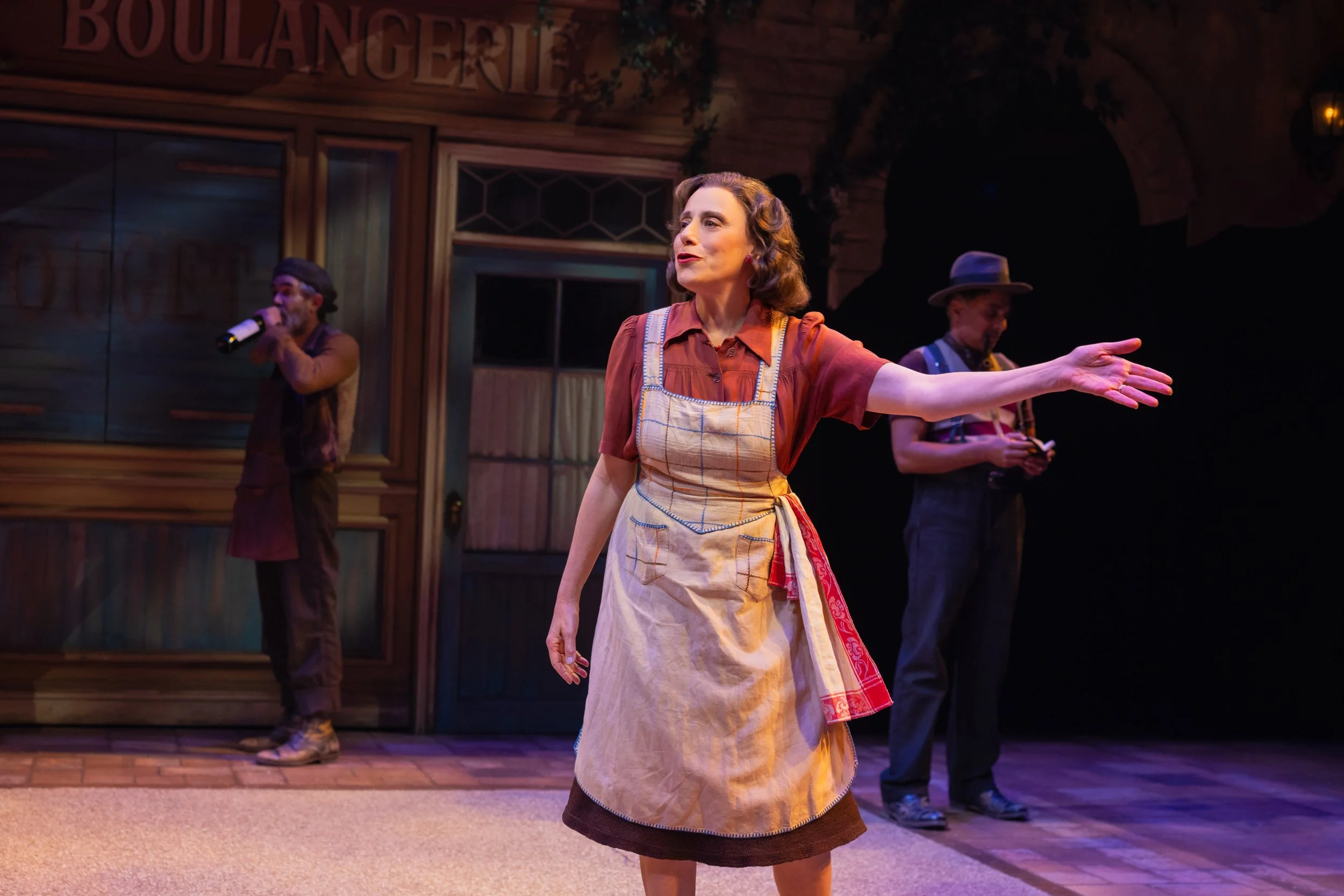
Judy Kuhn plays Denise, a waitress in a French village and the show’s moral compass, in the long-awaited New York production of The Baker’s Wife at Classic Stage Company, directed by Gordon Greenberg. Photo: Matthew Murphy and Evan Zimmerman.
Judy Kuhn’s artistic relationship with prolific composer and lyricist Stephen Schwartz spans her entire distinguished career. Her first turn as a Broadway principal came in 1986, when she played Bella Cohen in the musical Rags, with lyrics by Stephen Schwartz, music by Charles Strouse, and a book by Joseph Stein. Though it managed only 18 previews and four performances in an ill-fated run, Kuhn earned a Drama Desk nomination, and the role cemented her path to an acclaimed career on stage.
Nearly 10 years later, she made the leap to voice acting, lending her singing voice to Disney’s Pocahontas and joining a cadre of Broadway stars who have shaken hands with the Mouse. Here she crossed paths with Schwartz’s lyrics again, experiencing commercial success with songs like “Colors of the Wind” and “Just Around the Riverbend”—songs that are celebrating their 30th anniversary this year.
When she was approached with the opportunity to do The Baker’s Wife at Classic Stage Company (CSC) this season—a venue where she has appeared in several memorable musicals, including I Can Get It for You Wholesale (2023) and Assassins (2021)—it put her back in one of Schwartz’s rich lyrical worlds. She could have approached this show as familiar and comfortable territory. However, she told The Hat that working on the musical, and bringing the cult classic to a major New York stage for the first time in its history, felt new to her. Though she’s sung Schwartz’s words for decades, this is Kuhn’s first time working on a production for which he’s written the score as well—the full Schwartzian experience.
At CSC, Kuhn stars as Denise, a waitress at the town-square café and the show’s moral compass among a literal village of larger-than-life comedic personalities. It’s a responsibility she takes seriously, serving as a conduit for the audience; yet she relishes that she gets some laughs of her own. She’s one of a high-caliber ensemble, including Ariana DeBose and Scott Bakula as the central romantic couple.
Over the years, The Baker’s Wife developed a devoted following, like many niche musicals do, mostly due to its elusiveness on New York stages. Its long and winding development process saw a US tour in 1976 followed by regional productions in Los Angeles and Washington, DC. After a short West End stint starring Patti LuPone and Paul Sorvino in 1986, the musical lost momentum and never made it to Broadway, yet its 11-o’clock number “Meadowlark” lingered in audition rooms and cabaret concerts.
Nearly 40 years after it was written, The Baker’s Wife arrives in New York, and Judy Kuhn spoke to us about the show’s meandering journey, her responsibility to Denise, and her love of collaboration.
JEN GUSHUE: This is the first major New York production of The Baker’s Wife, and like any good niche musical, it has a cult audience. What do you make of the show’s journey?
JUDY KUHN: I actually had no idea about the journey when I started working on it. I always assumed that because it had a cast album with Patti LuPone and Paul Sorvino, that it was the Broadway cast album. I never really looked into its history. I didn’t know that [The Baker’s Wife] had this long, torturous journey that didn’t end with Broadway.
I just think it’s fantastic that New Yorkers are finally getting to see the show, and I can’t think of a better setting than CSC. It’s so intimate, and the audiences have been so enthusiastic. I had no idea how people would respond to this show, but I feel like we’re giving them something they need—that we all need right now, which is some laughter and some uplift. It does have a dark heart in it too, but it’s about a group of people who cannot get along and then they find their way to community. Don’t we need that right now?
What’s been your impression of the types of fans that have come out: Are they Schwartz fans, CSC fans?
You never really know where the audience comes from, but I think this show has attracted so much interest because it’s never been seen in New York, yet a lot of serious theater fans know the score, and they want to see the show. That is a big pull for the audience, and, of course it’s an incredible cast and I think everyone in the cast has their fans who want to see them on stage.
You’re actually revisiting this material. You sang the part of Geneviève as part of a concert version of the show in Boston in 2001.
I did! I can’t believe you know that. I forgot about that. It was a long, long time ago.
Has that experience come back to you in revisiting the show?
I can barely even remember it! I had a very young child at the time and have amnesia about a lot of things that happened around then. If I’m remembering correctly, we mostly did the music and only did a little bit of the dialogue, so when they sent me the script this time and said, “Will you do this?” the show still felt very new to me.
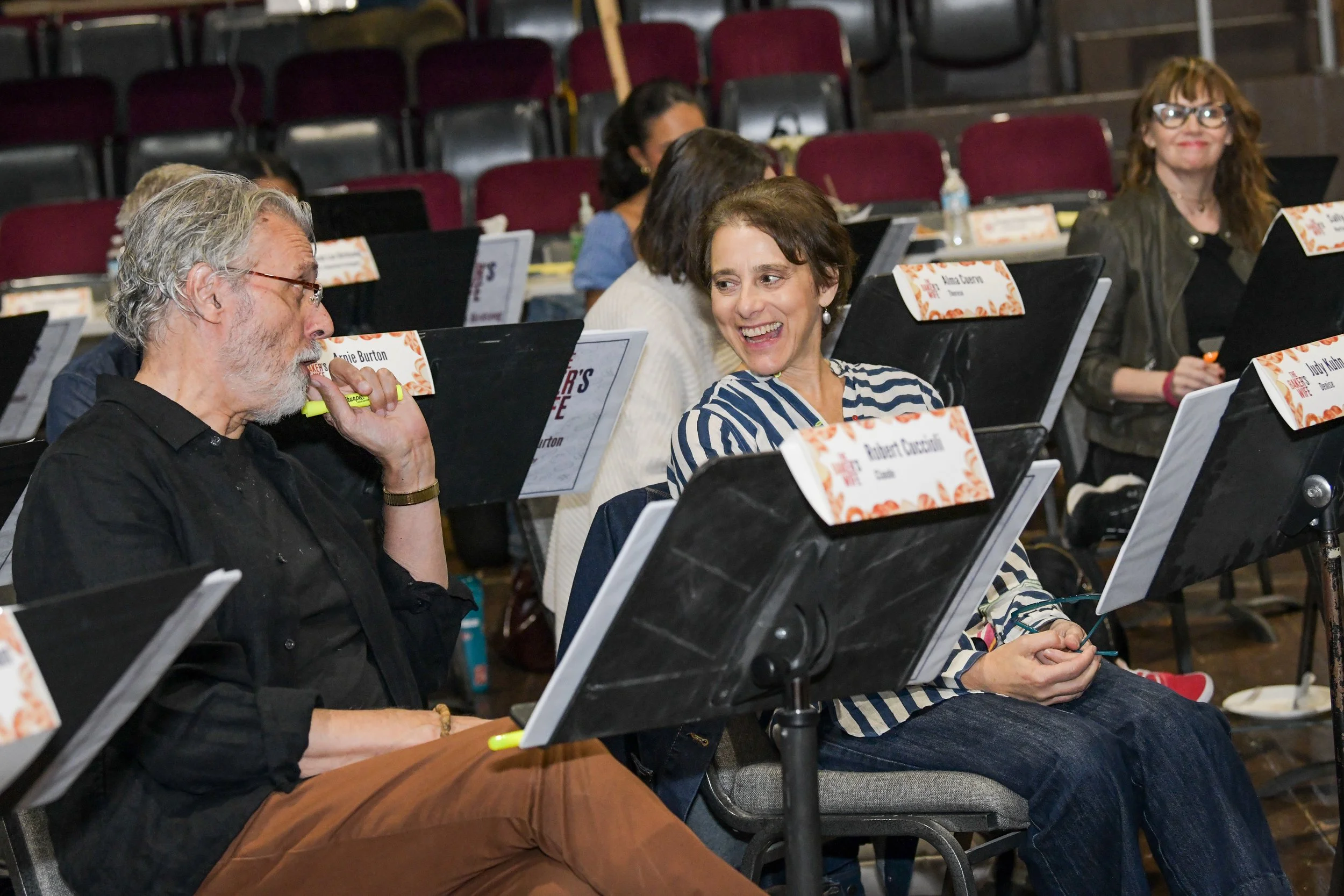
Robert Cuccioli and Judy Kuhn in rehearsal for The Baker’s Wife. Photo: Allison Stock.
This is one of Stephen Schwartz’s earlier works, and you have a long history with his music. Rags was one of your first Broadway roles almost 40 years ago, and you were the singing voice of Pocahontas.
But this is the first show I’ve done of Stephen’s where he wrote the music!
For Rags and Pocahontas he wrote the lyrics, but not the music. I’ve sung a lot of his songs—I’ve sung “Meadowlark” a lot—but I have never done a show in which he wrote the music and the lyrics. So this is a first for me, which is great.
The two projects I did with him where he wrote the lyrics, they were such great collaborations, with Charles Strouse [for Rags] and then with Alan Menken [for Pocahontas]. It’s a great thing when there’s a good collaboration between composer and lyricist. And Stephen is such a great lyricist, because Stephen writes lyrics for actors.
Do you say that because of the strong storytelling elements within his lyricism?
Yeah. For example, I’ll take “Chanson,” which is the song that I open the musical with. It’s so interesting to me because that song has a function, which is to welcome the audience and set up this village and to explain to the audience what they’re going to see. But it’s also deeply personal to the character that I’m playing, Denise, because what she wants and needs is also what the village wants and needs. I think that is a really hard line to walk, but I think it’s done so successfully because she then becomes a conduit for the audience to understand what the story is—but it also gives her individuality.
She’s not just a stock figure in this village. She is a person who has wants and needs, and that’s just an example of what he does with his lyrics. He writes very much from a character’s perspective, but it also serves the larger story that’s being told. And I think that’s hard to do. And I think a lot of lyricists don’t know how to do that. Stephen does it beautifully, so it feels comfortable to be inside of it.
Denise feels like such an emotionally grounded character in an ensemble of bold, brash, and comedy-first characters. This archetype pops up throughout your career—these strong, steady, at times melancholic women: Helen Bechdel in Fun Home, Florence Vassy in Chess, Golde in Fiddler on the Roof, to name a few. What do you make of that?
You know, I don’t know. And it’s so funny because there was one time after I’d sung a concert when my daughter was very young, but already very wise at the time, she said to me, “Mom, you’re one of the most content and happy people that I know. Why do you sing so many sad songs?” And it’s true, I do. But I’ll tell you, one of the things that I really appreciate about playing Denise is I get to also get laughs. I get to have a dark heart, but also have fun and get laughter, which is really satisfying. But what is it about me that people want to cast me as sad women? I don’t know! I guess I have that in me, even though in life I’m a pretty happy person.
We talked about Pocahontas earlier, and this year is the film’s 30th anniversary. Is there a certain kinship among the Broadway/Disney Princess set?
[Laughs.] Well, we don’t get together for tea or anything, but yes, there definitely is a shared experience and a shared legacy, which is really special.
Do you find that you take a different approach to meet your audience as a performer when singing for a live audience versus recording for an animated movie?
You’re definitely using the same skillset. You’re thinking about it in terms of storytelling and the intention. The only thing that you don’t have when you’re doing animation is the physical aspect of it. I did not get in a canoe and go over a waterfall [laughs]. But you have storyboards in front of you, directors, and a whole host of producers and executives who are telling you all that information while you’re recording. You just have to use an extra part of your imagination to imagine physically doing the things and seeing the person that you’re speaking to who isn’t in front of you and hope that that is expressed in the performance. And they let you know if it’s not!
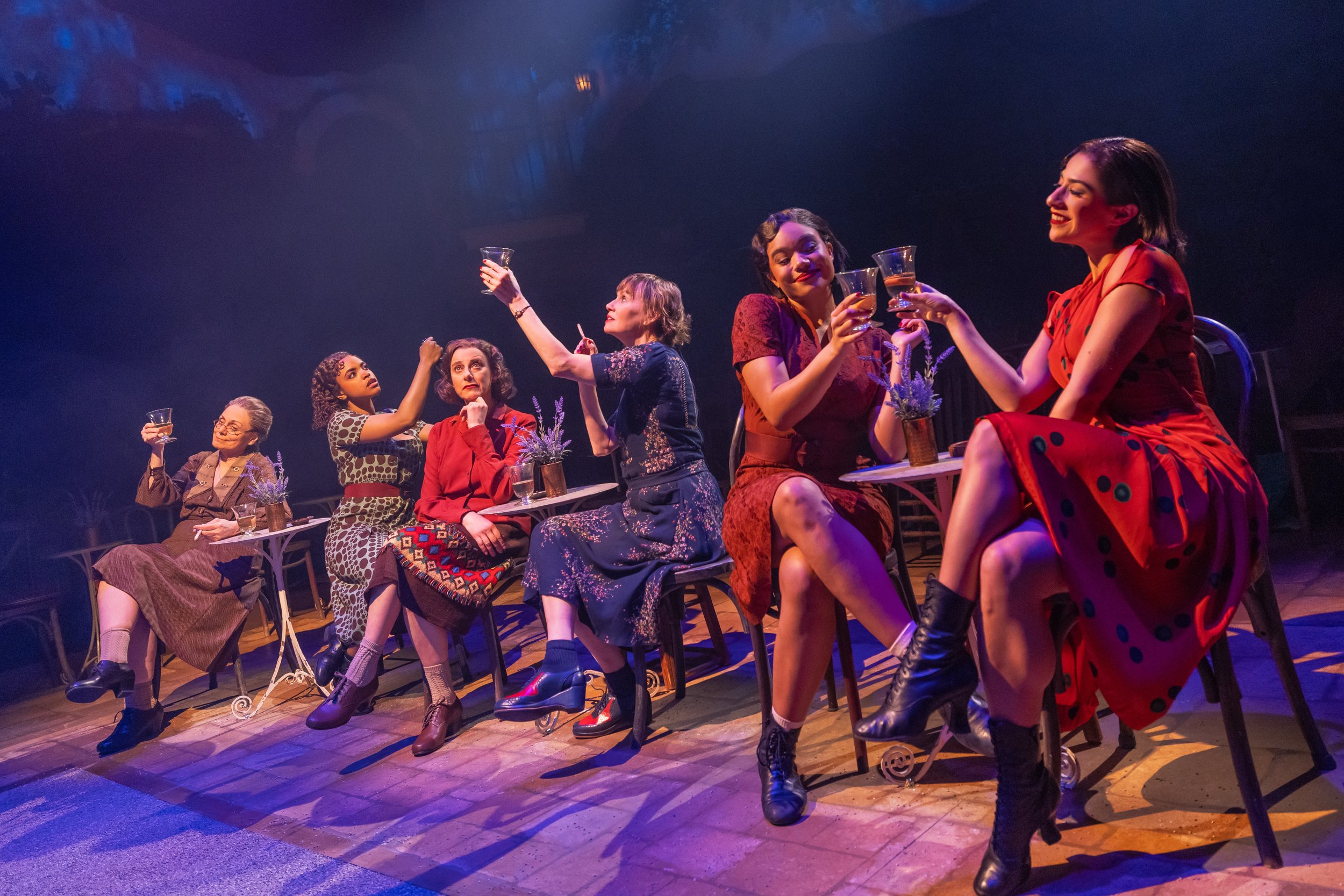
Alma Cuervo, Savannah Lee Birdsong, Judy Kuhn, Sally Murphy, Hailey Thomas, and Samantha Gershman in The Baker’s Wife. Photo: Matthew Murphy and Evan Zimmerman.
You’ve been singing Schwartz’s music your entire career. How has your approach to his music evolved as you’ve grown as a performer?
The wonderful thing about being an actor is that your own emotional, physical, intellectual journey through life is going to inform everything you do. And even though this is not a business that’s very kind to women my age, because people don’t want to write for us, I do find that the parts that I have played over the last 10, 15 years are much more interesting in many ways. They’re much more complex people, and so you bring your own life experience, and also for me personally, more confidence. I can take risks. I can try things. I don’t care if I look like an idiot in rehearsal anymore.
So it leads to a more interesting performance, and a richer experience. That’s how I think about, sort of being in the later stage of my career. Life just makes you a more interesting person and hopefully leads to more interesting work.
Approached from a certain angle, you could say The Baker’s Wife is one of those pieces that’s not particularly kind to women, yet there is certainly a kinship among the female characters. How do you walk that line between the content of the material and how it’s interpreted for contemporary audiences?
I think it’s interesting because yes, there are those attitudes towards women from the men in the piece. One would hope that the stuff that might have seemed funny in the ’70s, that today’s audiences don’t find it so funny anymore. And because Stephen’s written these big moments for these women to say, “No, that’s not okay to speak to me that way or to treat me that way,” it gives the audience—and us as actresses—the chance to say that we’re moving on from that [attitude]. And in the end it’s my character’s husband who has to come around, and there’s another put-upon wife who stands up and goes, “No, I’m leaving.” And her husband winds up alone. In the end, there’s a victory for the women in the piece.
I think it’s also really lovely that art can evolve in a way that shines the spotlight on something different in the piece. Like you said, in the ’70s that was played for laughs. Now it’s kind of gross, but those characters are still allowed to be those characters.
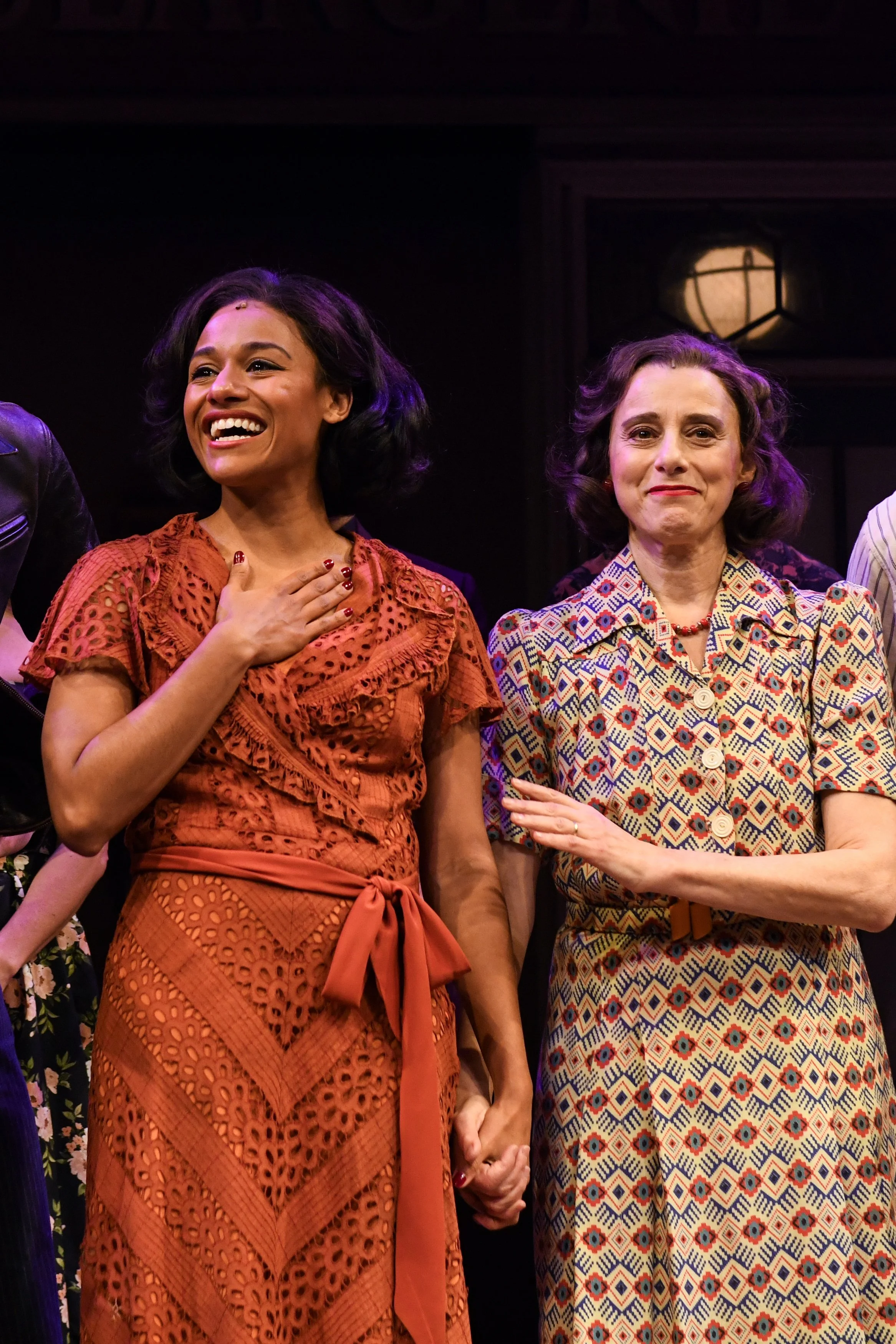
Ariana DeBose and Judy Kuhn at opening night of The Baker’s Wife. Photo: Allison Stock.
And all of these characters are played by an incredible cast of prominent theater actors. What has that ensemble experience been like for you?
Oh, it’s absolutely my favorite thing to do. I’ve been so lucky that so many of the shows I’ve done recently have been those kinds of ensembles. This is ensemble storytelling by actors who are at the top of their game, who are all leading players. That’s one of the reasons I love the theater. It’s why I want to do theater, because of that collaboration with other artists, be they actors or directors or designers or whatever. Nothing makes me happier.
I’m just very happy to be doing this show right now. Initially, I wasn’t sure if this is what we need right now—this somewhat old-fashioned musical comedy—but I couldn’t be more thrilled with what we’ve made and how audiences are reacting to it. It’s fun to go to work every day and it’s so gratifying.
This interview has been edited and condensed.