

The director is following up Kramer/Fauci with a radical version of Elektra at Theatre for a New Audience: “It’s not a play that one’s gonna get right,” he tells Eben Shapiro, in a conversation about money, meaning, and checking email once a week.
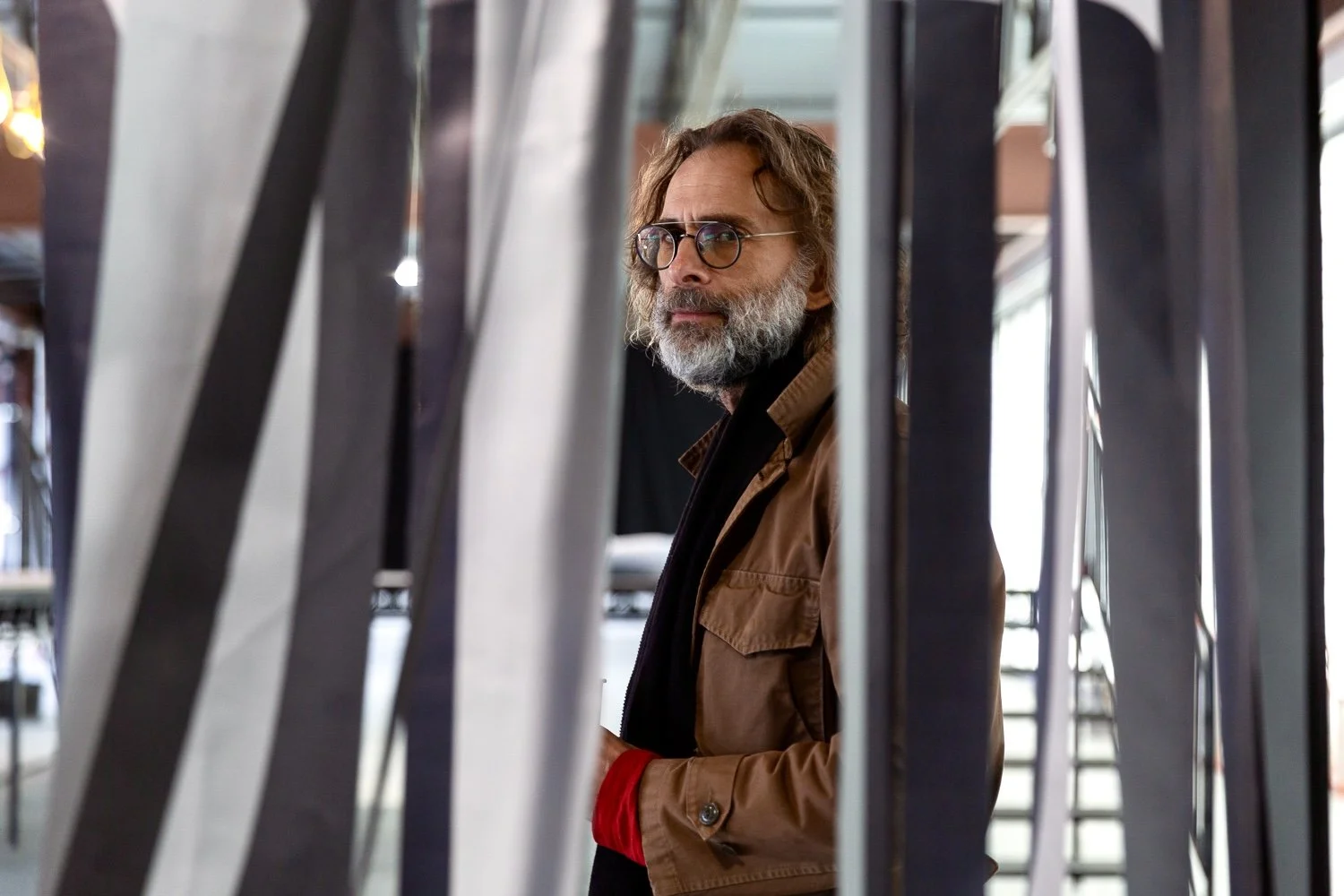
Daniel Fish is having a busy season: “It’s not my job to make people feel comfortable. We can get that plenty of other places.” Photo: Susan Rosenberg Jones.
There are a handful of theater directors whose every production is worth seeing. Daniel Fish is one of them. This fall, there has been ample opportunity to experience the full range of his work.
In the span of less than two months, Fish has had three productions open in the Northeast (two in New York City and one in Philadelphia). “I haven’t seen my partner as much as I would like to, but other than that I’m happy to have the work,” said Fish, who stepped out of rehearsal last week to talk to The Hat before the second preview of Elektra at Theatre for a New Audience in Brooklyn.
Throughout his career, Fish, 59, has been drawn to a broad range of texts: Shakespeare, Clifford Odets, David Foster Wallace, and Rodgers and Hammerstein. His production of Oklahoma! won a 2019 Tony Award for Best Revival of a Musical.
This fall, Fish’s choices are equally wide-ranging: Sophocles (Elektra), Tennessee Williams (an operatic version of Suddenly Last Summer), and a transcript from a 1993 C-SPAN live call-in program featuring Dr. Anthony Fauci and activist Larry Kramer at the height of the AIDS crisis (Kramer/Fauci).
Critics routinely describe his work as radical, daring, provocative, experimental, unsettling, and deconstructed. In interviews, he is serious and cerebral. He adamantly declines to bequeath interpretation to his creative choices. In Kramer/Fauci, there is an exuberant bubble machine that floods the stage with a captivating mountain of pure white foam: The meaning of the bubbles has been the subject of endless interpretation, from semen to the spread of AIDS to rampant government bureaucracy.
Fish would rather not play that game. “It’s all a proposal. It’s not a statement,” says Fish.
EBEN SHAPIRO: Do you recall another time in your professional life that’s been this intense or busy?
DANIEL FISH: Even if I’m working on one show it feels intense and busy. And the fact is, I was never in rehearsal for two things at once, so it was manageable.
When you’re juggling productions, do you also have time to make headway on new projects?
I try to be pretty focused on the thing that is in rehearsal or in previews. I check email maybe once a week. I try to be pretty single-minded.
You are using the Canadian poet Anne Carson’s translation of Elektra. When did you first encounter her translations?
I’ve known Anne’s work for a very long time, easily 20 years.
In October, she won the 2026 Nobel Prize in Literature. Is she coming to New York for the opening?
Obviously her life’s suddenly very busy and there are a lot of demands on her, but I hope she comes.
Have you ever worked with a Nobel Prize winner before?
No.
Did you have an explicit conversation with her about winning the prize?
I congratulated her, and she thanked me for congratulating her and asked, “I wonder what Elektra would say?”
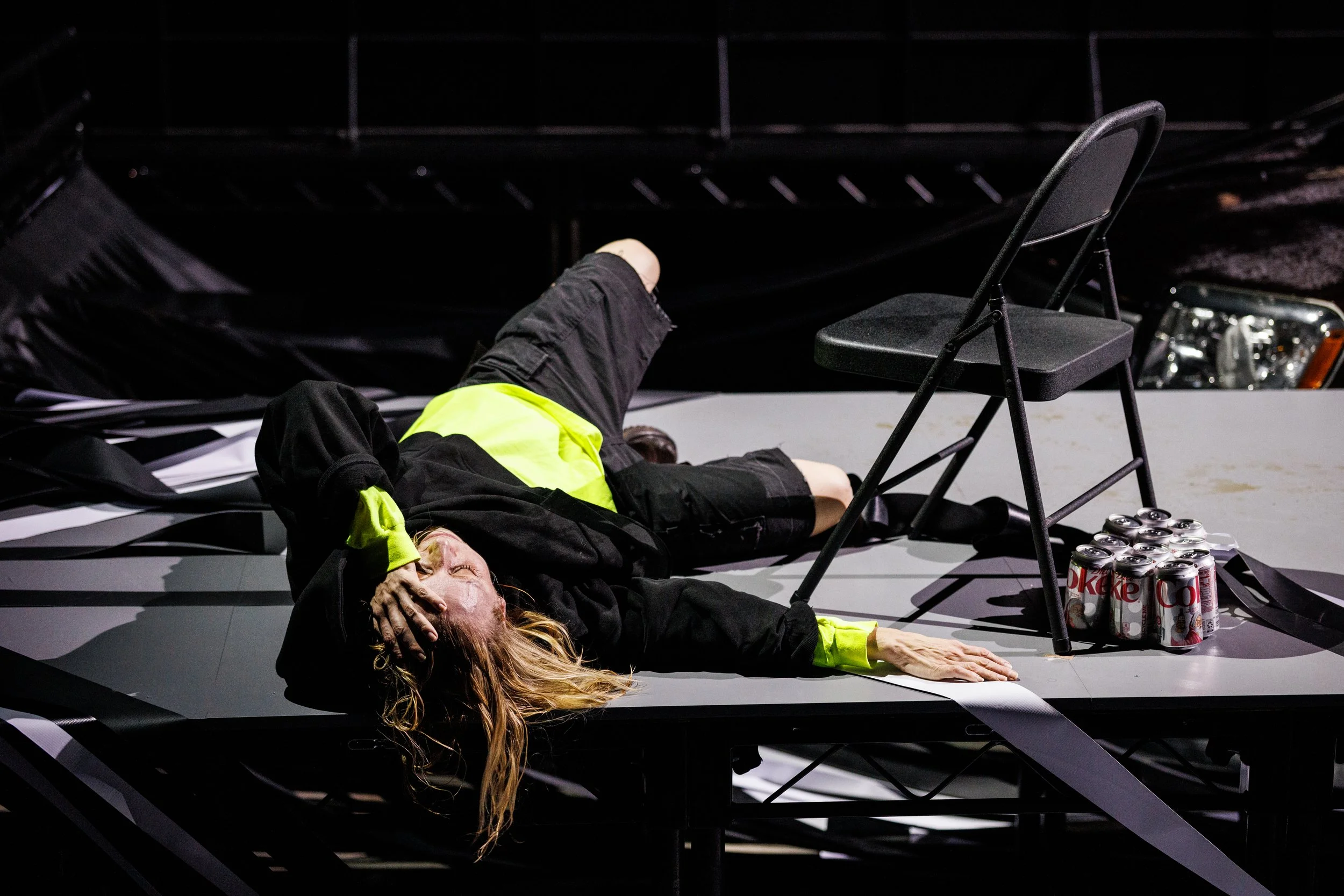
Tina Benko portrays Elektra in a translation by Nobel Prize winner Anne Carson, directed by Fish at Theatre for a New Audience. Photo: Maria Baranova.
I’m going to jump around a bit now and ask some random questions before we get into the meat of it.
How do directors get paid? How much money do you make?
I’m not going to say how much because that’s none of your business. I’m a freelance artist. I don’t have a company, which means I’m paid by the gig. I’m a member of the directors’ union so I get a job and that contributes towards my health insurance. I have to earn a certain amount of money and work a certain amount of jobs in order to get health insurance. And there have been times very recently where I have lost health insurance. That’s a real problem. Currently I have it.
Has Hollywood come calling?
I’m not sure I would call it Hollywood. I have a couple of film projects that are in development. One’s very far along in development that’s based on a Lauren Groff short story. But Marvel hasn’t called, nor would I expect them to.
How do you choose a text? You have such a broad range of work that you have dealt with.
I get excited about the language. I get interested in the language and I want to spend time with that language. It’s kind of as simple as that.
Do you have a working list of books or texts ahead of you that you’d like to do, or do they arise one at a time?
There are always things that are interesting to me, and some have been interesting to me for a long time, like the film based on Lauren’s story. There’s a Lear that I’m interested in working on. Sometimes projects come very quickly and sometimes they take years.
Which Lear are you interested in?
It’s kind of a mashup of King Lear and June Jordan’s “Poem About My Rights.” I don’t know if that will ever materialize or not.
You commented once that “If I see one more show that makes me want to leave feeling good, I’m going to spray the place with machine gun fire.”
I don’t know that I ever said that. I might have said something like that.
We’re living in desperate times. What’s so bad about that?
It’s not my job to make people feel comfortable. We can get that plenty of other places. I’m not interested in that. People go to the theater to see what’s going to happen. I certainly want to be entertained. I want to be compelled. I want to be challenged sometimes. But really, I go to see what’s going to happen.
Sometimes producers or artistic directors think an audience wants something—it is impossible to predict what an ever-changing group of people, in ever-changing circumstances, want to see or how they will react. There are marketing people and marketing firms who would absolutely dispute that.
Let’s talk about the different productions. Where can I get a bubble machine?
Foam Daddy.
That’s the company? Online?
Yes, Foam Daddy.
Do you recall roughly how much it costs?
No.
(Note from The Hat: We looked it up. It’s on sale for $2,600 with free shipping [a $185 value!].)
Do you know the formulation for the liquid bubbles?
Personally, I don’t, but it was much, much researched and calculated with temperature and all sorts of things like that. A lot—a lot—of time by the designers was put into figuring out the right mix.
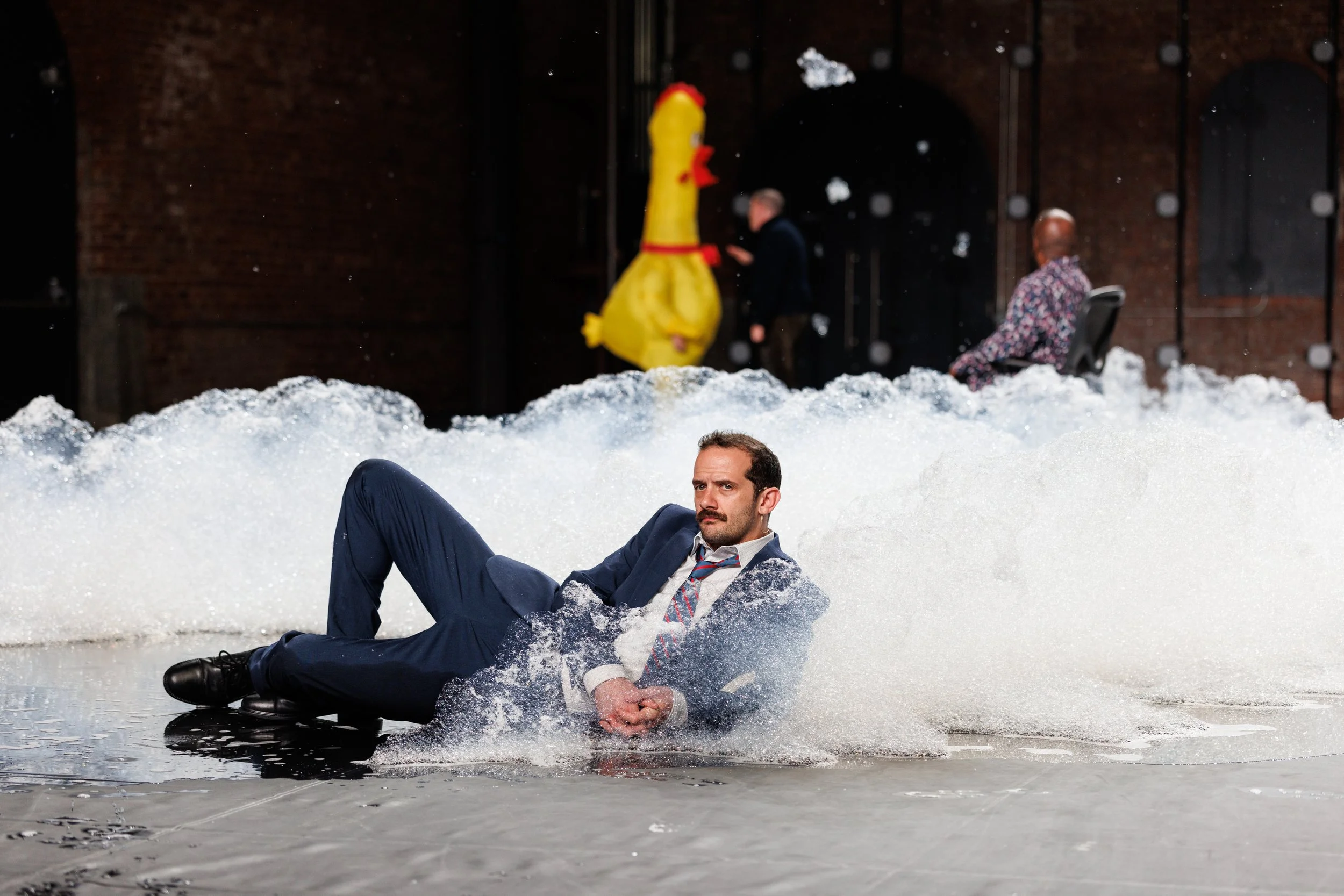
Will Brill and Greig Sargeant among the bubbles provided by Foam Daddy, in Kramer/Fauci at St. Ann’s Warehouse. Photo: Maria Baranova.
I know you resist saying what the bubbles mean. I would like to use that as a basis for a broader conversation on leading the audience to the answer and your feelings about that.
My collaborators and I work very, very hard to get a show the way we want it to be. We spend an enormous amount of time on that and if we’re lucky, we sometimes get there or get close. And once that happens, and it is shown to our audience, it no longer belongs to us. It belongs to them. And any meaning, should they choose to find it—and that’s a choice they can make or not make—is up to them. I don’t believe that I should have that power to give that meaning.
I think if I were to try to articulate it—and the truth is, I don’t even think, in most cases, I could articulate it. It’s not like I’m withholding something. Then it would be viewed through that lens, and I don’t think that’s a responsibility I should have.
What was the impulse for the bubble machine?
It’s not one of those things that I can pinpoint. I must have seen one somewhere and thought, well, what would happen if I used that on stage? What would happen if I put that next to this material of Larry Kramer and Tony Fauci. It’s all a proposal. It’s not a statement.
Do you have a troupe of collaborators that you work with?
Not formally, but I have people that I’ve worked with very frequently. Like Tina Benko, who’s playing Elektra and is thrilling. Like Sally Wingert, who I’ve known for over 30 years, who’s playing Clytemnestra.
How is Elektra coming together?
It’s not a play that one’s gonna get right. You just kind of keep working at it. I’ve been very aware of this in the last couple of days. We’re far from nailing it. There’s some very difficult scenes in this play.
Do you get stalled on projects?
I get stalled every day. I got stalled for two hours today in rehearsal. When am I not?
What do you do when you hit a wall?
You keep working. I find you have to try to be patient and sit with those moments. Because sometimes those moments when you’re stalled, if you sit with them and sit in the being stalled and try to free oneself—and I find this very difficult to do—from the need to get it right or the need to make it work, sometimes, a way through emerges that is worthwhile.
If I feel like I’m trying to solve a problem, that’s usually a bad sign.
What do you mean? I don't quite follow.
If I feel like I’m just trying to solve the problem or fix something, then I’m not in the most creative or open space that I can be. So much of what I think being a director is about is being present, being alert, being open to what happens in the room.
This interview has been edited and condensed.